Myocardial Function Section, National Heart and Lung Institute, Fourth Floor, Imperial Centre for Translational and Experimental Medicine, Imperial College, Hammersmith Campus, Du Cane Road, London W12 0NN, UK.
Cardiovasc Res. 2013 May 1;98(2):286-96. doi: 10.1093/cvr/cvt012. Epub 2013 Jan 19.
Ca(2+) waves are thought to be important in the aetiology of ventricular tachyarrhythmias. There have been conflicting results regarding whether flecainide reduces Ca(2+) waves in isolated cardiomyocytes. We sought to confirm whether flecainide inhibits waves in the intact cardiomyocyte and to elucidate the mechanism.
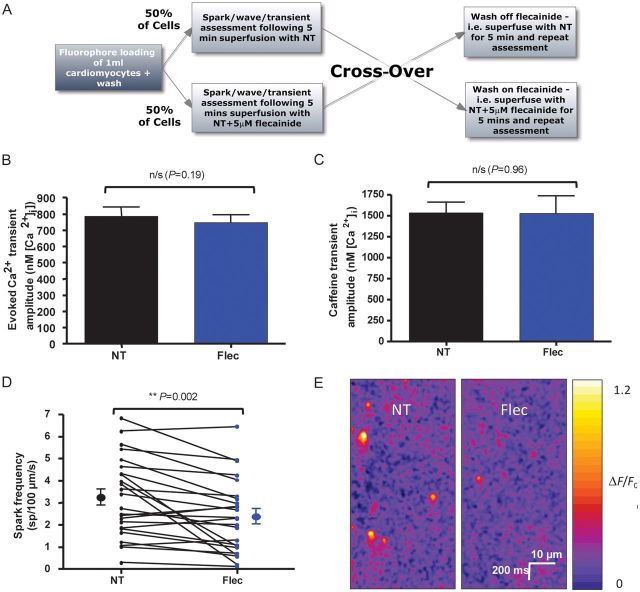
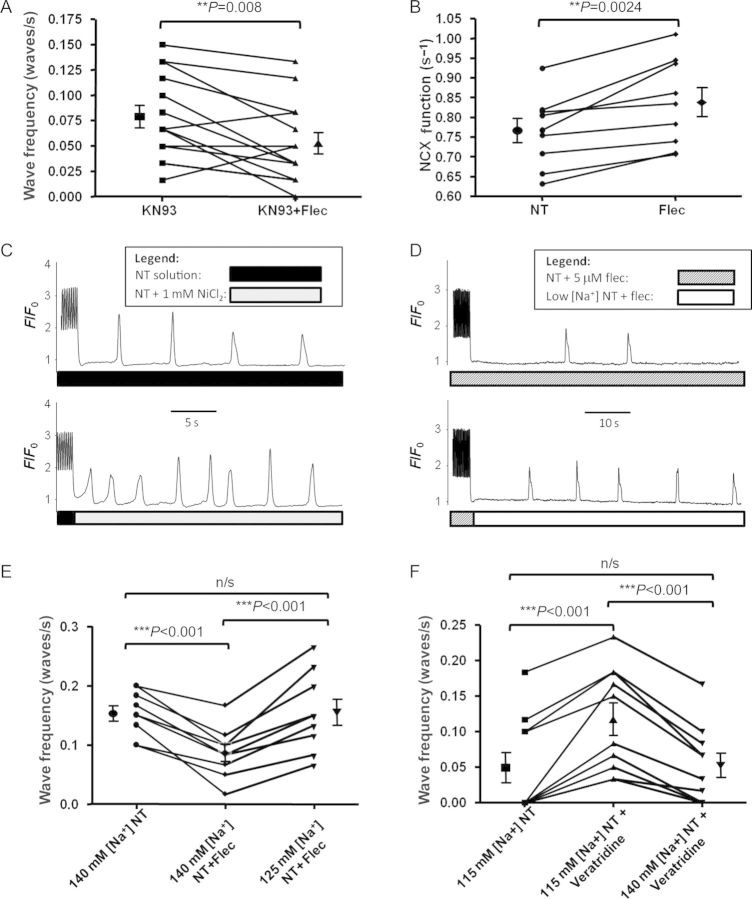
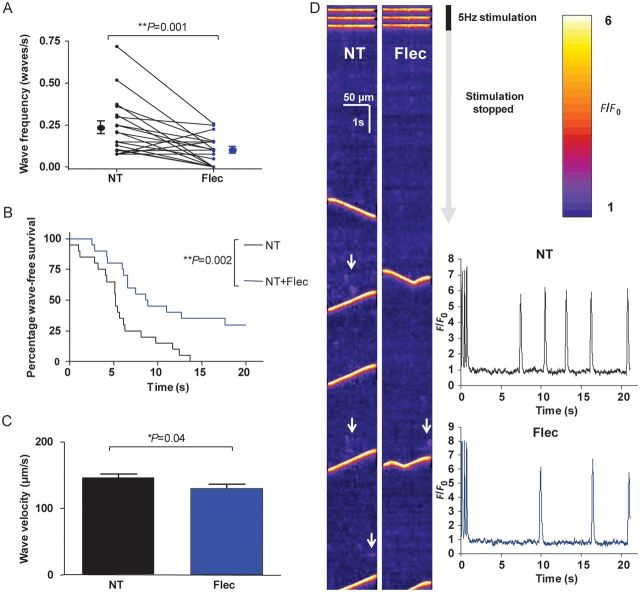
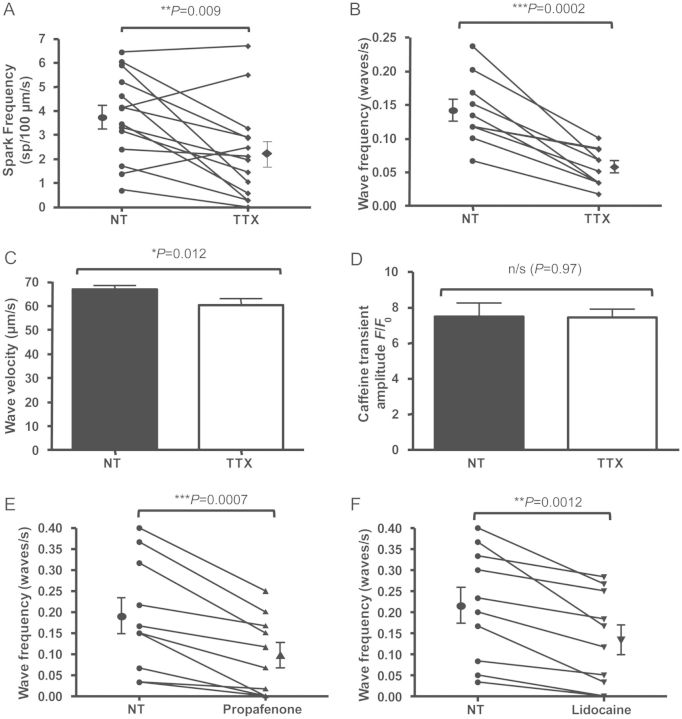
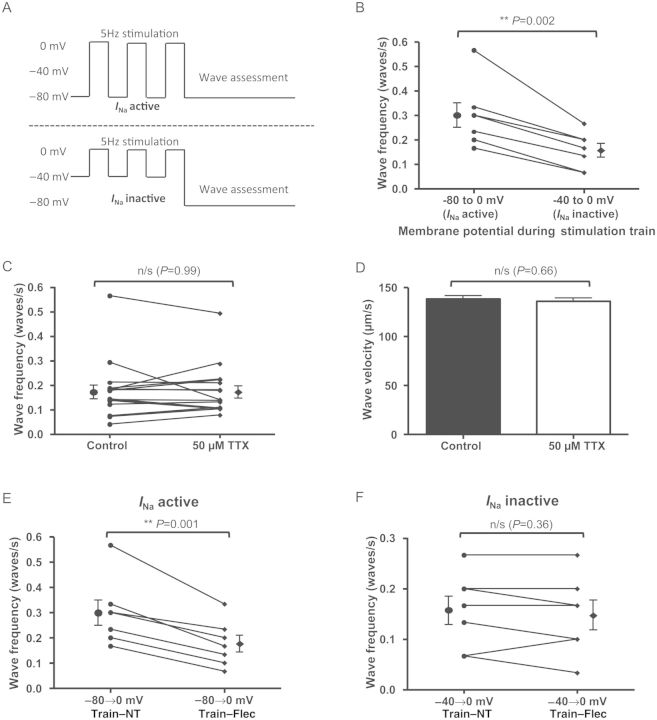
We imaged spontaneous sarcoplasmic reticulum (SR) Ca(2+) release events in healthy adult rat cardiomyocytes. Variation in stimulation frequency was used to produce Ca(2+) sparks or waves. Spark frequency, wave frequency, and wave velocity were reduced by flecainide in the absence of a reduction of SR Ca(2+) content. Inhibition of I(Na) via alternative pharmacological agents (tetrodotoxin, propafenone, or lidocaine) produced similar changes. To assess the contribution of I(Na) to spark and wave production, voltage clamping was used to activate contraction from holding potentials of -80 or -40 mV. This confirmed that reducing Na(+) influx during myocyte stimulation is sufficient to reduce waves and that flecainide only causes Ca(2+) wave reduction when I(Na) is active. It was found that Na(+)/Ca(2+)-exchanger (NCX)-mediated Ca(2+) efflux was significantly enhanced by flecainide and that the effects of flecainide on wave frequency could be reversed by reducing Na(+), suggesting an important downstream role for NCX function.
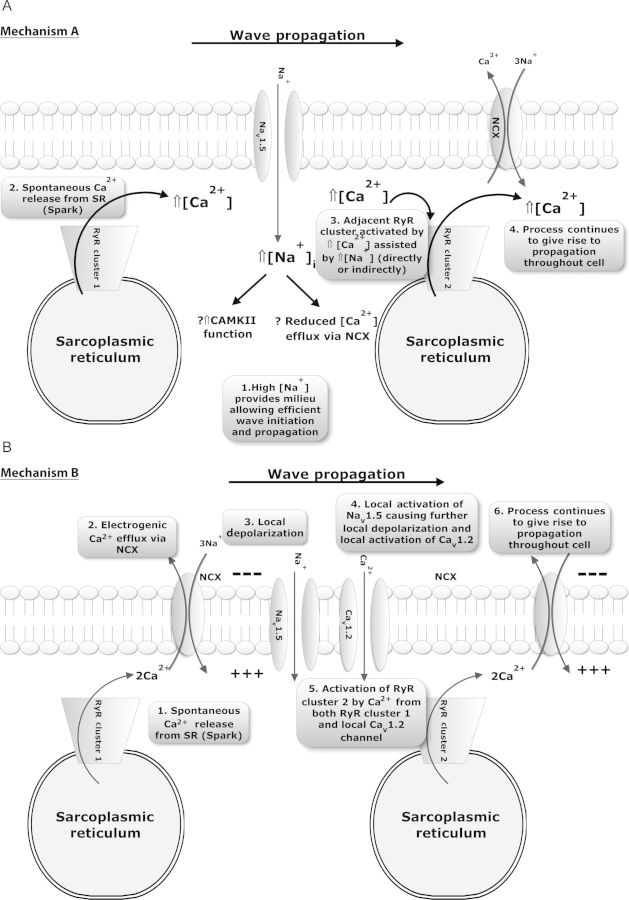
Flecainide reduces spark and wave frequency in the intact rat cardiomyocyte at therapeutically relevant concentrations but the mechanism involves I(Na) reduction rather than direct ryanodine receptor (RyR2) inhibition. Reduced I(Na) results in increased Ca(2+) efflux via NCX across the sarcolemma, reducing Ca(2+) concentration in the vicinity of the RyR2.
钙波被认为在室性心动过速的发病机制中起重要作用。关于氟卡尼是否减少分离的心肌细胞中的钙波,存在相互矛盾的结果。我们试图证实氟卡尼是否抑制完整心肌细胞中的波,并阐明其机制。
我们在健康成年大鼠心肌细胞中成像自发性肌浆网(SR)钙释放事件。通过改变刺激频率产生钙火花或波。在不减少 SR 钙含量的情况下,氟卡尼降低钙火花频率、波频率和波速度。通过替代药理学药物(河豚毒素、普罗帕酮或利多卡因)抑制 I(Na)也产生类似的变化。为了评估 I(Na)对火花和波产生的贡献,使用电压钳位从 -80 或 -40 mV 的保持电位激活收缩。这证实了在肌细胞刺激期间减少 Na+内流足以减少波,并且只有当 I(Na)活跃时,氟卡尼才会导致钙波减少。发现氟卡尼显著增强 Na+/Ca2+-交换体(NCX)介导的 Ca2+外排,并且氟卡尼对波频率的影响可以通过降低 [Na+](o)来逆转,这表明 NCX 功能在下游具有重要作用。
氟卡尼以治疗相关浓度降低完整大鼠心肌细胞中的火花和波频率,但该机制涉及 I(Na)减少,而不是直接ryanodine 受体(RyR2)抑制。减少 I(Na)导致通过质膜上的 NCX 增加 Ca2+流出,从而降低 RyR2 附近的 Ca2+浓度。