
通过对心肌细胞的全细胞模拟来理解影响 L 型钙通道钙依赖性失活的钙调蛋白变异体。
Understanding Calmodulin Variants Affecting Calcium-Dependent Inactivation of L-Type Calcium Channels through Whole-Cell Simulation of the Cardiac Ventricular Myocyte.
机构信息
School of Systems Biology, George Mason University, Fairfax, VA 22030, USA.
Innovation Center for Biomedical Informatics, Department of Oncology, Georgetown University Medical Center, Georgetown University, Washington, DC 20057, USA.
出版信息
Biomolecules. 2022 Dec 29;13(1):72. doi: 10.3390/biom13010072.
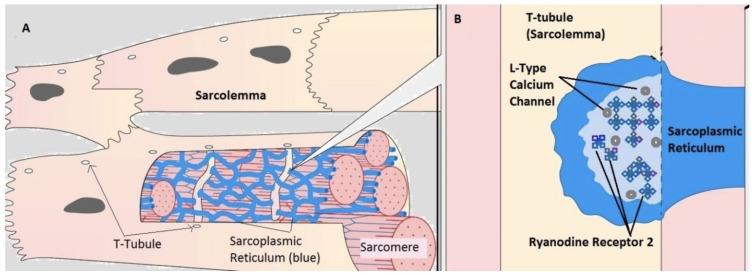
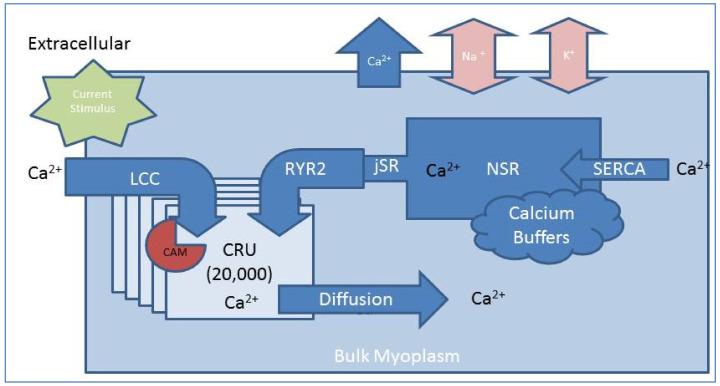
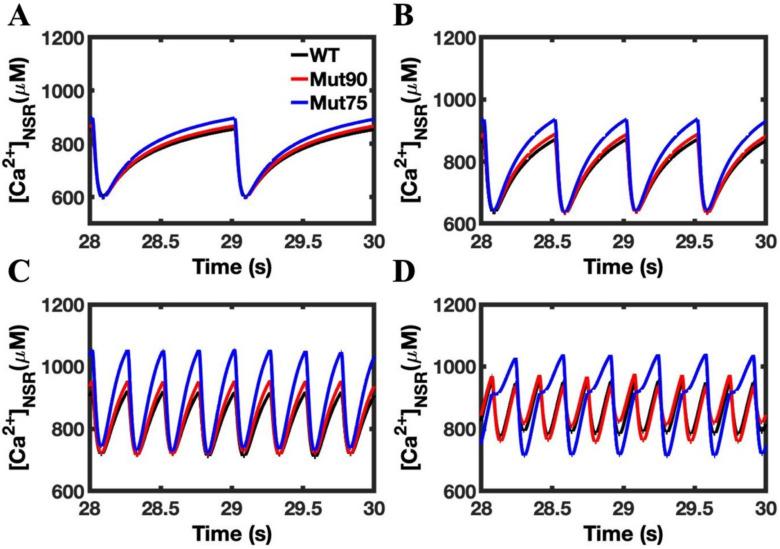
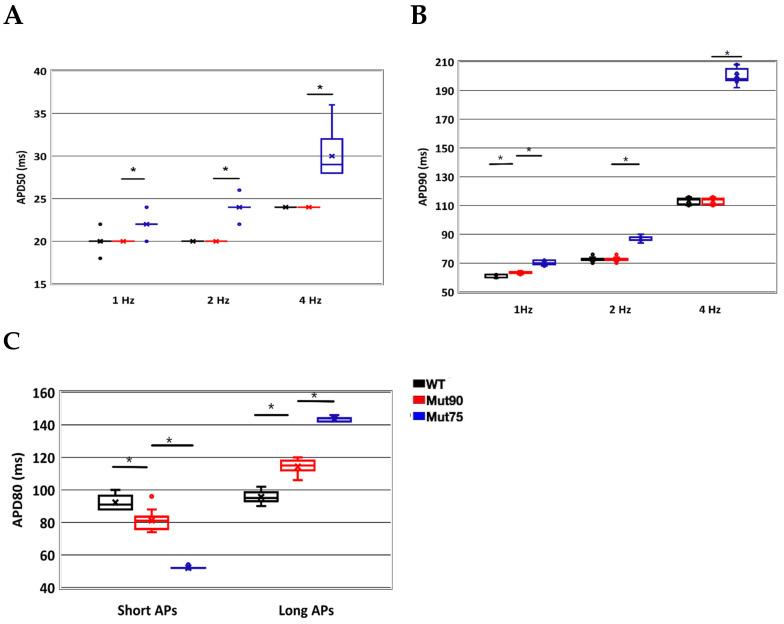
Mutations in the calcium-sensing protein calmodulin () have been linked to two cardiac arrhythmia diseases, Long QT Syndrome 14 (LQT14) and Catecholaminergic Polymorphic Ventricular Tachycardia Type 4 (CPVT4), with varying degrees of severity. Functional characterization of the mutants most strongly associated with LQT14 show a clear disruption of the calcium-dependent inactivation (CDI) of the L-Type calcium channel (LCC). CPVT4 mutants on the other hand are associated with changes in their affinity to the ryanodine receptor. In clinical studies, some variants have been associated with both CPVT4 and LQT15. This study uses simulations in a model for excitation-contraction coupling in the rat ventricular myocytes to understand how LQT14 variant might give the functional phenotype similar to CPVT4. Changing the -dependent transition rate by a factor of 0.75 corresponding to the D96V variant and by a factor of 0.90 corresponding to the F142L or N98S variants, in a physiologically based stochastic model of the LCC prolonger, the action potential duration changed by a small amount in a cardiac myocyte but did not disrupt CICR at 1, 2, and 4 Hz. Under beta-adrenergic simulation abnormal excitation-contraction coupling was observed above 2 Hz pacing for the mutant . The same conditions applied under beta-adrenergic stimulation led to the rapid onset of arrhythmia in the mutant simulations. Simulations with the LQT14 mutations under the conditions of rapid pacing with beta-adrenergic stimulation drives the cardiac myocyte toward an arrhythmic state known as Ca overload. These simulations provide a mechanistic link to a disease state for LQT14-associated mutations in to yield a CPVT4 phenotype. The results show that small changes to the -regulated inactivation of LCC promote arrhythmia and underscore the significance of CDI in proper heart function.
钙敏感受体钙调蛋白()中的突变与两种心律失常疾病有关,长 QT 综合征 14 型(LQT14)和儿茶酚胺能多形性室性心动过速 4 型(CPVT4),其严重程度不同。与 LQT14 关系最密切的突变体的功能特征表明,L 型钙通道(LCC)的钙依赖性失活(CDI)明显受到破坏。另一方面,CPVT4 突变体与它们与兰尼碱受体亲和力的变化有关。在临床研究中,一些变体与 CPVT4 和 LQT15 都有关联。本研究使用大鼠心室肌细胞兴奋-收缩偶联模型中的模拟来理解 LQT14 变体如何赋予类似于 CPVT4 的功能表型。将 D96V 变体对应的 -依赖性跃迁速率改变 0.75 倍,F142L 或 N98S 变体对应的 -依赖性跃迁速率改变 0.90 倍,在 LCC 延长剂的基于生理的随机模型中,动作电位持续时间在心肌细胞中只发生微小变化,但在 1、2 和 4 Hz 时并未破坏 CICR。在β-肾上腺素能模拟下,对于突变体,观察到在高于 2 Hz 起搏时异常的兴奋-收缩偶联。在相同条件下,β-肾上腺素能刺激下的突变体模拟导致心律失常迅速发作。在快速起搏和β-肾上腺素能刺激的条件下,LQT14 突变的模拟提供了一种与心律失常状态相关的机制联系,这种心律失常状态被称为钙超载。这些模拟结果表明,LCC 的 -调节失活的微小变化会促进心律失常,并强调 CDI 在心脏正常功能中的重要性。







 Zotero 插件