Laboratory of Mucosal Immunology, The Rockefeller University, New York, New York, USA.
Nat Immunol. 2013 Mar;14(3):271-80. doi: 10.1038/ni.2518. Epub 2013 Jan 20.
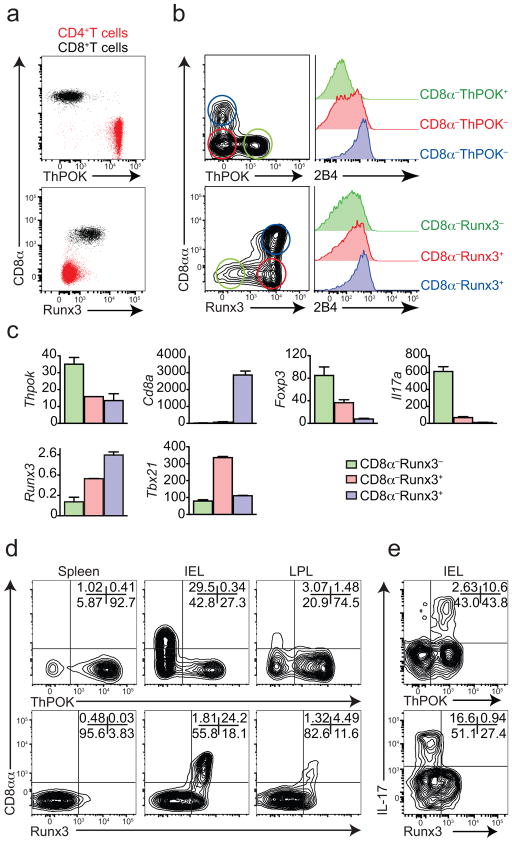
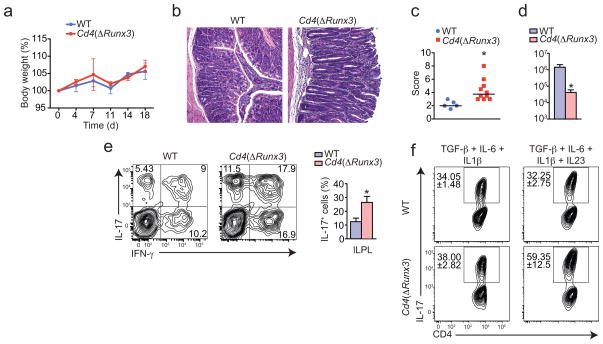
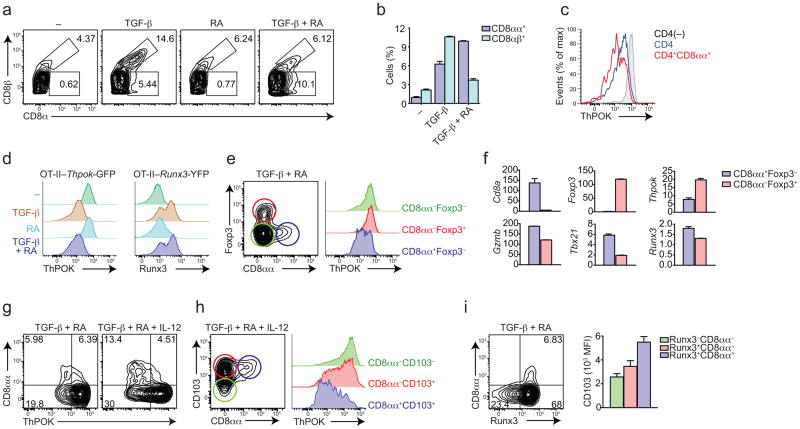
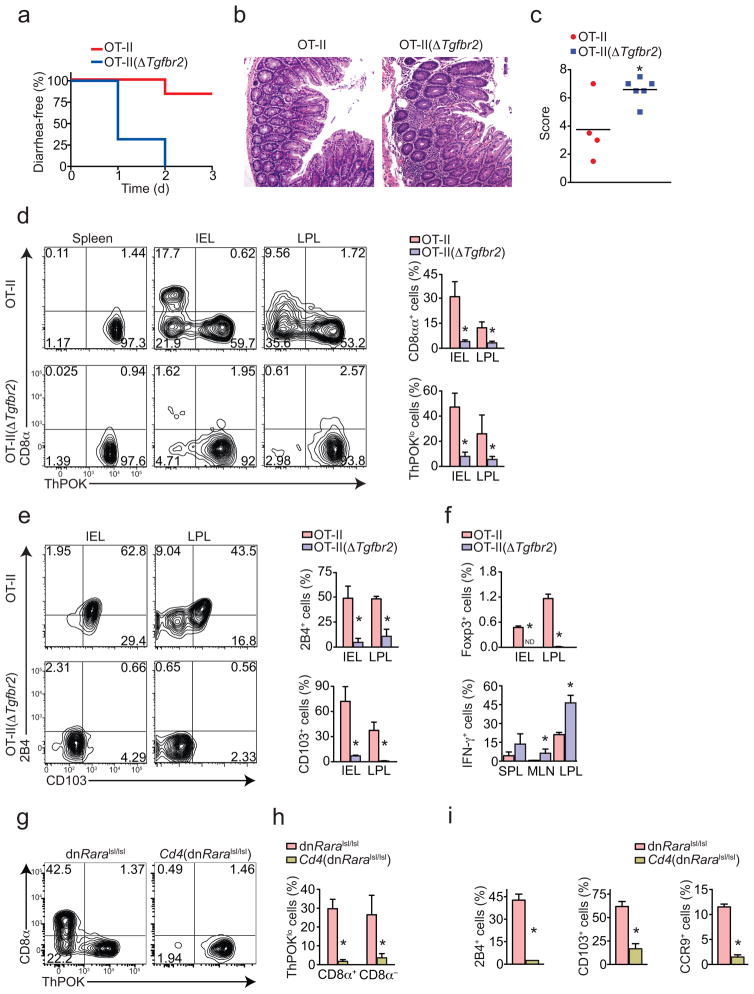
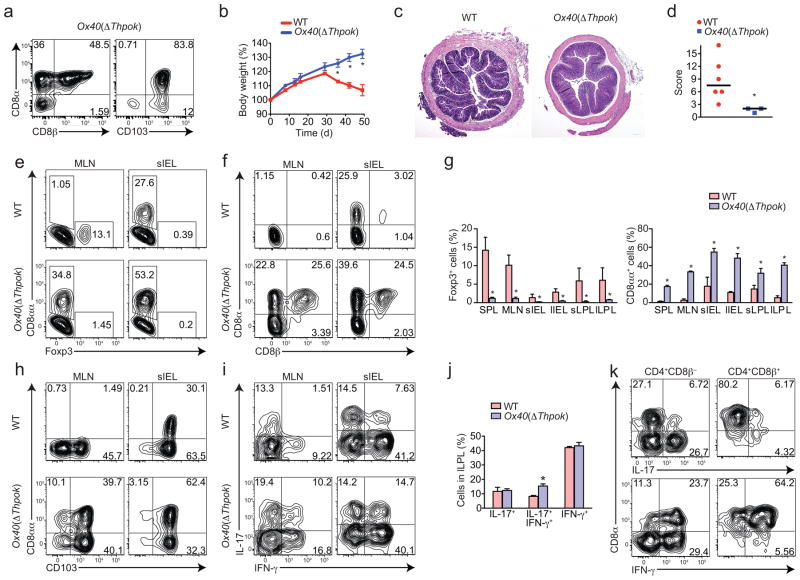
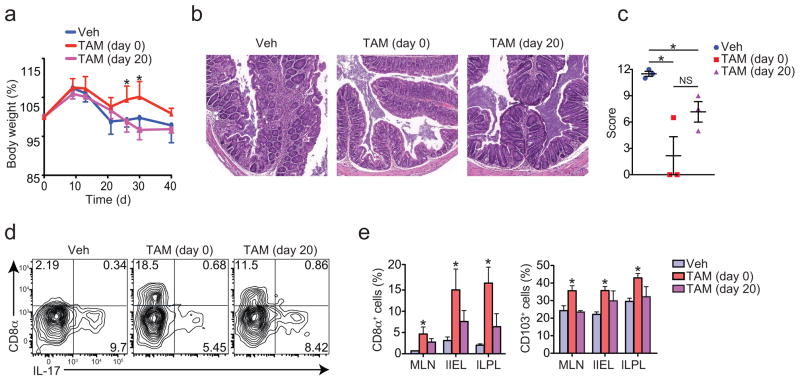
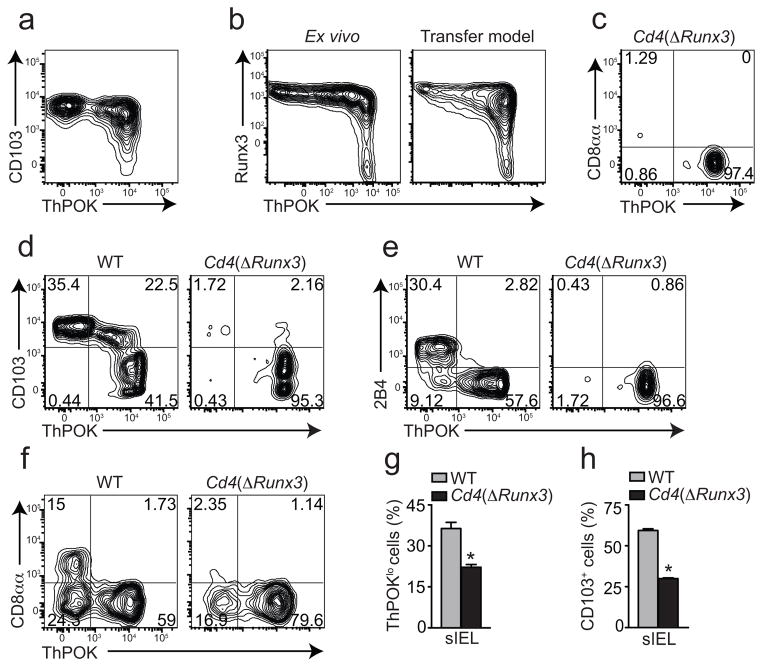
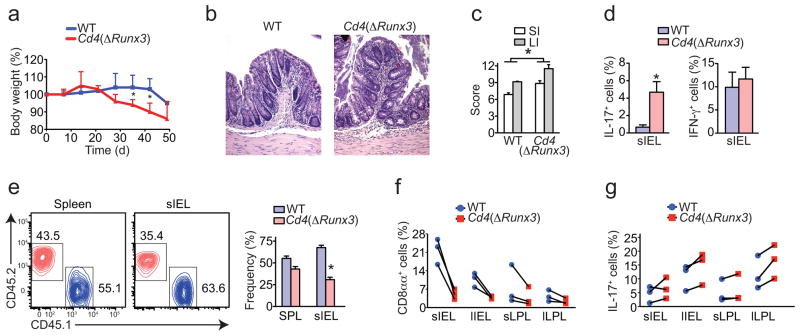
The gut mucosa hosts large numbers of activated lymphocytes that are exposed to stimuli from the diet, microbiota and pathogens. Although CD4(+) T cells are crucial for defense, intestinal homeostasis precludes exaggerated responses to luminal contents, whether they are harmful or not. We investigated mechanisms used by CD4(+) T cells to avoid excessive activation in the intestine. Using genetic tools to label and interfere with T cell-development transcription factors, we found that CD4(+) T cells acquired the CD8-lineage transcription factor Runx3 and lost the CD4-lineage transcription factor ThPOK and their differentiation into the T(H)17 subset of helper T cells and colitogenic potential, in a manner dependent on transforming growth factor-β (TGF-β) and retinoic acid. Our results demonstrate considerable plasticity in the CD4(+) T cell lineage that allows chronic exposure to luminal antigens without pathological inflammation.
肠道黏膜中存在大量的活化淋巴细胞,这些淋巴细胞会受到饮食、微生物群和病原体的刺激。虽然 CD4(+)T 细胞对于防御至关重要,但肠道内稳态可防止对腔内容物产生过度反应,无论这些内容物是否有害。我们研究了 CD4(+)T 细胞避免在肠道中过度激活的机制。我们使用遗传工具来标记和干扰 T 细胞发育转录因子,发现 CD4(+)T 细胞获得了 CD8 谱系转录因子 Runx3,失去了 CD4 谱系转录因子 ThPOK,并且其向辅助性 T 细胞的 T(H)17 亚群和致结肠炎潜能的分化,这一过程依赖于转化生长因子-β(TGF-β)和视黄酸。我们的研究结果表明,CD4(+)T 细胞谱系具有相当大的可塑性,允许其在慢性暴露于腔抗原的情况下而不发生病理性炎症。