Bearer Elaine L
Department of Pathology, University of New Mexico Health Sciences Center, Albuquerque, NM 81131, USA.
Future Virol. 2012 Sep;7(9):885-899. doi: 10.2217/fvl.12.81.
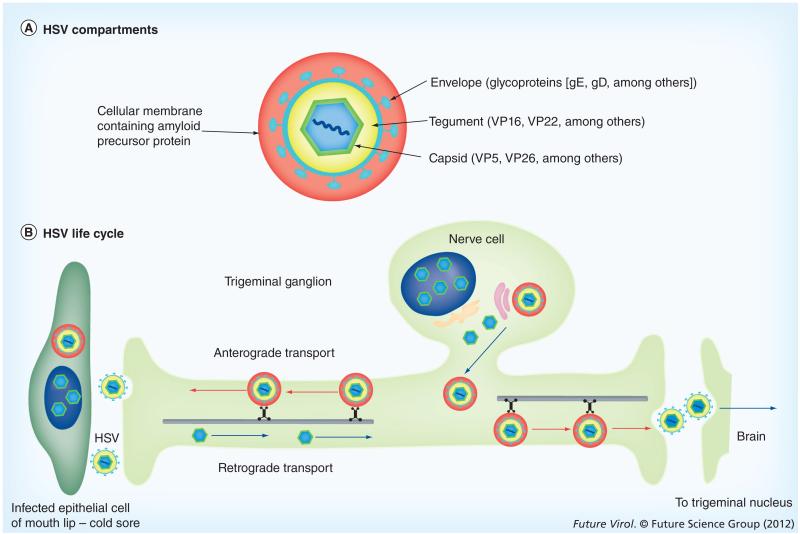
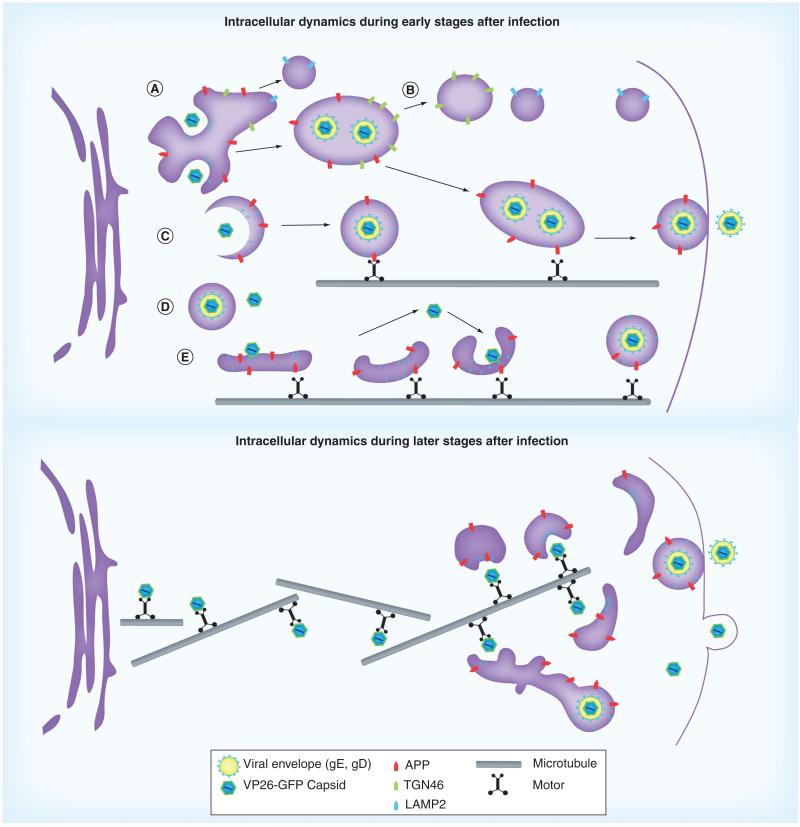
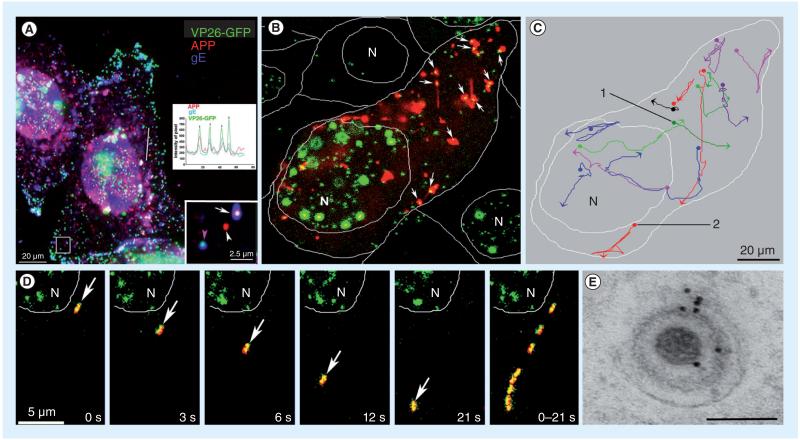
HSV, a neurotropic virus, travels within neuronal processes by fast axonal transport. During neuronal infection HSV travels retrograde from the sensory nerve terminus to the neuronal cell body, where it replicates or enters latency. During replication HSV travels anterograde from the cell body to the nerve terminus. Postmortem studies find a high frequency of HSV DNA in the trigeminal ganglia as well as the brain. Studies correlating HSV with Alzheimer's disease (AD) have been controversial. Here we review clinical evidence supporting such a link. Furthermore, the author describes experimental data showing physical interactions between nascent HSV particles and host transport machinery implicated in AD. The author concludes that the complexity of this relationship has been insufficiently explored, although the relative ease and nontoxicity of a potential anti-HSV treatment for AD demands further study.
单纯疱疹病毒(HSV)是一种嗜神经病毒,通过快速轴突运输在神经突起内传播。在神经元感染期间,HSV从感觉神经末梢逆行至神经元细胞体,在那里它进行复制或进入潜伏期。在复制过程中,HSV从细胞体顺行至神经末梢。尸检研究发现三叉神经节以及大脑中HSV DNA的频率很高。将HSV与阿尔茨海默病(AD)相关联的研究一直存在争议。在此我们回顾支持这种联系的临床证据。此外,作者描述了实验数据,这些数据显示新生HSV颗粒与AD相关的宿主运输机制之间存在物理相互作用。作者得出结论,尽管针对AD的潜在抗HSV治疗相对简便且无毒,但这种关系的复杂性尚未得到充分探索,仍需进一步研究。