Department of Pediatrics, Arkansas Children's Hospital Research Institute, Little Rock, AR, USA.
Transl Psychiatry. 2013 Jan 22;3(1):e220. doi: 10.1038/tp.2012.143.
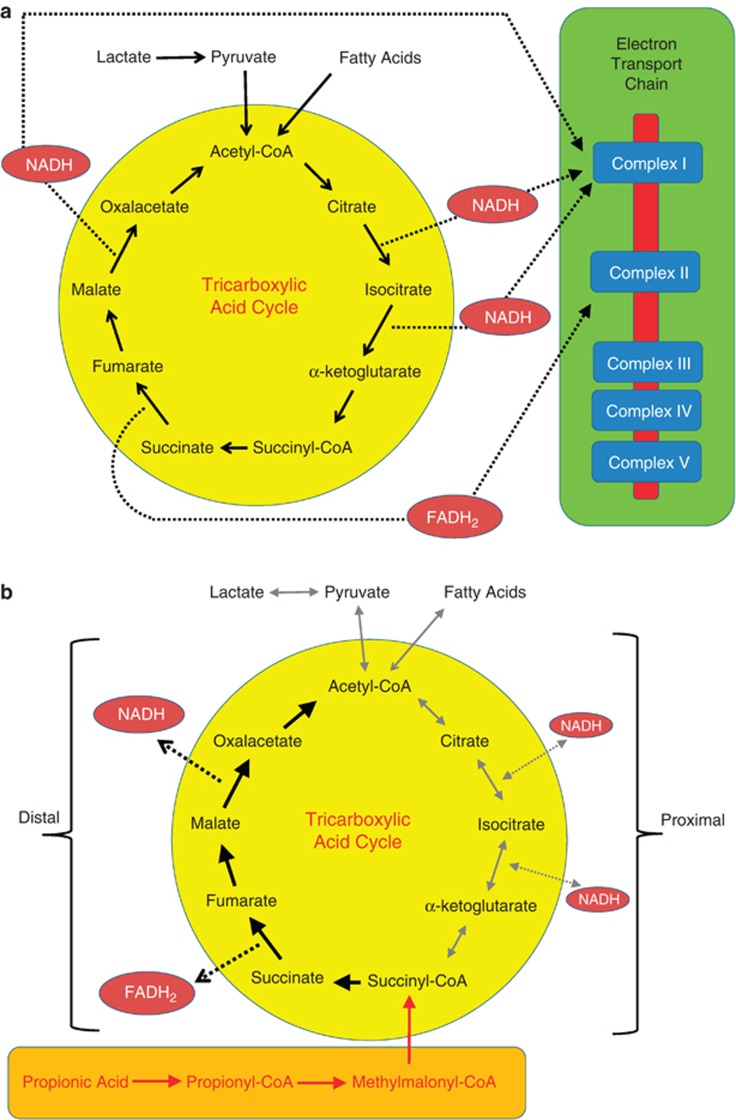
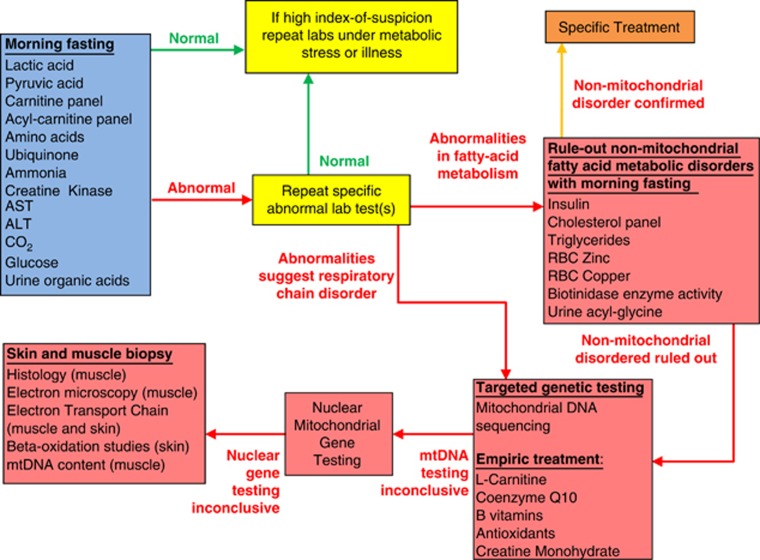
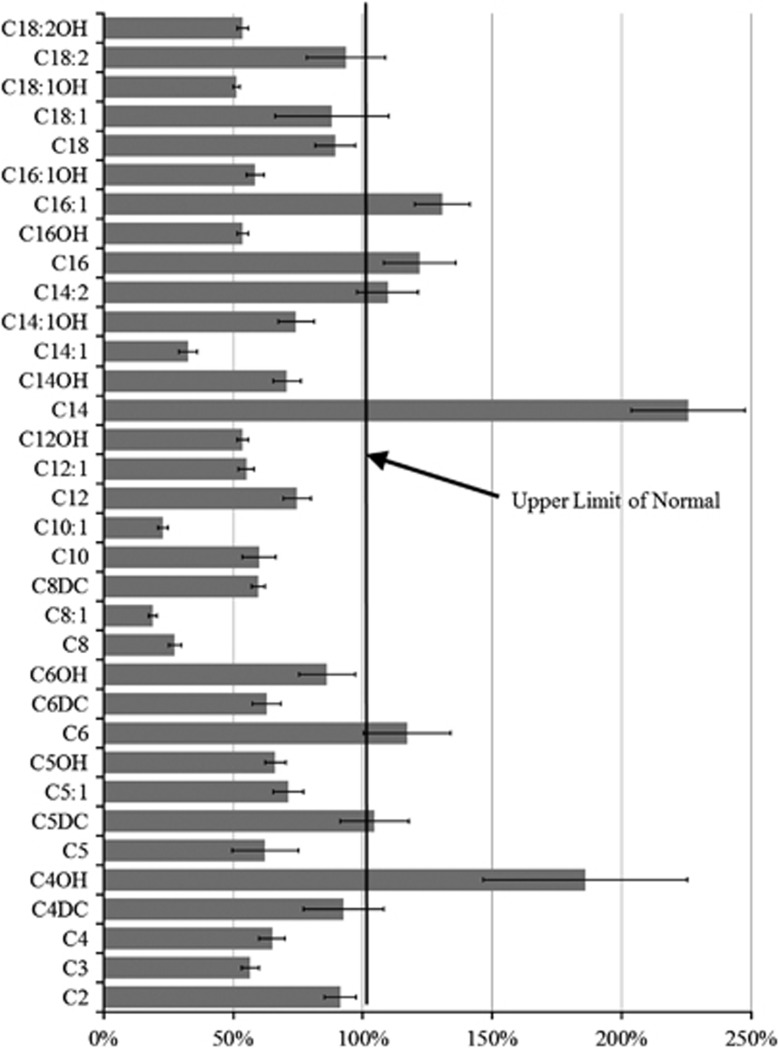
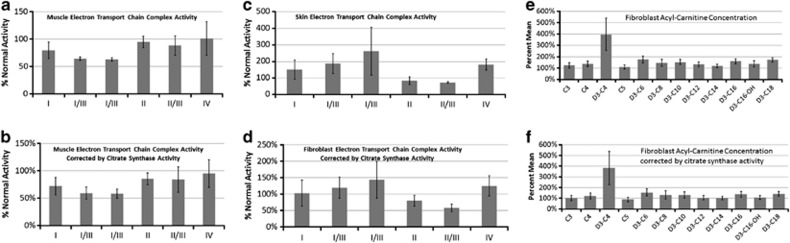
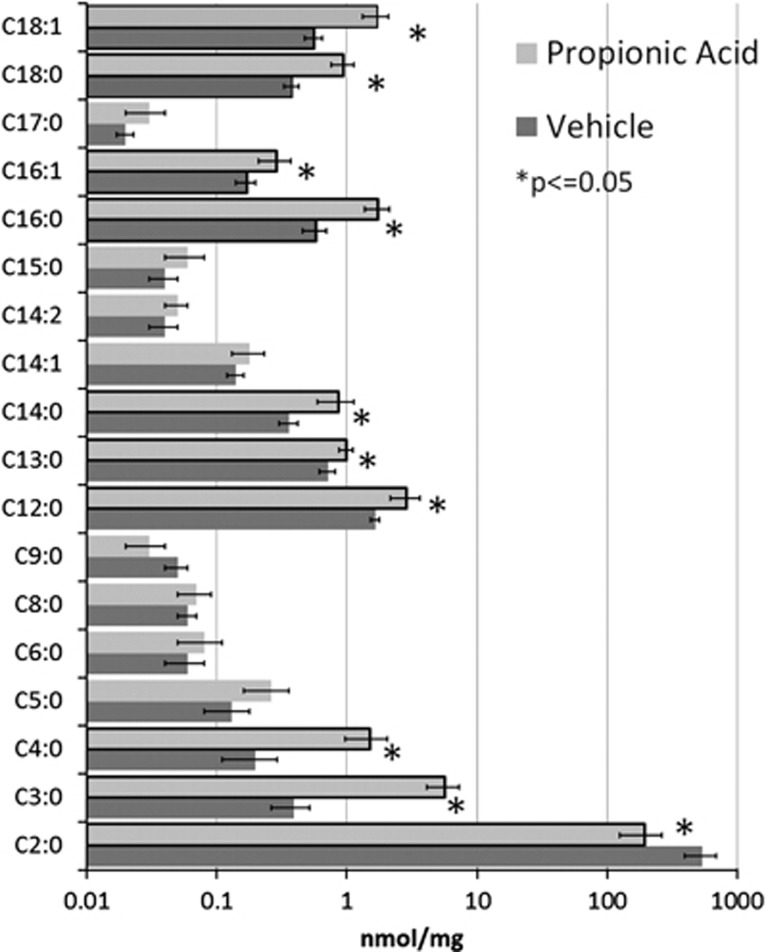
Autism spectrum disorder (ASD) has been associated with mitochondrial disease (MD). Interestingly, most individuals with ASD and MD do not have a specific genetic mutation to explain the MD, raising the possibility of that MD may be acquired, at least in a subgroup of children with ASD. Acquired MD has been demonstrated in a rodent ASD model in which propionic acid (PPA), an enteric bacterial fermentation product of ASD-associated gut bacteria, is infused intracerebroventricularly. This animal model shows validity as it demonstrates many behavioral, metabolic, neuropathologic and neurophysiologic abnormalities associated with ASD. This animal model also demonstrates a unique pattern of elevations in short-chain and long-chain acyl-carnitines suggesting abnormalities in fatty-acid metabolism. To determine if the same pattern of biomarkers of abnormal fatty-acid metabolism are present in children with ASD, the laboratory results from a large cohort of children with ASD (n=213) who underwent screening for metabolic disorders, including mitochondrial and fatty-acid oxidation disorders, in a medically based autism clinic were reviewed. Acyl-carnitine panels were determined to be abnormal if three or more individual acyl-carnitine species were abnormal in the panel and these abnormalities were verified by repeated testing. Overall, 17% of individuals with ASD demonstrated consistently abnormal acyl-carnitine panels. Next, it was determined if specific acyl-carnitine species were consistently elevated across the individuals with consistently abnormal acyl-carnitine panels. Significant elevations in short-chain and long-chain, but not medium-chain, acyl-carnitines were found in the ASD individuals with consistently abnormal acyl-carnitine panels-a pattern consistent with the PPA rodent ASD model. Examination of electron transport chain function in muscle and fibroblast culture, histological and electron microscopy examination of muscle and other biomarkers of mitochondrial metabolism revealed a pattern consistent with the notion that PPA could be interfering with mitochondrial metabolism at the level of the tricarboxylic-acid cycle (TCAC). The function of the fatty-acid oxidation pathway in fibroblast cultures and biomarkers for abnormalities in non-mitochondrial fatty-acid metabolism were not consistently abnormal across the subgroup of ASD children, consistent with the notion that the abnormalities in fatty-acid metabolism found in this subgroup of children with ASD were secondary to TCAC abnormalities. Glutathione metabolism was abnormal in the subset of ASD individuals with consistent acyl-carnitine panel abnormalities in a pattern similar to glutathione abnormalities found in the PPA rodent model of ASD. These data suggest that there are similar pathological processes between a subset of ASD children and an animal model of ASD with acquired mitochondrial dysfunction. Future studies need to identify additional parallels between the PPA rodent model of ASD and this subset of ASD individuals with this unique pattern of acyl-carnitine abnormalities. A better understanding of this animal model and subset of children with ASD should lead to better insight in mechanisms behind environmentally induced ASD pathophysiology and should provide guidance for developing preventive and symptomatic treatments.
自闭症谱系障碍(ASD)与线粒体疾病(MD)有关。有趣的是,大多数 ASD 和 MD 患者没有特定的基因突变来解释 MD,这增加了 MD 可能是获得性的可能性,至少在 ASD 儿童的亚组中是这样。在一种啮齿动物 ASD 模型中已经证明了获得性 MD,其中丙酸酸(PPA)是 ASD 相关肠道细菌的肠内细菌发酵产物,被脑室内输注。该动物模型具有有效性,因为它表现出许多与 ASD 相关的行为、代谢、神经病理学和神经生理学异常。该动物模型还表现出短链和长链酰基肉碱升高的独特模式,表明脂肪酸代谢异常。为了确定患有 ASD 的儿童是否存在相同模式的异常脂肪酸代谢生物标志物,对在医学自闭症诊所接受代谢疾病(包括线粒体和脂肪酸氧化疾病)筛查的 213 名 ASD 儿童的大型队列的实验室结果进行了回顾。如果酰基肉碱谱中的三种或更多种个体酰基肉碱异常,则酰基肉碱谱被确定为异常,并且这些异常通过重复测试得到验证。总体而言,17%的 ASD 患者表现出一致的酰基肉碱谱异常。接下来,确定在具有一致异常酰基肉碱谱的 ASD 个体中是否存在一致升高的特定酰基肉碱。在具有一致异常酰基肉碱谱的 ASD 个体中发现短链和长链酰基肉碱显著升高,但中链酰基肉碱没有升高 - 这种模式与 PPA 啮齿动物 ASD 模型一致。在肌肉和成纤维细胞培养物中检查电子传递链功能、肌肉的组织学和电子显微镜检查以及线粒体代谢的其他生物标志物表明,PPA 可能在三羧酸循环(TCAC)水平干扰线粒体代谢的观点是一致的。在 ASD 儿童亚组中,脂肪酸氧化途径的功能和非线粒体脂肪酸代谢异常的生物标志物在纤维母细胞培养物中并不一致异常,这与脂肪酸代谢异常是继发于 TCAC 异常的观点一致。在具有一致酰基肉碱谱异常的 ASD 个体亚组中,谷胱甘肽代谢异常,其模式类似于 ASD 的 PPA 啮齿动物模型中发现的谷胱甘肽异常。这些数据表明,在 ASD 儿童的亚组和具有获得性线粒体功能障碍的 ASD 动物模型之间存在相似的病理过程。未来的研究需要确定 PPA 啮齿动物 ASD 模型和具有这种独特酰基肉碱异常模式的 ASD 个体亚组之间的其他相似之处。更好地了解这种动物模型和 ASD 儿童的亚组应该可以更深入地了解环境诱导的 ASD 病理生理学背后的机制,并为预防和对症治疗提供指导。