Department of Biology, Indiana University, Bloomington, Indiana, United States of America.
PLoS One. 2013;8(1):e54120. doi: 10.1371/journal.pone.0054120. Epub 2013 Jan 14.
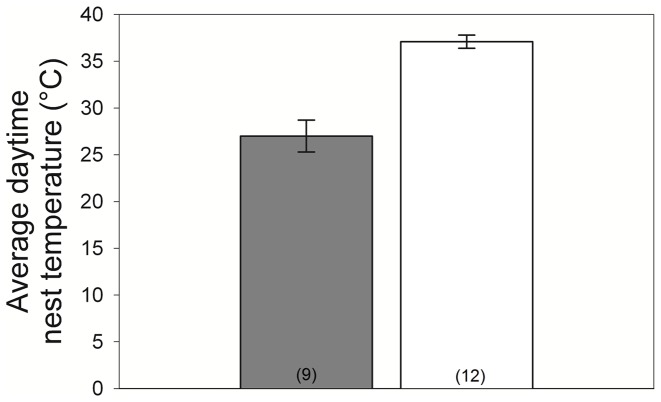
Research on male animals suggests that the hormone testosterone plays a central role in mediating the trade-off between mating effort and parental effort. However, the direct links between testosterone, intrasexual aggression and parental care are remarkably mixed across species. Previous attempts to reconcile these patterns suggest that selection favors behavioral insensitivity to testosterone when paternal care is essential to reproductive success and when breeding seasons are especially short. Females also secrete testosterone, though the degree to which similar testosterone-mediated trade-offs occur in females is much less clear. Here, I ask whether testosterone mediates trade-offs between aggression and incubation in females, and whether patterns of female sensitivity to testosterone relate to female life history, as is often the case in males. I experimentally elevated testosterone in free-living, incubating female tree swallows (Tachycineta bicolor), a songbird with a short breeding season during which female incubation and intrasexual aggression are both essential to female reproductive success. Testosterone-treated females showed significantly elevated aggression, reduced incubation temperatures, and reduced hatching success, relative to controls. Thus, prolonged testosterone elevation during incubation was detrimental to reproductive success, but females nonetheless showed behavioral sensitivity to testosterone. These findings suggest that the relative importance of both mating effort and parental effort may be central to understanding patterns of behavioral sensitivity in both sexes.
对雄性动物的研究表明,激素睾酮在调节交配努力和亲代努力之间的权衡中起着核心作用。然而,睾酮、同性内攻击和亲代照料之间的直接联系在物种间差异显著。先前试图调和这些模式的尝试表明,当父代照顾对繁殖成功至关重要且繁殖季节特别短时,选择有利于对睾酮的行为不敏感。雌性也会分泌睾酮,尽管类似的睾酮介导的权衡在雌性中发生的程度要小得多。在这里,我想知道睾酮是否在雌性的攻击性和孵化之间进行权衡,以及雌性对睾酮的敏感性模式是否与雌性的生活史有关,就像在雄性中那样。我在自由生活、孵化的树燕(Tachycineta bicolor)中实验性地提高了睾酮水平,树燕是一种繁殖季节较短的鸣禽,在繁殖季节,雌性的孵化和同性内攻击对雌性的繁殖成功都是必不可少的。与对照组相比,接受睾酮处理的雌性表现出明显更高的攻击性、更低的孵化温度和更低的孵化成功率。因此,孵化期间睾酮的持续升高对繁殖成功是有害的,但雌性仍然对睾酮表现出行为敏感性。这些发现表明,交配努力和亲代努力的相对重要性可能是理解两性行为敏感性模式的核心。