Laboratory of Bioassays and Signal Transduction, Department of Biochemistry, Institute of Biology, University of Campinas, Campinas, São Paulo, Brazil.
PLoS One. 2013;8(1):e54269. doi: 10.1371/journal.pone.0054269. Epub 2013 Jan 16.
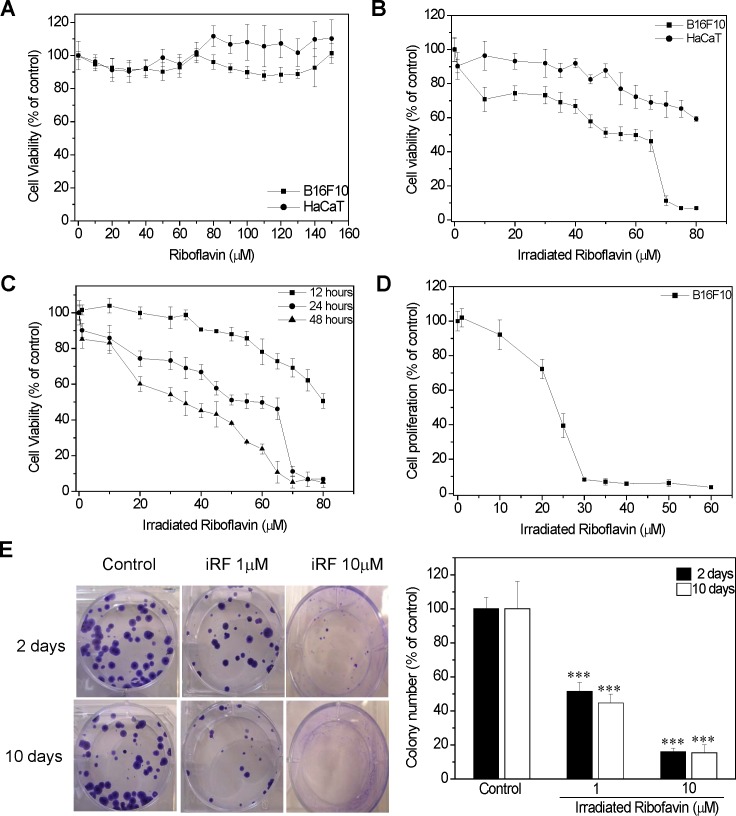
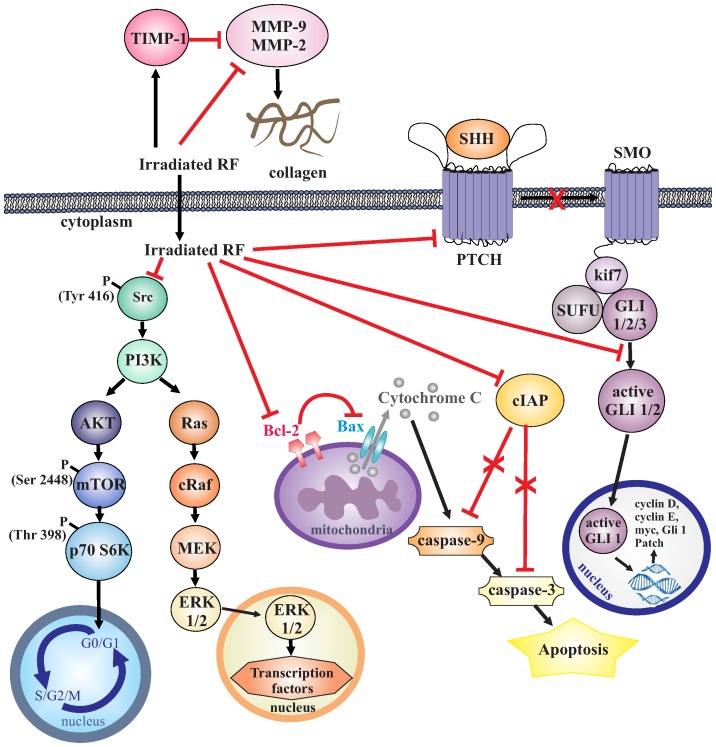
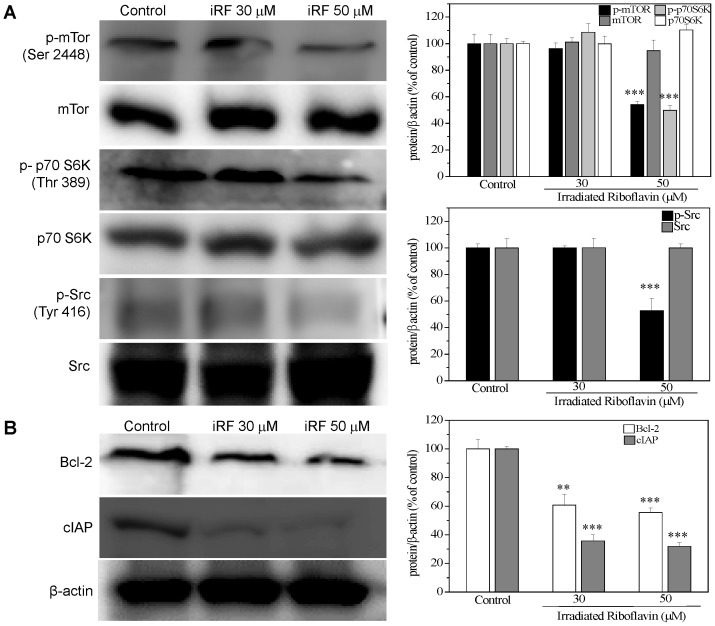
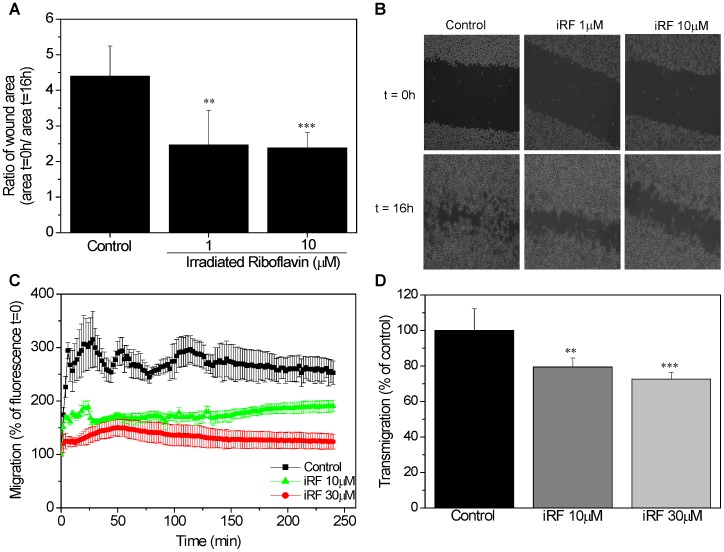
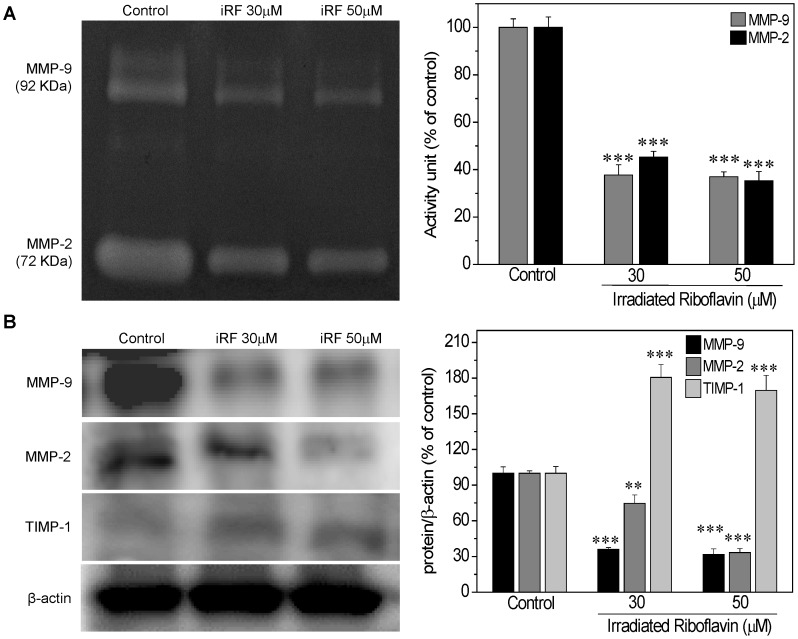
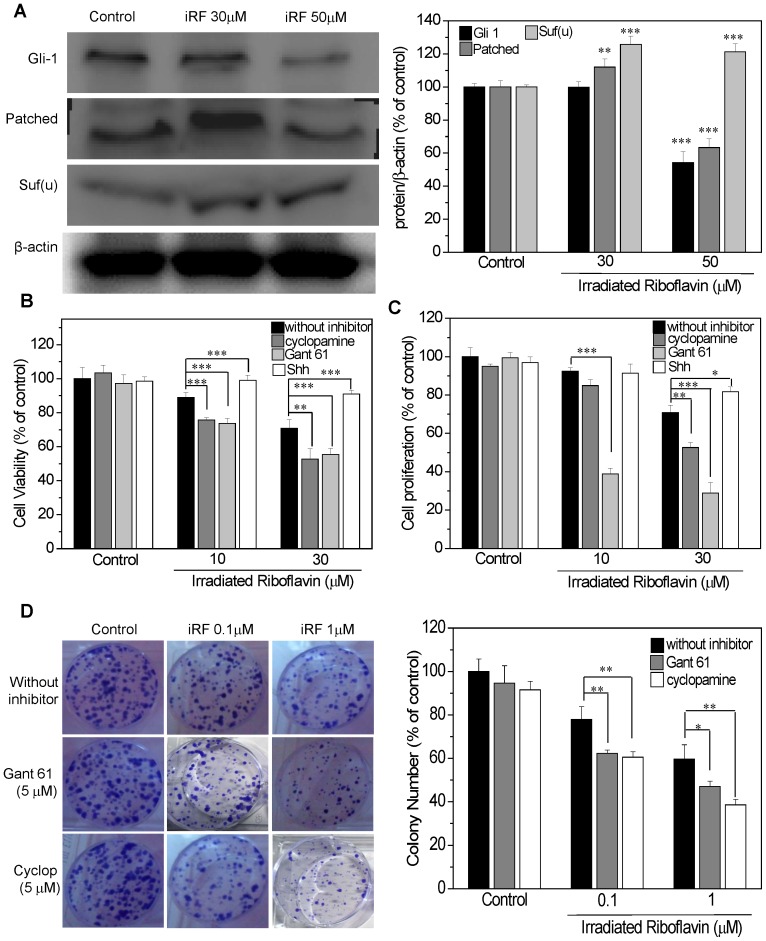
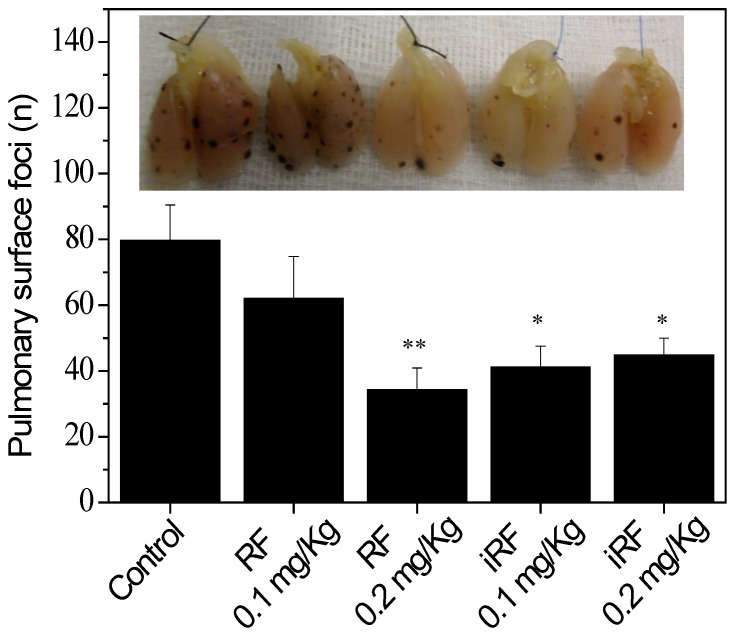
Melanoma is one of the most aggressive skin cancers due to its high capacity to metastasize. Treatment of metastatic melanomas is challenging for clinicians, as most therapeutic agents have failed to demonstrate improved survival. Thus, new candidates with antimetastatic activity are much needed. Riboavin (RF) is a component of the vitamin B complex and a potent photosensitizer. Previously, our group showed that the RF photoproducts (iRF) have potential as an antitumoral agent. Hence, we investigated the capacity of iRF on modulating melanoma B16F10 cells aggressiveness in vitro and in vivo. iRF decreases B16F10 cells survival by inhibiting mTOR as well as Src kinase. Moreover, melanoma cell migration was disrupted after treatment with iRF, mainly by inhibition of metalloproteinase (MMP) activity and expression, and by increasing TIMP expression. Interestingly, we observed that the Hedgehog (HH) pathway was inhibited by iRF. Two mediators of HH signaling, GLI1 and PTCH, were downregulated, while SUFU expression (an inhibitor of this cascade) was enhanced. Furthermore, inhibition of HH pathway signaling by cyclopamine and Gant 61 potentiated the antiproliferative action of RF. Accordingly, when a HH ligand was applied, the effect of iRF was almost completely abrogated. Our findings indicate that Hedgehog pathway is involved on the modulation of melanoma cell aggressiveness by iRF. Moreover, iRF treatment decreased pulmonary tumor formation in a murine experimental metastasis model. Research to clarify the molecular action of flavins, in vivo, is currently in progress. Taken together, the present data provides evidence that riboflavin photoproducts may provide potential candidates for improving the efficiency of melanoma treatment.
黑色素瘤是最具侵袭性的皮肤癌之一,因其高转移能力而得名。转移性黑色素瘤的治疗对临床医生来说是一个挑战,因为大多数治疗药物都未能证明能提高生存率。因此,急需具有抗转移活性的新候选药物。核黄素(RF)是维生素 B 复合物的组成部分,也是一种有效的光敏剂。以前,我们的研究小组表明,RF 的光产物(iRF)具有作为抗肿瘤剂的潜力。因此,我们研究了 iRF 对体外和体内调节黑色素瘤 B16F10 细胞侵袭性的能力。iRF 通过抑制 mTOR 和 Src 激酶来降低 B16F10 细胞的存活率。此外,iRF 处理后黑色素瘤细胞迁移被破坏,主要通过抑制金属蛋白酶(MMP)活性和表达,并通过增加 TIMP 表达。有趣的是,我们观察到 iRF 抑制了 Hedgehog(HH)途径。HH 信号通路的两个介质,GLI1 和 PTCH,下调,而 SUFU 表达(该级联的抑制剂)上调。此外,用环巴胺和 Gant 61 抑制 HH 通路信号增强了 RF 的抗增殖作用。因此,当应用 HH 配体时,iRF 的作用几乎完全被消除。我们的研究结果表明,HH 途径参与了 iRF 对黑色素瘤细胞侵袭性的调节。此外,iRF 治疗可减少小鼠实验性转移模型中的肺肿瘤形成。目前正在研究体内黄素的分子作用。综上所述,这些数据表明核黄素光产物可能为提高黑色素瘤治疗效果提供潜在的候选药物。