Department of Molecular and Forensic Genetics, Bydgoszcz, Institute of Forensic Medicine, Ludwik Rydygier Collegium Medicum, Nicolaus Copernicus University, Bydgoszcz, Poland.
PLoS One. 2013;8(1):e54360. doi: 10.1371/journal.pone.0054360. Epub 2013 Jan 14.
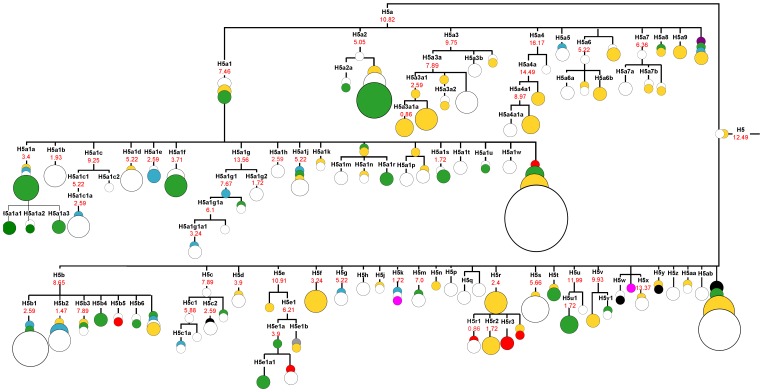
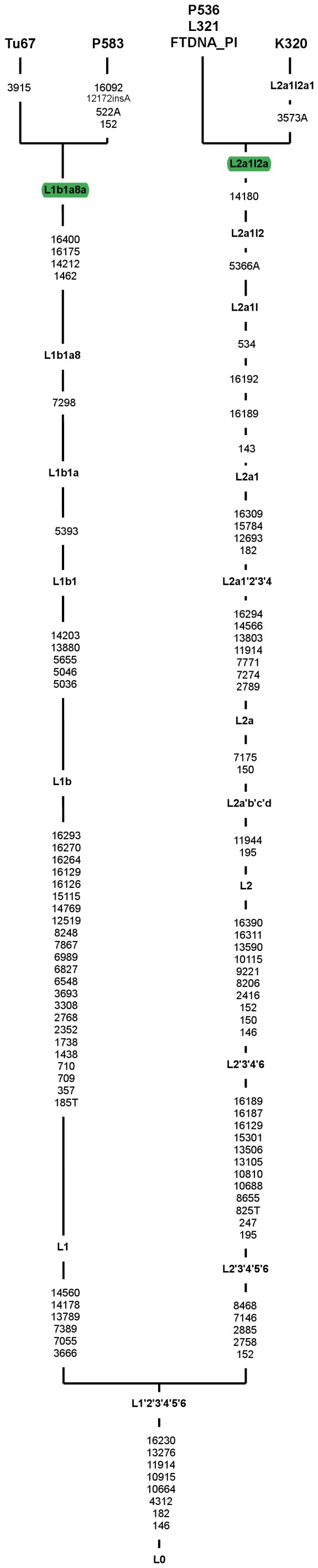
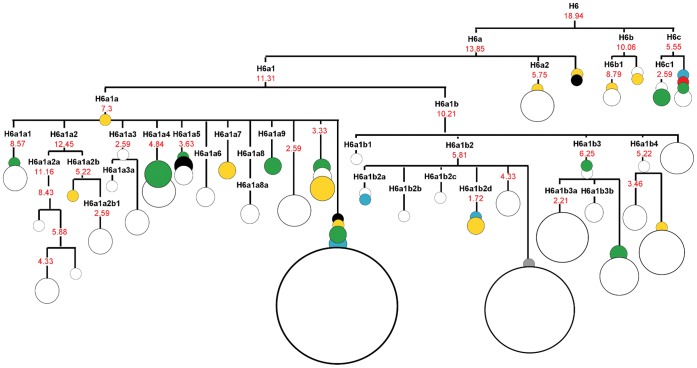
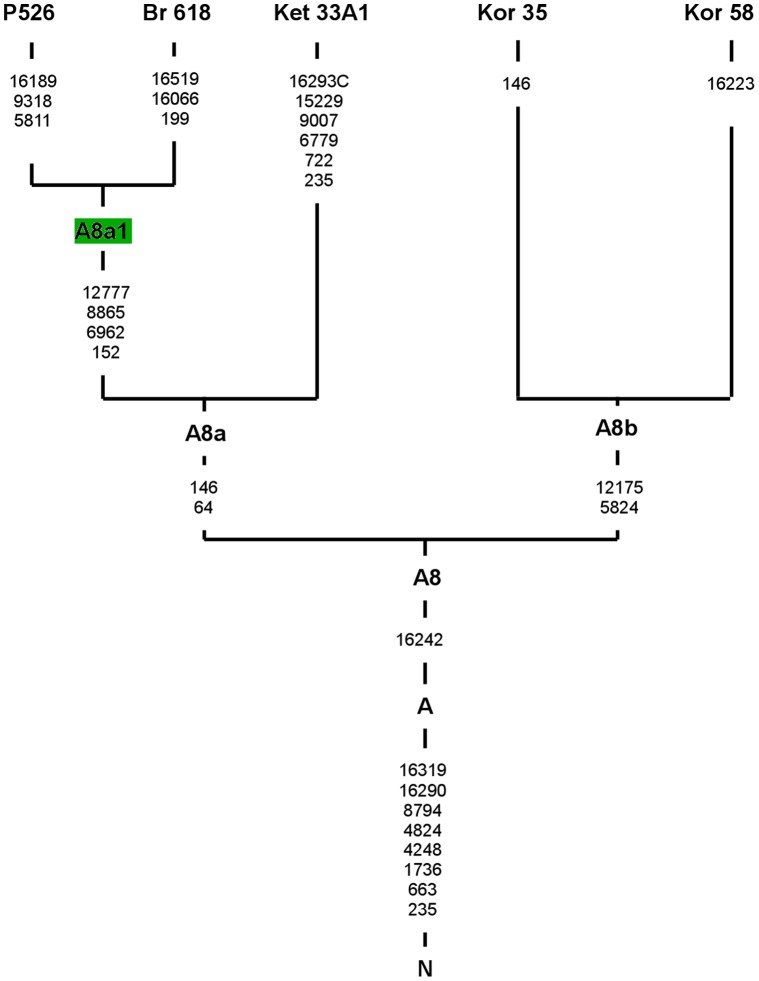
To shed more light on the processes leading to crystallization of a Slavic identity, we investigated variability of complete mitochondrial genomes belonging to haplogroups H5 and H6 (63 mtDNA genomes) from the populations of Eastern and Western Slavs, including new samples of Poles, Ukrainians and Czechs presented here. Molecular dating implies formation of H5 approximately 11.5-16 thousand years ago (kya) in the areas of southern Europe. Within ancient haplogroup H6, dated at around 15-28 kya, there is a subhaplogroup H6c, which probably survived the last glaciation in Europe and has undergone expansion only 3-4 kya, together with the ancestors of some European groups, including the Slavs, because H6c has been detected in Czechs, Poles and Slovaks. Detailed analysis of complete mtDNAs allowed us to identify a number of lineages that seem specific for Central and Eastern Europe (H5a1f, H5a2, H5a1r, H5a1s, H5b4, H5e1a, H5u1, some subbranches of H5a1a and H6a1a9). Some of them could possibly be traced back to at least ∼4 kya, which indicates that some of the ancestors of today's Slavs (Poles, Czechs, Slovaks, Ukrainians and Russians) inhabited areas of Central and Eastern Europe much earlier than it was estimated on the basis of archaeological and historical data. We also sequenced entire mitochondrial genomes of several non-European lineages (A, C, D, G, L) found in contemporary populations of Poland and Ukraine. The analysis of these haplogroups confirms the presence of Siberian (C5c1, A8a1) and Ashkenazi-specific (L2a1l2a) mtDNA lineages in Slavic populations. Moreover, we were able to pinpoint some lineages which could possibly reflect the relatively recent contacts of Slavs with nomadic Altaic peoples (C4a1a, G2a, D5a2a1a1).
为了更深入地了解斯拉夫民族认同形成的过程,我们研究了属于 H5 和 H6 单倍群(共 63 个线粒体基因组)的东欧和西斯拉夫人群的完整线粒体基因组的变异性,其中包括本文中呈现的波兰人、乌克兰人和捷克人的新样本。分子钟推断 H5 大约在 11500-16000 年前在南欧地区形成。在古老的 H6 单倍群中,H6c 大约在 15-28 千年前形成,可能在欧洲末次冰期幸存下来,并且仅在 3-4 千年前与一些欧洲群体(包括斯拉夫人)的祖先一起扩张,因为 H6c 已经在捷克人、波兰人和斯洛伐克人中被检测到。对完整 mtDNA 的详细分析使我们能够识别出一些似乎是中欧和东欧特有的谱系(H5a1f、H5a2、H5a1r、H5a1s、H5b4、H5e1a、H5u1、H5a1a 和 H6a1a9 的一些分支)。其中一些可能至少可以追溯到 4000 年前,这表明今天的斯拉夫人(波兰人、捷克人、斯洛伐克人、乌克兰人和俄罗斯人)的一些祖先在中欧和东欧的居住时间比根据考古学和历史学数据估计的要早得多。我们还对在波兰和乌克兰当代人群中发现的几个非欧洲谱系(A、C、D、G、L)的整个线粒体基因组进行了测序。这些单倍群的分析证实了西伯利亚(C5c1、A8a1)和阿什肯纳兹特定(L2a1l2a)的 mtDNA 谱系存在于斯拉夫人群中。此外,我们还能够确定一些可能反映斯拉夫人与游牧阿尔泰民族最近接触的谱系(C4a1a、G2a、D5a2a1a1)。