Walter Reed Project, Kenya Medical Research Institute, Kisumu, Kenya.
Malar J. 2013 Jan 23;12:29. doi: 10.1186/1475-2875-12-29.
The development of an asexual blood stage vaccine against Plasmodium falciparum malaria based on the major merozoite surface protein-1 (MSP1) antigen is founded on the protective efficacy observed in preclinical studies and induction of invasion and growth inhibitory antibody responses. The 42 kDa C-terminus of MSP1 has been developed as the recombinant protein vaccine antigen, and the 3D7 allotype, formulated with the Adjuvant System AS02A, has been evaluated extensively in human clinical trials. In preclinical rabbit studies, the FVO allele of MSP142 has been shown to have improved immunogenicity over the 3D7 allele, in terms of antibody titres as well as growth inhibitory activity of antibodies against both the heterologous 3D7 and homologous FVO parasites.
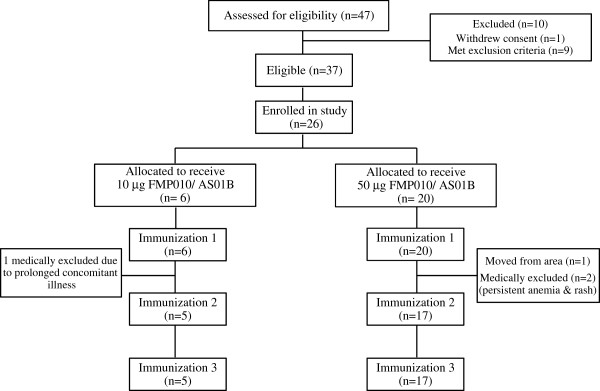
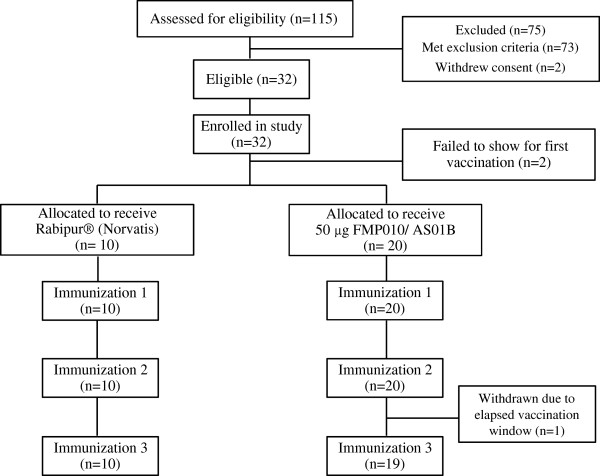
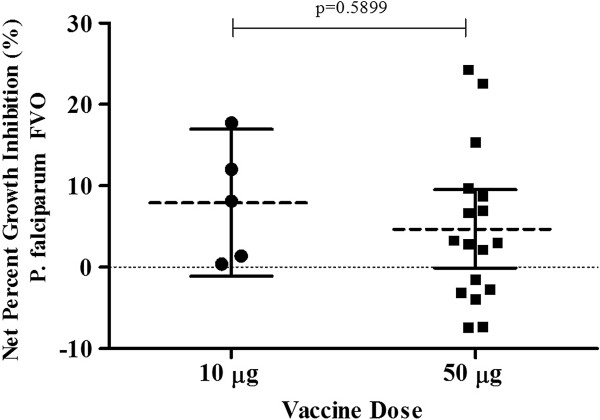
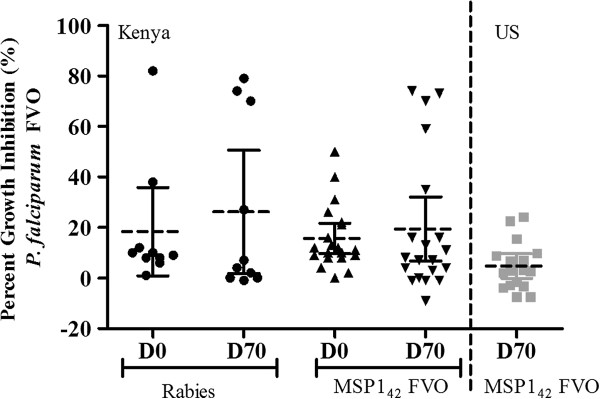
Two Phase 1 clinical studies were conducted to examine the safety, reactogenicity and immunogenicity of the FVO allele of MSP142 in the adjuvant system AS01 administered intramuscularly at 0-, 1-, and 2-months: one in the USA and, after evaluation of safety data results, one in Western Kenya. The US study was an open-label, dose escalation study of 10 and 50 μg doses of MSP142 in 26 adults, while the Kenya study, evaluating 30 volunteers, was a double-blind, randomized study of only the 50 μg dose with a rabies vaccine comparator.
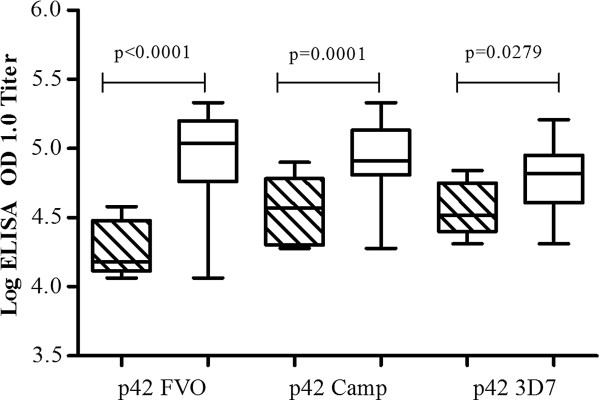
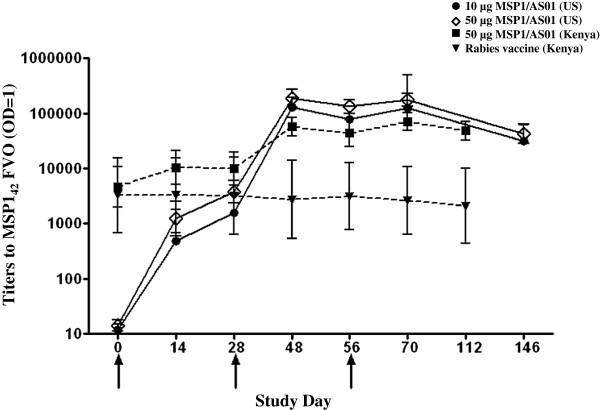
In these studies it was demonstrated that this vaccine formulation has an acceptable safety profile and is immunogenic in malaria-naïve and malaria-experienced populations. High titres of anti-MSP1 antibodies were induced in both study populations, although there was a limited number of volunteers whose serum demonstrated significant inhibition of blood-stage parasites as measured by growth inhibition assay. In the US volunteers, the antibodies generated exhibited better cross-reactivity to heterologous MSP1 alleles than a MSP1-based vaccine (3D7 allele) previously tested at both study sites.
Given that the primary effector mechanism for blood stage vaccine targets is humoral, the antibody responses demonstrated to this vaccine candidate, both quantitative (total antibody titres) and qualitative (functional antibodies inhibiting parasite growth) warrant further consideration of its application in endemic settings.
Clinical Trials NCT00666380.
基于主要裂殖子表面蛋白-1(MSP1)抗原开发的无性生活阶段疟原虫恶性疟疫苗是基于临床前研究中观察到的保护效力和诱导入侵和生长抑制抗体反应。MSP1 的 42 kDa C 末端已被开发为重组蛋白疫苗抗原,并且 3D7 同种型与佐剂系统 AS02A 联合使用,已在人体临床试验中进行了广泛评估。在临床前兔研究中,与 3D7 等位基因相比,MSP142 的 FVO 等位基因在抗体滴度以及对异源 3D7 和同源 FVO 寄生虫的抗体生长抑制活性方面显示出更好的免疫原性。
进行了两项 1 期临床试验,以研究佐剂系统 AS01 中 MSP142 的 FVO 等位基因的安全性、反应原性和免疫原性,分别在 0、1 和 2 个月时进行肌内注射:一项在美国进行,在评估安全性数据结果后,在肯尼亚进行了一项研究。美国的研究是一项开放标签、剂量递增研究,研究了 26 名成年人中 10 和 50 μg 剂量的 MSP142,而肯尼亚的研究,评估了 30 名志愿者,是一项仅使用 50 μg 剂量的双盲、随机狂犬病疫苗比较研究。
在这些研究中,证明了这种疫苗配方具有可接受的安全性,并在疟原虫初治和疟原虫经验丰富的人群中具有免疫原性。在两个研究人群中都诱导了高水平的抗 MSP1 抗体,尽管有少数志愿者的血清显示出通过生长抑制测定法测量的对血期寄生虫的显著抑制。在美国志愿者中,与在两个研究地点之前测试的基于 MSP1 的疫苗(3D7 等位基因)相比,产生的抗体表现出对异源 MSP1 等位基因更好的交叉反应性。
鉴于针对血期疫苗靶标的主要效应机制是体液,因此对这种疫苗候选物的抗体反应,无论是定量(总抗体滴度)还是定性(抑制寄生虫生长的功能抗体),都值得进一步考虑将其应用于流行地区。
NCT00666380。