Schneider Cosette G, Taylor Justin A, Sibilo Michael Q, Miura Kazutoyo, Mallory Katherine L, Mann Christopher, Karch Christopher, Beck Zoltan, Matyas Gary R, Long Carole A, Bergmann-Leitner Elke, Burkhard Peter, Angov Evelina
Malaria Biologics Branch, Walter Reed Army Institute of Research, Silver Spring, MD 20910, USA.
Oak Ridge Institute for Science and Education, Oak Ridge, TN 37831, USA.
Vaccines (Basel). 2021 Jan 29;9(2):103. doi: 10.3390/vaccines9020103.
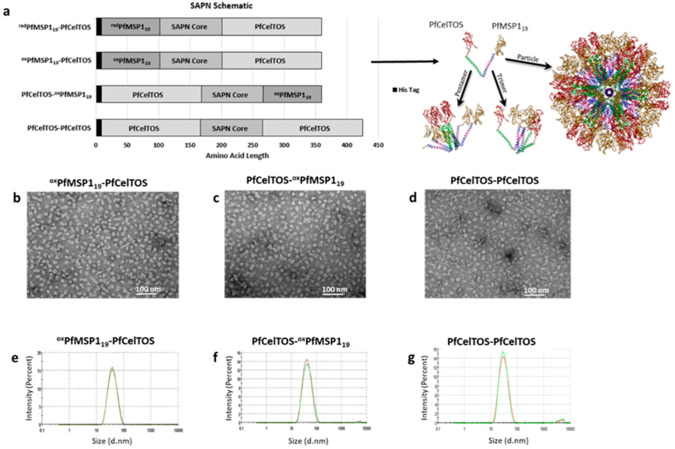
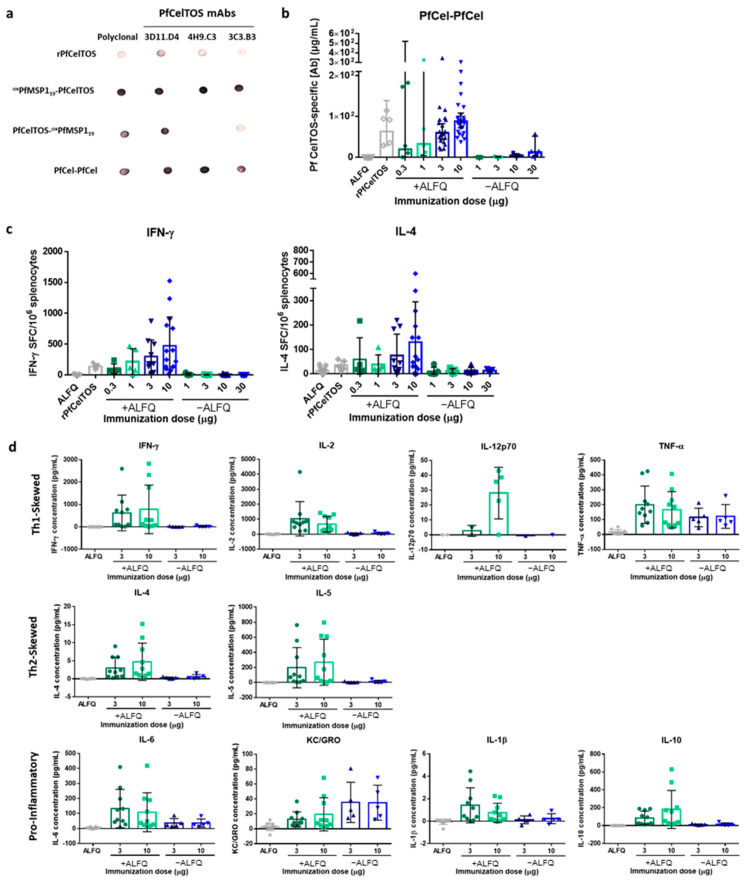
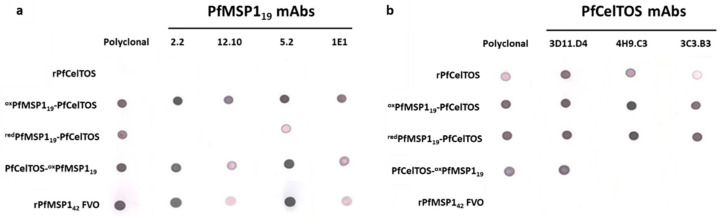
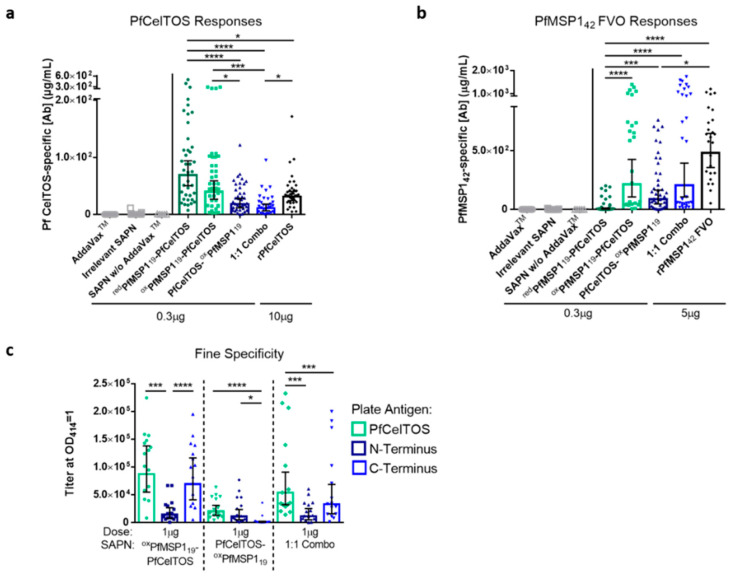
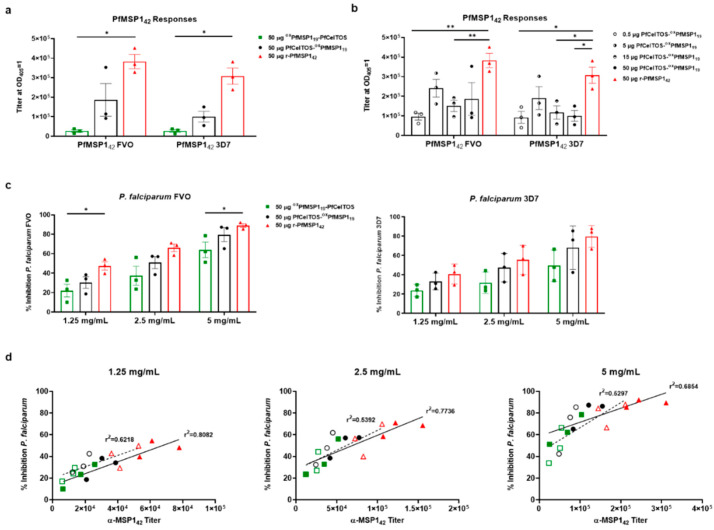
Self-assembling protein nanoparticles (SAPN) serve as a repetitive antigen delivery platform with high-density epitope display; however, antigen characteristics such as size and epitope presentation can influence the immunogenicity of the assembled particle and are aspects to consider for a rationally designed effective vaccine. Here, we characterize the folding and immunogenicity of heterogeneous antigen display by integrating (a) dual-stage antigen SAPN presenting the () merozoite surface protein 1 subunit, PfMSP1, and cell-traversal protein for ookinetes and sporozoites, PfCelTOS, in addition to (b) a homogenous antigen SAPN displaying two copies of PfCelTOS. Mice and rabbits were utilized to evaluate antigen-specific humoral and cellular induction as well as functional antibodies via growth inhibition of the blood-stage parasite. We demonstrate that antigen orientation and folding influence the elicited immune response, and when appropriately designed, SAPN can serve as an adaptable platform for an effective multi-antigen display.
自组装蛋白纳米颗粒(SAPN)作为一种具有高密度表位展示的重复性抗原递送平台;然而,诸如大小和表位呈现等抗原特性会影响组装颗粒的免疫原性,并且是合理设计有效疫苗时需要考虑的方面。在此,我们通过整合(a)双阶段抗原SAPN来表征异质抗原展示的折叠和免疫原性,该双阶段抗原SAPN除了呈现()裂殖子表面蛋白1亚基PfMSP1和动合子与子孢子的细胞穿越蛋白PfCelTOS外,还(b)展示两个PfCelTOS拷贝的同质抗原SAPN。利用小鼠和兔子通过血液阶段寄生虫的生长抑制来评估抗原特异性体液和细胞诱导以及功能性抗体。我们证明抗原取向和折叠会影响引发的免疫反应,并且经过适当设计后,SAPN可以作为有效多抗原展示的适应性平台。