Laboratory of Psychophysics, Brain Mind Institute, École Polytechnique, Fédérale de Lausanne, Lausanne EPFL, Switzerland.
PLoS One. 2013;8(1):e46525. doi: 10.1371/journal.pone.0046525. Epub 2013 Jan 21.
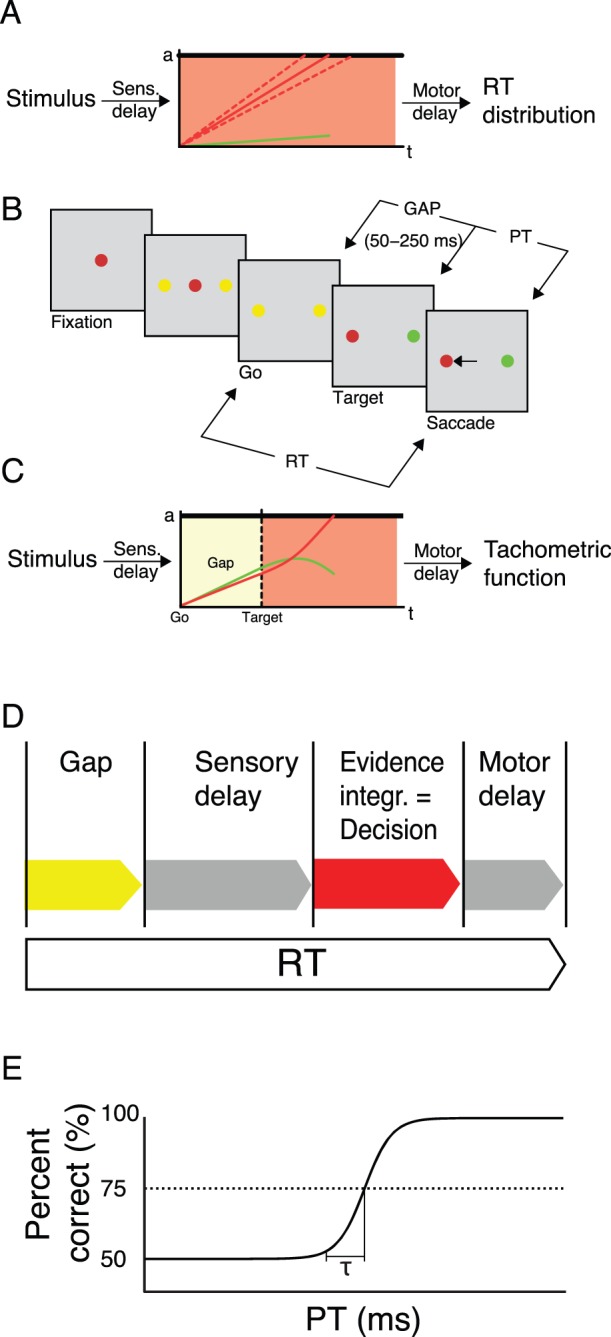
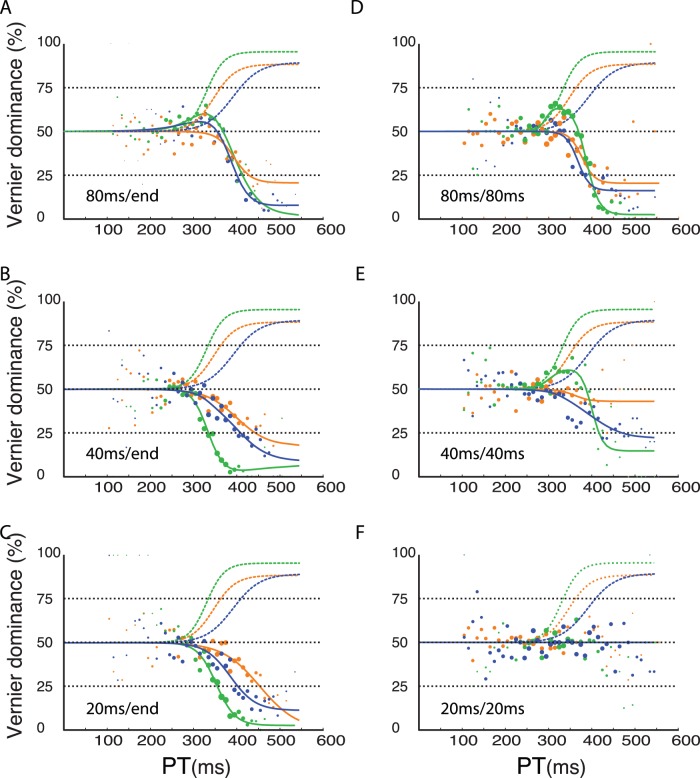
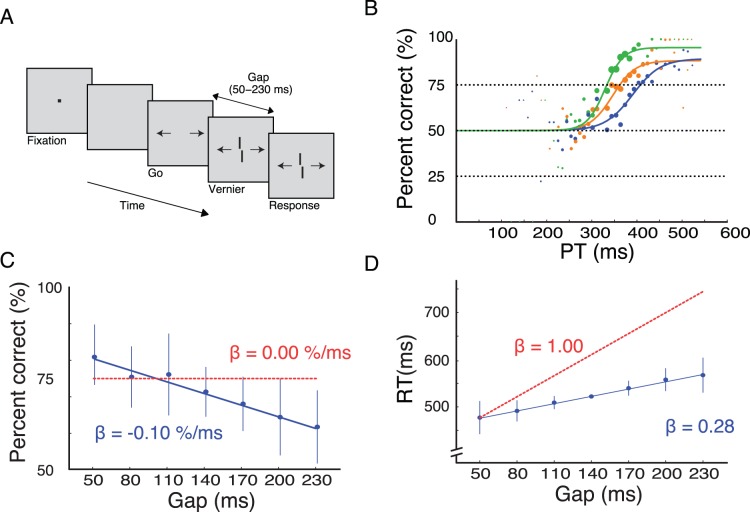
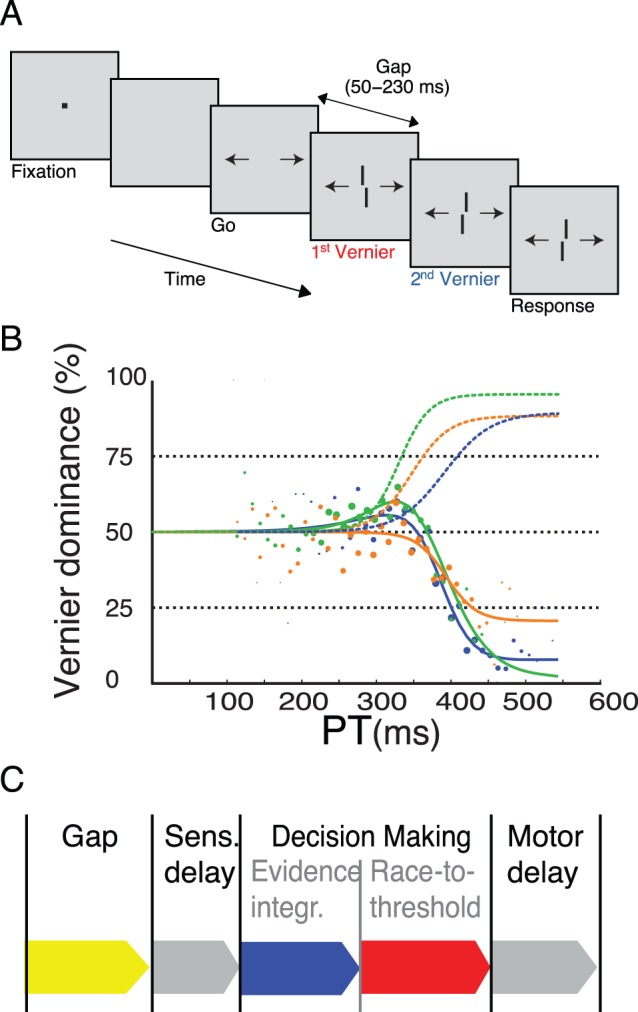
In a typical experiment on decision making, one out of two possible stimuli is displayed and observers decide which one was presented. Recently, Stanford and colleagues (2010) introduced a new variant of this classical one-stimulus presentation paradigm to investigate the speed of decision making. They found evidence for "perceptual decision making in less than 30 ms". Here, we extended this one-stimulus compelled-response paradigm to a two-stimulus compelled-response paradigm in which a vernier was followed immediately by a second vernier with opposite offset direction. The two verniers and their offsets fuse. Only one vernier is perceived. When observers are asked to indicate the offset direction of the fused vernier, the offset of the second vernier dominates perception. Even for long vernier durations, the second vernier dominates decisions indicating that decision making can take substantial time. In accordance with previous studies, we suggest that our results are best explained with a two-stage model of decision making where a leaky evidence integration stage precedes a race-to-threshold process.
在一个典型的决策实验中,会显示两个可能的刺激之一,然后观察者决定哪个被呈现。最近,斯坦福大学的同事们(2010 年)引入了这种经典的单刺激呈现范式的一种新变体,以研究决策的速度。他们发现了“不到 30 毫秒的知觉决策”的证据。在这里,我们将这种单刺激强制反应范式扩展到了双刺激强制反应范式,其中一个游标紧接着第二个具有相反偏移方向的游标。这两个游标及其偏移量融合在一起。只有一个游标被感知到。当观察者被要求指示融合游标偏移方向时,第二个游标偏移量主导感知。即使游标持续时间很长,第二个游标也主导决策,表明决策可能需要大量时间。根据之前的研究,我们建议我们的结果最好用决策的两阶段模型来解释,其中一个是证据整合阶段泄漏,然后是竞争到阈值过程。