University of Tasmania, Hobart, Australia.
PLoS One. 2013;8(1):e53805. doi: 10.1371/journal.pone.0053805. Epub 2013 Jan 18.
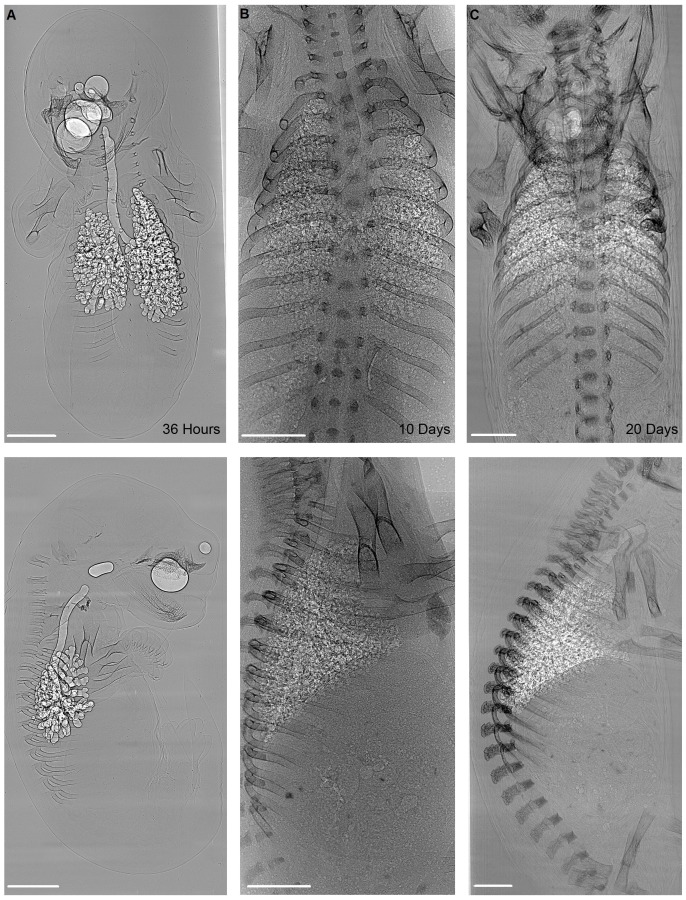
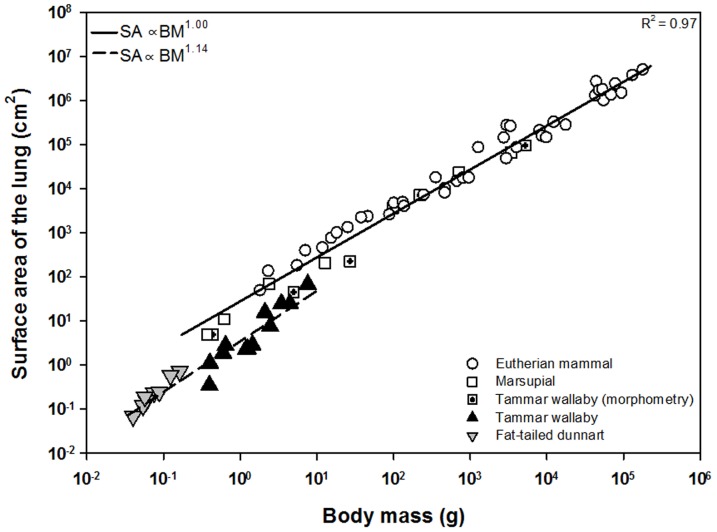
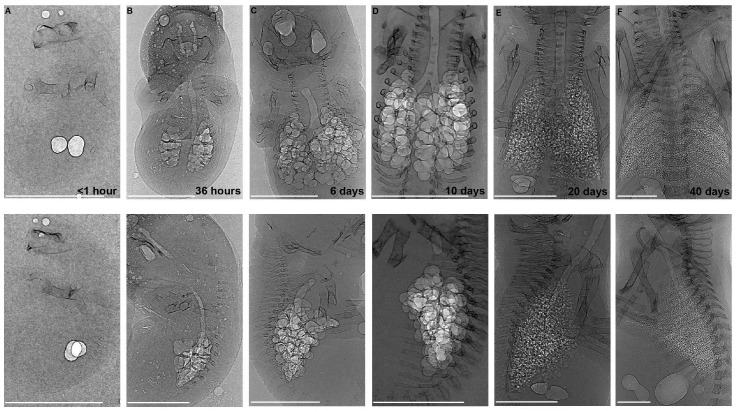
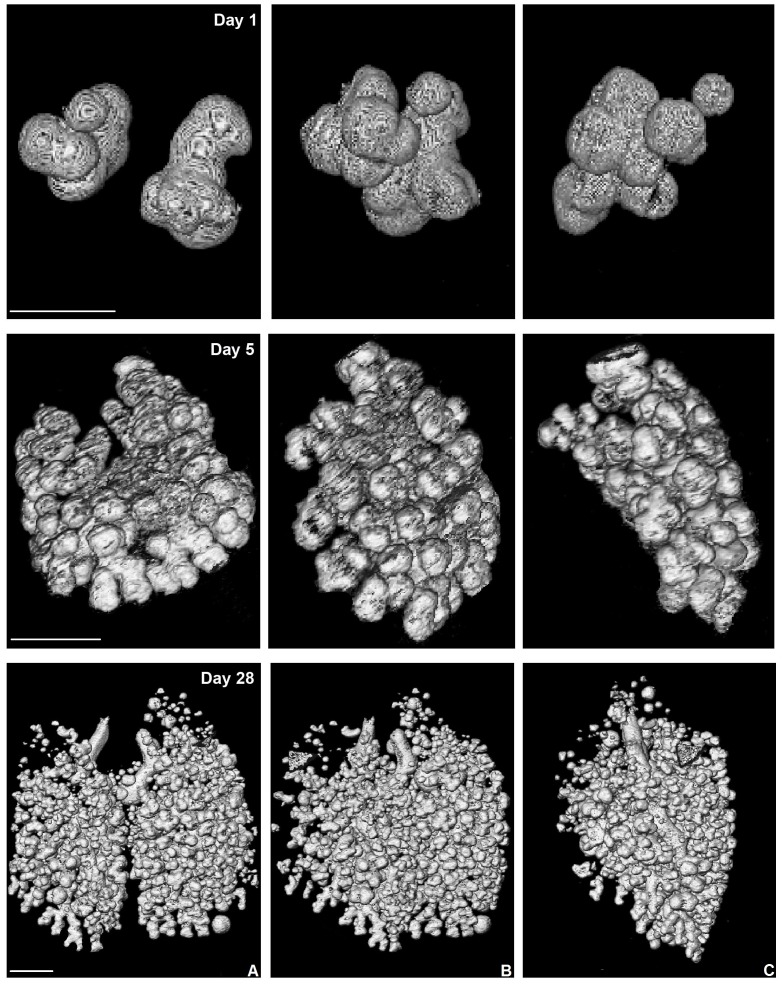
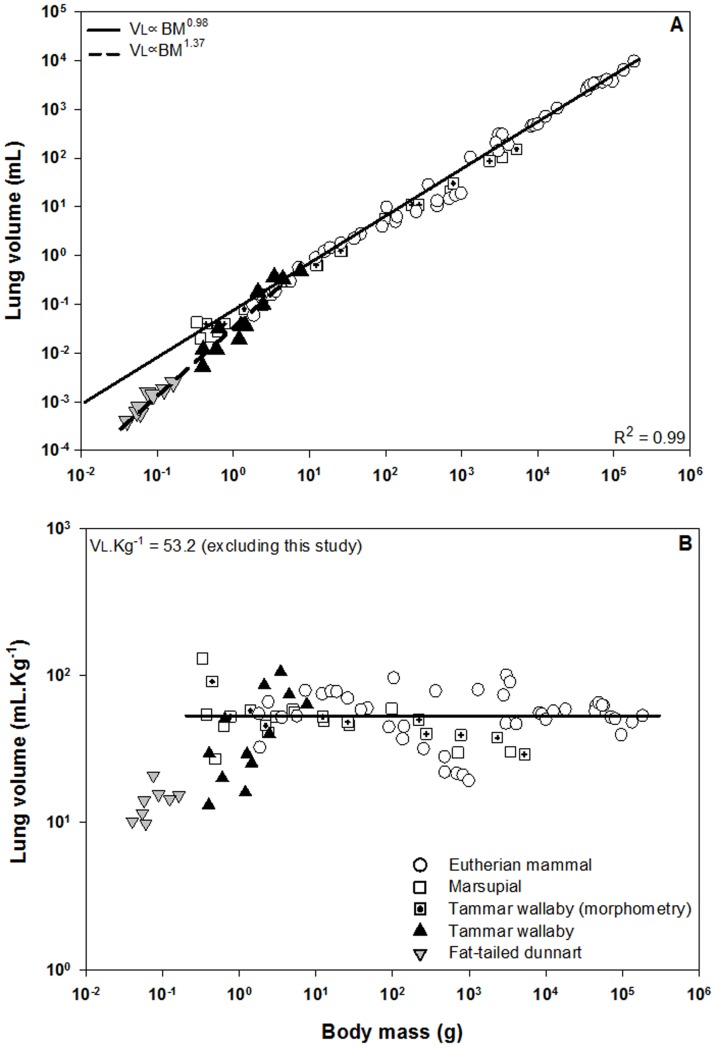
Marsupials are born with immature lungs when compared to eutherian mammals and rely, to various extents, on cutaneous gas exchange in order to meet metabolic requirements. Indeed, the fat-tailed dunnart is born with lungs in the canalicular stage of development and relies almost entirely on the skin for gas exchange at birth; consequently undergoing the majority of lung development in air. Plane radiographs and computed tomography data sets were acquired using phase contrast imaging with a synchrotron radiation source for two marsupial species, the fat-tailed dunnart and the larger tammar wallaby, during the first weeks of postnatal life. Phase contrast imaging revealed that only two lung sacs contain air after the first hour of life in the fat-tailed dunnart. While the lung of the tammar wallaby was comparatively more developed, both species demonstrated massive increases in air sac number and architectural complexity during the postnatal period. In addition, both the tammar wallaby and fat-tailed dunnart had lower lung volumes and parenchymal surface areas than were expected from morphometrically determined allometric equations relating these variables to body mass during the neonatal period. However, lung volume is predicted to scale with mass as expected after the neonatal marsupial reaches a body mass of ∼1 g and no longer relies on the skin for gas exchange. Decreased lung volume in the marsupial neonate further supports the maxim that cutaneous gas exchange occurs in the marsupial neonate because the respiratory apparatus is not yet capable of meeting the gas exchange requirements of the newborn.
与有胎盘哺乳动物相比,有袋类动物出生时肺部尚未发育成熟,在一定程度上依赖皮肤进行气体交换,以满足代谢需求。事实上,胖尾袋狸出生时肺部处于腔室发育阶段,几乎完全依赖皮肤进行气体交换;因此,在空气环境中经历了大部分的肺部发育过程。在出生后的第一周,使用同步辐射源的相位对比成像技术对两种有袋动物,胖尾袋狸和大袋鼠,获取了平面射线照片和计算机断层扫描数据集。相位对比成像显示,胖尾袋狸在出生后的第一个小时内只有两个肺囊中含有空气。尽管大袋鼠的肺部相对更发达,但在出生后的阶段,这两个物种的气囊数量和结构复杂性都有了显著的增加。此外,大袋鼠和胖尾袋狸的肺容量和实质表面积都低于形态学确定的、将这些变量与新生儿期体重相关联的比例方程所预测的水平。然而,在新生儿有袋类动物达到约 1 克的体重并且不再依赖皮肤进行气体交换后,肺容量预计将按照预期的比例与体重成比例增加。在有袋类新生儿中,肺容量的减少进一步支持了这样一个观点,即皮肤气体交换发生在有袋类新生儿中,因为呼吸系统尚未能够满足新生儿的气体交换需求。