Institut Cavanilles de Biodiversitat i Biologia Evolutiva, Universitat de València, València, Spain.
Genome Biol Evol. 2013;5(2):351-61. doi: 10.1093/gbe/evt011.
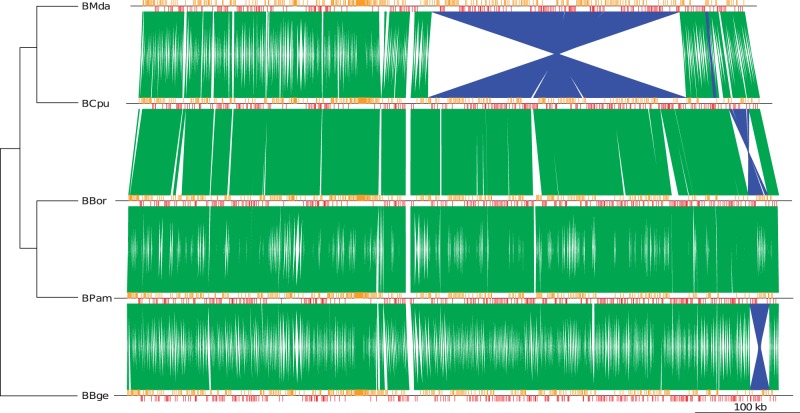
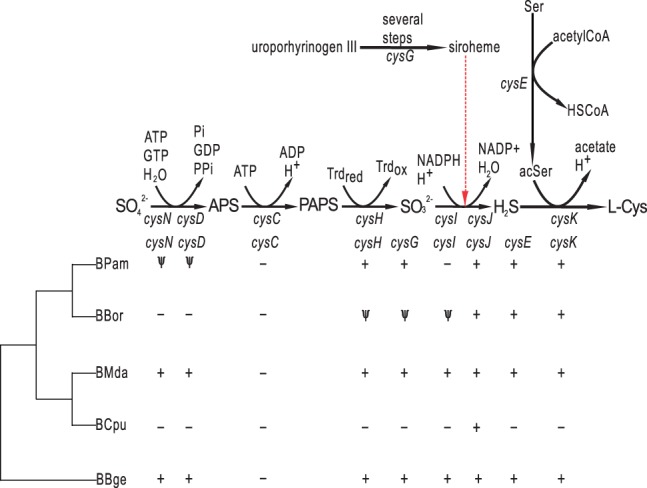
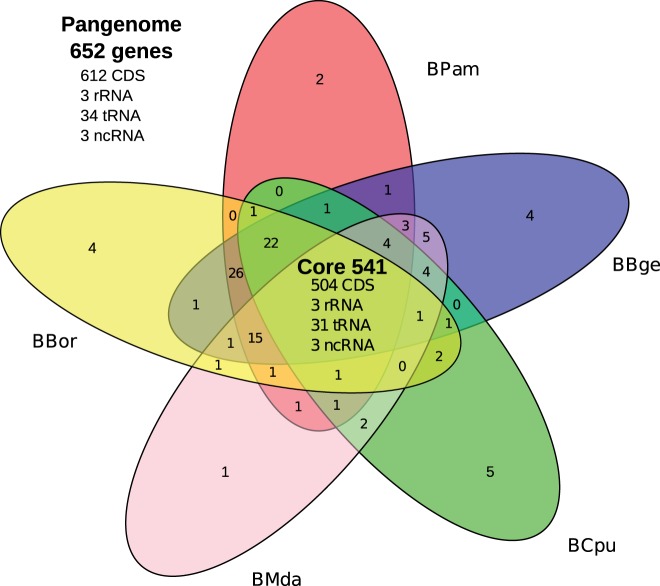
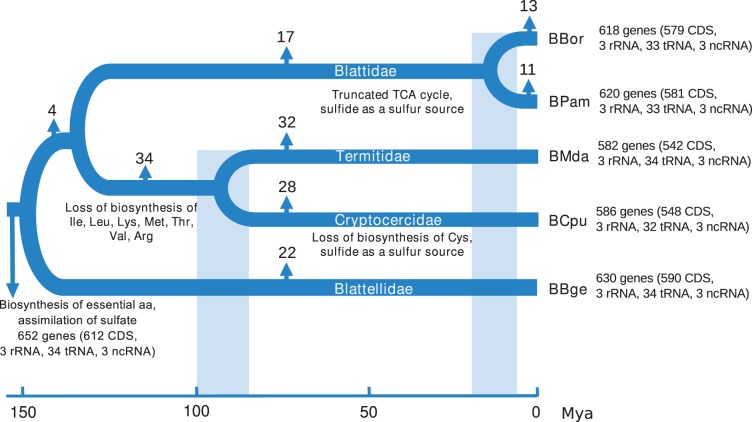
Many insect species have established long-term symbiotic relationships with intracellular bacteria. Symbiosis with bacteria has provided insects with novel ecological capabilities, which have allowed them colonize previously unexplored niches. Despite its importance to the understanding of the emergence of biological complexity, the evolution of symbiotic relationships remains hitherto a mystery in evolutionary biology. In this study, we contribute to the investigation of the evolutionary leaps enabled by mutualistic symbioses by sequencing the genome of Blattabacterium cuenoti, primary endosymbiont of the omnivorous cockroach Blatta orientalis, and one of the most ancient symbiotic associations. We perform comparative analyses between the Blattabacterium cuenoti genome and that of previously sequenced endosymbionts, namely those from the omnivorous hosts the Blattella germanica (Blattelidae) and Periplaneta americana (Blattidae), and the endosymbionts harbored by two wood-feeding hosts, the subsocial cockroach Cryptocercus punctulatus (Cryptocercidae) and the termite Mastotermes darwiniensis (Termitidae). Our study shows a remarkable evolutionary stasis of this symbiotic system throughout the evolutionary history of cockroaches and the deepest branching termite M. darwiniensis, in terms of not only chromosome architecture but also gene content, as revealed by the striking conservation of the Blattabacterium core genome. Importantly, the architecture of central metabolic network inferred from the endosymbiont genomes was established very early in Blattabacterium evolutionary history and could be an outcome of the essential role played by this endosymbiont in the host's nitrogen economy.
许多昆虫物种与细胞内细菌建立了长期的共生关系。与细菌的共生为昆虫提供了新的生态能力,使它们能够占领以前未被探索的小生境。尽管这对于理解生物复杂性的出现至关重要,但共生关系的进化在进化生物学中迄今仍是一个谜。在这项研究中,我们通过测序杂食性蟑螂东方蜚蠊的内共生菌 Blattabacterium cuenoti 的基因组,为共生关系的进化飞跃提供了新的研究视角。这是最古老的共生关系之一。我们对内共生菌 Blattabacterium cuenoti 的基因组进行了比较分析,与之前测序的内共生菌进行了比较,包括杂食性宿主德国小蠊(蜚蠊科)和美洲大蠊(蜚蠊科)的内共生菌,以及两个以木材为食的宿主——穴居蟑螂 Cryptocercus punctulatus(Cryptocercidae)和白蚁 Mastotermes darwiniensis(白蚁科)的内共生菌。我们的研究表明,在蟑螂和最古老的分支白蚁 M. darwiniensis 的进化历史中,这种共生系统在染色体结构和基因含量方面都表现出了显著的进化停滞,这表明 Blattabacterium 核心基因组的惊人保守性。重要的是,从共生体基因组推断出的中心代谢网络的结构在 Blattabacterium 的进化历史中很早就建立了,这可能是这种内共生体在宿主氮素代谢中发挥重要作用的结果。