Department of Forest Biomaterials, North Carolina State University, Box 8005, Raleigh, NC, 27695-8005, USA.
Biotechnol Biofuels. 2013 Jan 28;6(1):13. doi: 10.1186/1754-6834-6-13.
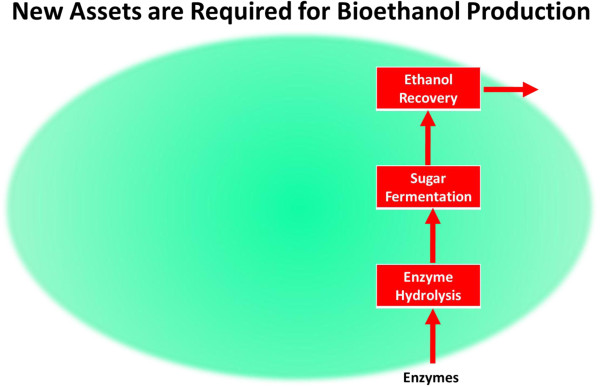
Despite decades of work and billions of dollars of investments in laboratory and pilot plant projects, commercial production of cellulosic ethanol is only now beginning to emerge. Because of: (1)high technical risk coupled with; (2) high capital investment cost relative to ethanol product value, investors have not been able to justify moving forward with large scale projects on woody biomass.
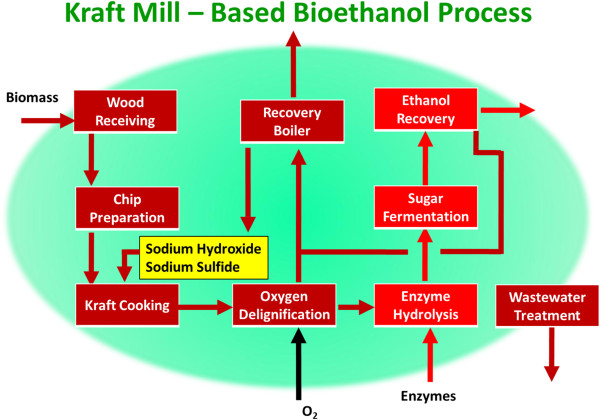
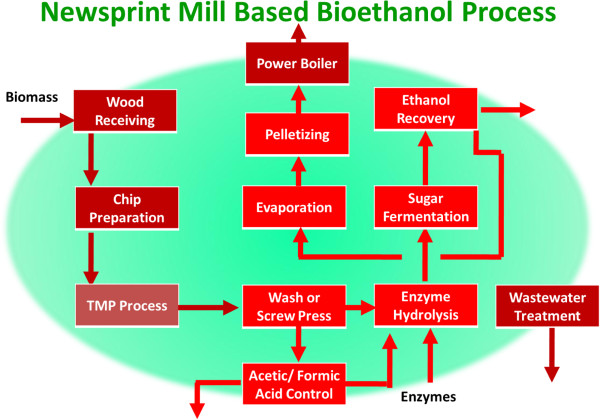
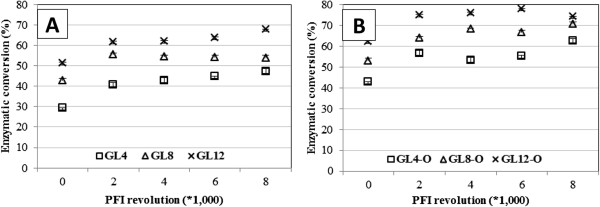
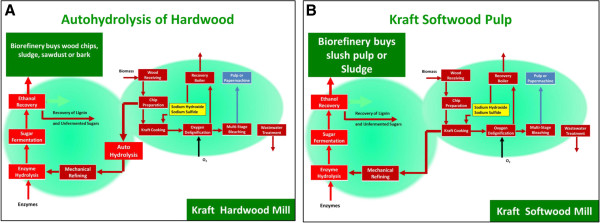
Both issues have been addressed by targeting pulp and paper industry processes for application in bioethanol production, in Greenfield, Repurpose and Co-Location scenarios. Processes commercially proven in hundreds of mills for many decades have been tailored to the recalcitrance of the biomass available. Economically feasible cellulosic bioethanol can be produced in Greenfield application with hardwoods, but not softwoods, using kraft mill equipment. Both types of wood species can profitably produce ethanol when kraft mill or newsprint assets are Repurposed to a biorefinery. A third situation which can generate high financial returns is where excess kraft pulp is available at a mill which has no excess drying capacity. Each scenario is supported by laboratory simulation, engineering and financial analysis. While pretreatment is critical to providing access of the biomass to enzymes, capital investment per unit of ethanol produced can be attractive, even if ethanol yield is modest.
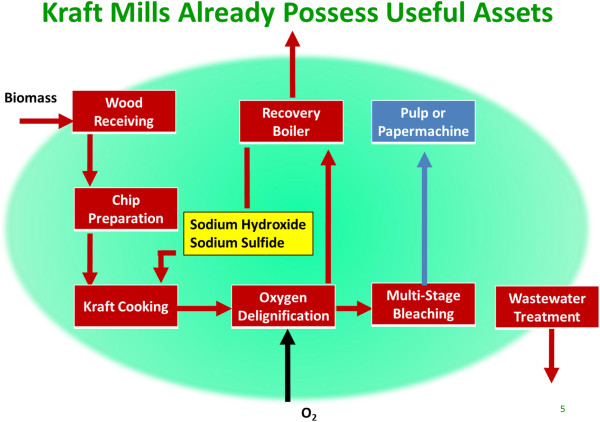
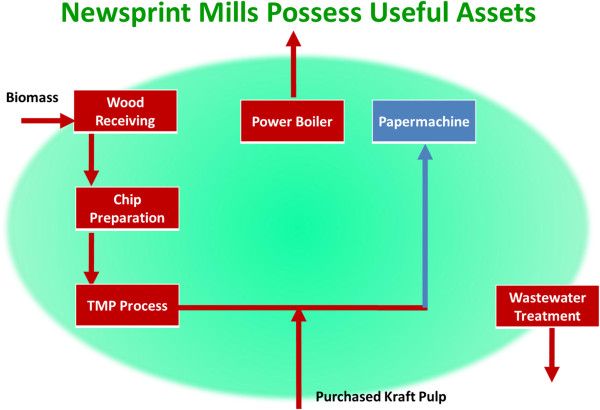
Three guiding principles result in attractive economics: (1) re-use existing assets to the maximum extent; (2) keep the process as simple as possible; (3) match the recalcitrance of the biomass with the severity of the pretreatment.
尽管在实验室和中试工厂项目上投入了数十年的工作和数十亿美元的资金,但纤维素乙醇的商业生产直到现在才开始出现。这是因为:(1)技术风险高,(2)相对于乙醇产品价值的资本投资成本高,投资者无法证明大规模项目在木质生物质方面是合理的。
通过将纸浆和造纸行业的工艺应用于生物乙醇生产,在绿地、再利用和共存情景中,解决了这两个问题。几十年来,在数百家工厂经过商业验证的工艺已经针对可用生物质的抗降解性进行了调整。在绿地应用中,使用硫酸盐浆厂设备可以用硬木生产出经济可行的纤维素生物乙醇,但不能用软木。当硫酸盐浆厂或新闻纸资产被重新用于生物精炼厂时,这两种木材都可以盈利地生产乙醇。在制浆厂有多余硫酸盐浆,但没有多余干燥能力的情况下,第三种情况可以产生高财务回报。每个情景都得到了实验室模拟、工程和财务分析的支持。虽然预处理对于提供生物质对酶的可及性至关重要,但每单位乙醇生产的资本投资可能具有吸引力,即使乙醇产量适中。
三个指导原则产生了有吸引力的经济:(1)最大限度地再利用现有资产;(2)使工艺尽可能简单;(3)将生物质的抗降解性与预处理的严格程度相匹配。