Department of Clinical Microbiology, Clinical Bacteriology and Laboratory for Molecular Infection Medicine Sweden, Umeå University, Umeå SE-901 85, Sweden.
BMC Microbiol. 2013 Jan 29;13:20. doi: 10.1186/1471-2180-13-20.
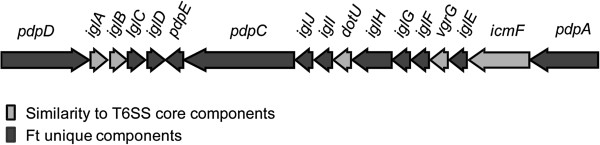
A prerequisite for the virulence of the facultative intracellular bacterium Francisella tularensis is effective intramacrophage proliferation, which is preceded by phagosomal escape into the cytosol, and ultimately leads to host cell death. Many components essential for the intracellular life cycle are encoded by a gene cluster, the Francisella pathogenicity island (FPI), constituting a type VI secretion system.
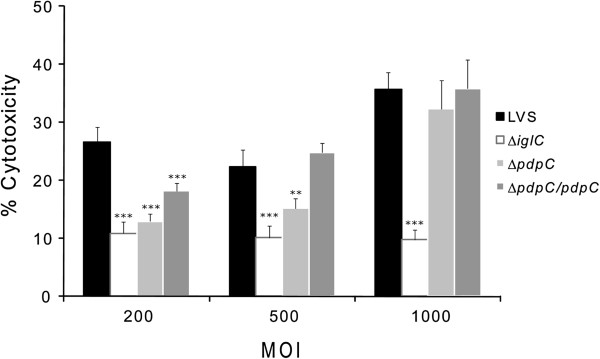
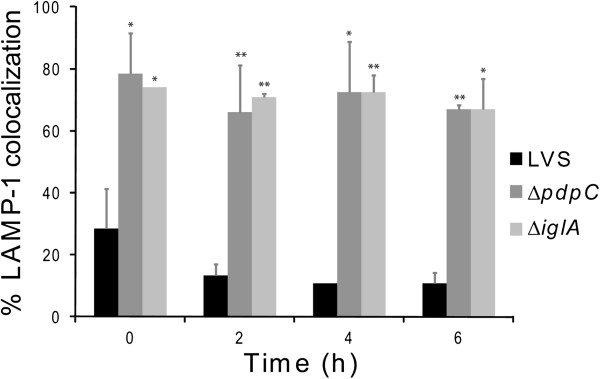
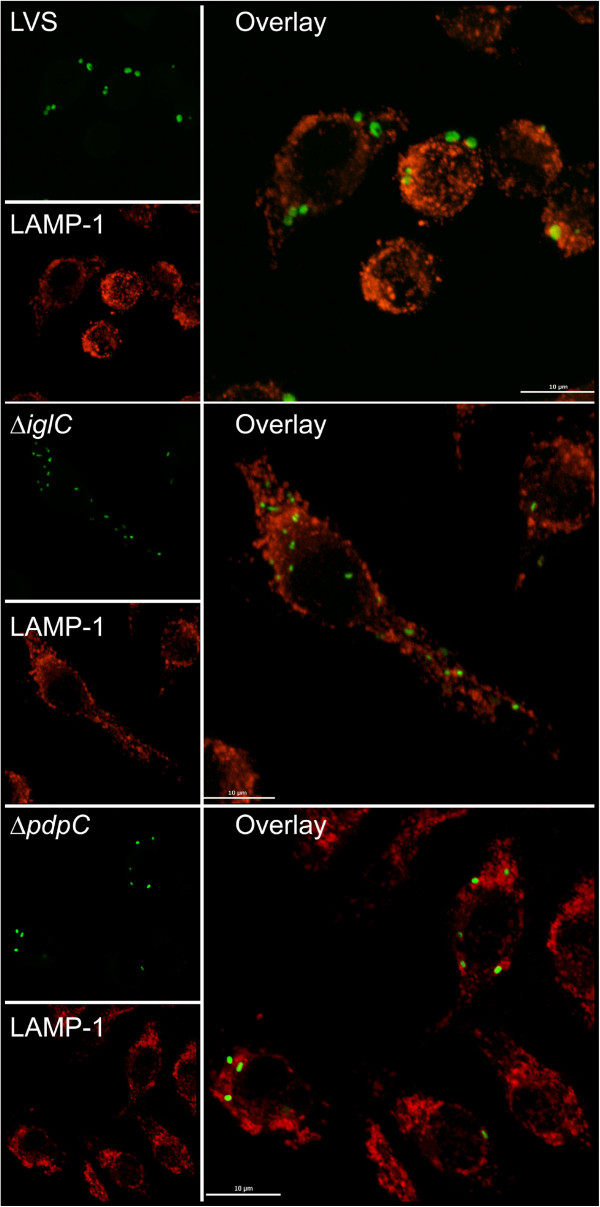
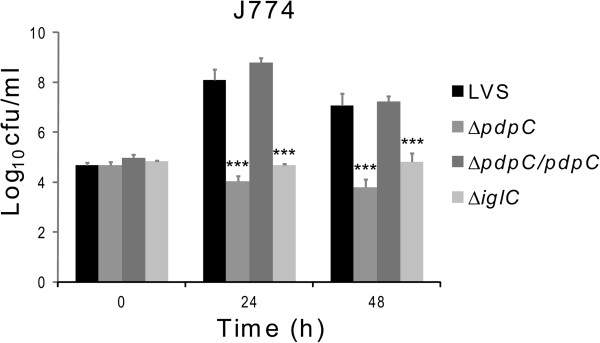
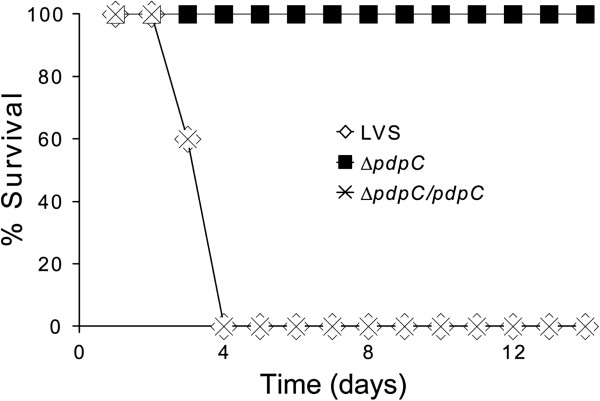
We characterized the FPI mutant ΔpdpC of the live vaccine strain (LVS) of F. tularensis and found that it exhibited lack of intracellular replication, incomplete phagosomal escape, and marked attenuation in the mouse model, however, unlike a phagosomally contained FPI mutant, it triggered secretion of IL-1β, albeit lower than LVS, and markedly induced LDH release.
The phenotype of the ΔpdpC mutant appears to be unique compared to previously described F. tularensis FPI mutants.
兼性细胞内细菌土拉弗朗西斯菌的毒力的一个前提是有效的巨噬细胞内增殖,这是由吞噬体逃入细胞质引起的,最终导致宿主细胞死亡。许多对细胞内生命周期至关重要的成分是由一个基因簇编码的,即弗朗西斯菌致病性岛(FPI),构成了一种类型 VI 分泌系统。
我们对土拉弗朗西斯菌活疫苗株(LVS)的 FPI 突变体 ΔpdpC 进行了表征,发现它表现出缺乏细胞内复制、不完全的吞噬体逃逸和在小鼠模型中明显的衰减,但与吞噬体包含的 FPI 突变体不同,它触发了 IL-1β 的分泌,尽管低于 LVS,但明显诱导了 LDH 的释放。
与先前描述的土拉弗朗西斯菌 FPI 突变体相比,ΔpdpC 突变体的表型似乎是独特的。