Lorente-Galdos Belen, Bleyhl Jonathan, Santpere Gabriel, Vives Laura, Ramírez Oscar, Hernandez Jessica, Anglada Roger, Cooper Gregory M, Navarro Arcadi, Eichler Evan E, Marques-Bonet Tomas
Genome Biol. 2013 Jan 29;14(1):R9. doi: 10.1186/gb-2013-14-1-r9.
The identification of signatures of natural selection has long been used as an approach to understanding the unique features of any given species. Genes within segmental duplications are overlooked in most studies of selection due to the limitations of draft nonhuman genome assemblies and to the methodological reliance on accurate gene trees, which are difficult to obtain for duplicated genes.
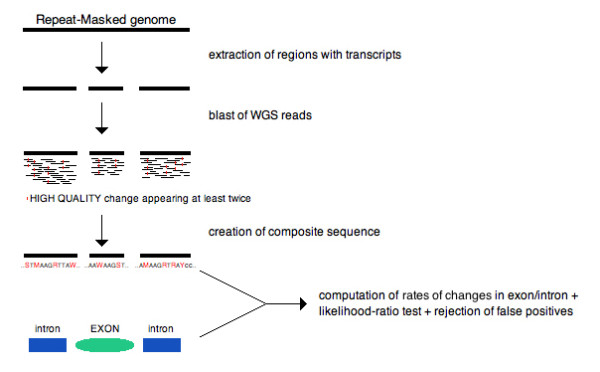
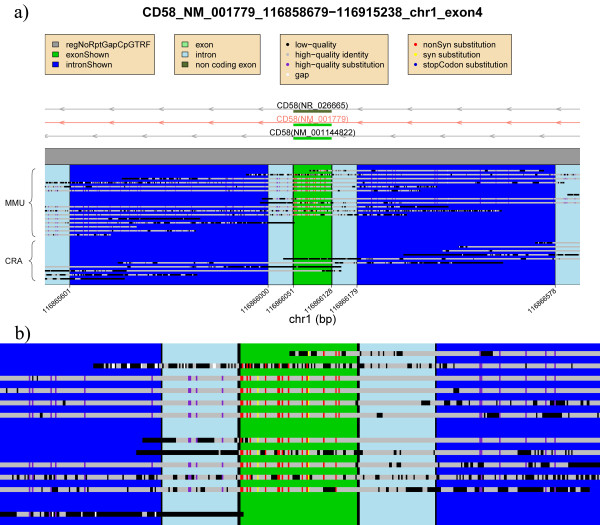
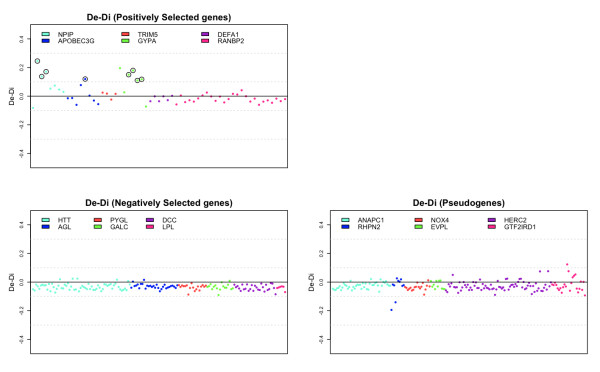
In this work, we detected exons with an accumulation of high-quality nucleotide differences between the human assembly and shotgun sequencing reads from single human and macaque individuals. Comparing the observed rates of nucleotide differences between coding exons and their flanking intronic sequences with a likelihood-ratio test, we identified 74 exons with evidence for rapid coding sequence evolution during the evolution of humans and Old World monkeys. Fifty-five percent of rapidly evolving exons were either partially or totally duplicated, which is a significant enrichment of the 6% rate observed across all human coding exons.
Our results provide a more comprehensive view of the action of selection upon segmental duplications, which are the most complex regions of our genomes. In light of these findings, we suggest that segmental duplications could be subjected to rapid evolution more frequently than previously thought.
长期以来,识别自然选择的特征一直被用作理解任何特定物种独特特征的一种方法。由于非人类基因组草图组装的局限性以及方法上对准确基因树的依赖,在大多数选择研究中,片段重复内的基因被忽视了,而对于重复基因来说,准确的基因树很难获得。
在这项研究中,我们在人类基因组组装与来自单个人类和猕猴个体的鸟枪法测序读数之间检测到了积累有高质量核苷酸差异的外显子。通过似然比检验比较编码外显子与其侧翼内含子序列之间观察到的核苷酸差异率,我们鉴定出74个外显子,这些外显子在人类和旧世界猴的进化过程中有快速编码序列进化的证据。55%快速进化的外显子部分或全部重复,这显著高于在所有人类编码外显子中观察到的6%的重复率。
我们的结果为选择作用于片段重复提供了更全面的观点,片段重复是我们基因组中最复杂的区域。鉴于这些发现,我们认为片段重复可能比以前认为的更频繁地经历快速进化。