ICAR-CNR, National Research Council of Italy, Viale delle Scienze Ed, 11, Palermo, 90128, Italy.
BMC Bioinformatics. 2013;14 Suppl 1(Suppl 1):S5. doi: 10.1186/1471-2105-14-S1-S5. Epub 2013 Jan 14.
We introduce a Knowledge-based Decision Support System (KDSS) in order to face the Protein Complex Extraction issue. Using a Knowledge Base (KB) coding the expertise about the proposed scenario, our KDSS is able to suggest both strategies and tools, according to the features of input dataset. Our system provides a navigable workflow for the current experiment and furthermore it offers support in the configuration and running of every processing component of that workflow. This last feature makes our system a crossover between classical DSS and Workflow Management Systems.
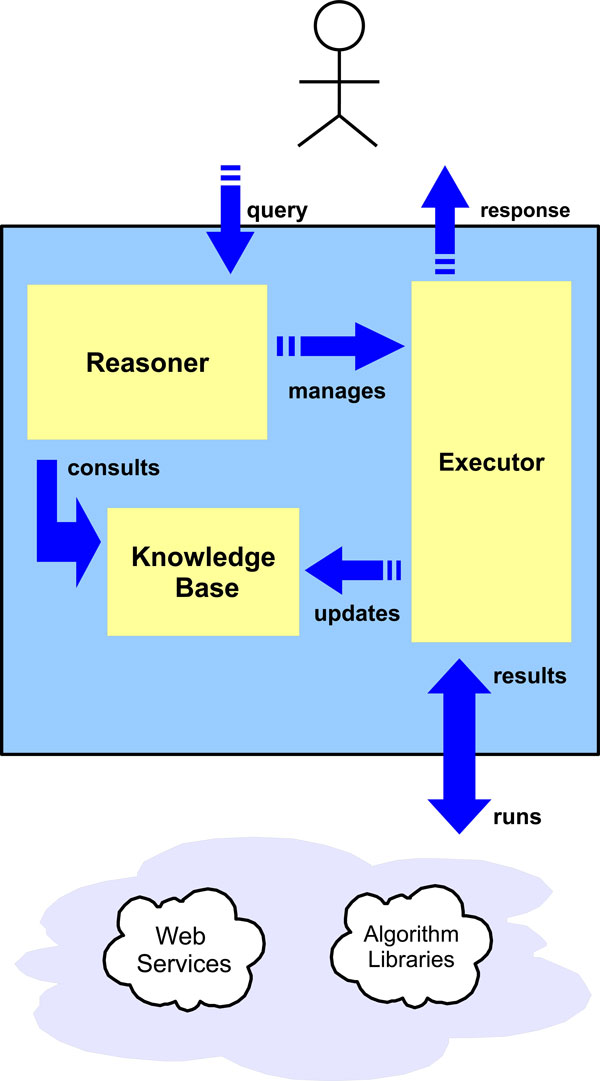
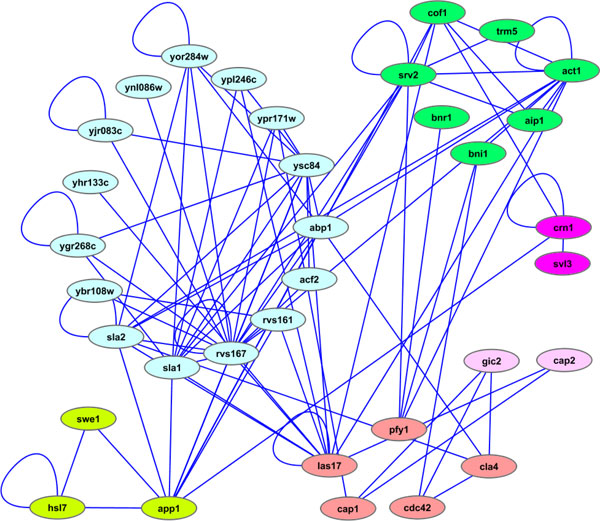
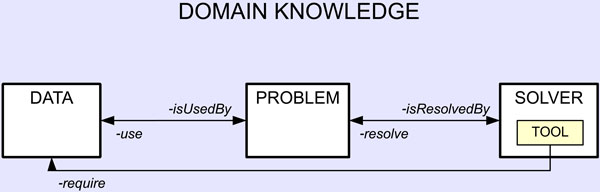
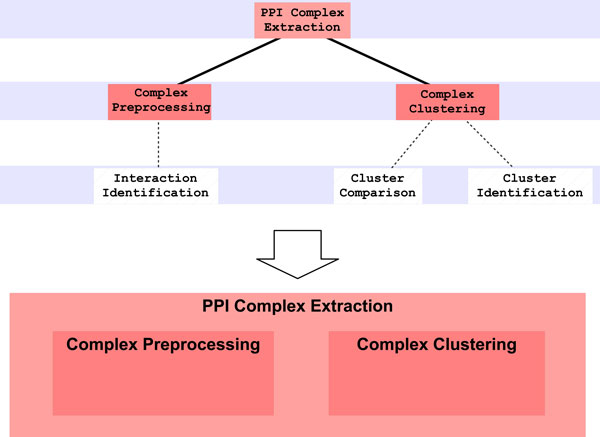
We briefly present the KDSS' architecture and basic concepts used in the design of the knowledge base and the reasoning component. The system is then tested using a subset of Saccharomyces cerevisiae Protein-Protein interaction dataset. We used this subset because it has been well studied in literature by several research groups in the field of complex extraction: in this way we could easily compare the results obtained through our KDSS with theirs. Our system suggests both a preprocessing and a clustering strategy, and for each of them it proposes and eventually runs suited algorithms. Our system's final results are then composed of a workflow of tasks, that can be reused for other experiments, and the specific numerical results for that particular trial.
The proposed approach, using the KDSS' knowledge base, provides a novel workflow that gives the best results with regard to the other workflows produced by the system. This workflow and its numeric results have been compared with other approaches about PPI network analysis found in literature, offering similar results.
我们引入了一个基于知识的决策支持系统 (KDSS),以应对蛋白质复合物提取问题。使用知识库 (KB) 对所提出的方案的专业知识进行编码,我们的 KDSS 能够根据输入数据集的特征,提出策略和工具。我们的系统为当前实验提供了可导航的工作流程,并为该工作流程的每个处理组件的配置和运行提供支持。最后这个特性使得我们的系统成为了经典 DSS 和工作流管理系统的交叉。
我们简要介绍了 KDSS 的架构和在知识库和推理组件设计中使用的基本概念。然后,我们使用酵母蛋白-蛋白相互作用数据集的一个子集来测试该系统。我们使用这个子集是因为它已经被该领域的几个研究小组在复合物提取方面进行了很好的研究:通过这种方式,我们可以很容易地将通过我们的 KDSS 获得的结果与他们的结果进行比较。我们的系统建议了一种预处理和聚类策略,并且为每种策略都提出并最终运行了合适的算法。我们的系统的最终结果由一个任务工作流程组成,可以在其他实验中重复使用,以及该特定试验的具体数值结果。
该方法使用 KDSS 的知识库,提供了一种新的工作流程,该流程在系统生成的其他工作流程中提供了最佳的结果。该工作流程及其数值结果已与文献中其他关于 PPI 网络分析的方法进行了比较,提供了类似的结果。