BIOALVO, Serviços Investigação e Desenvolvimento em Biotecnologia S.A., Edificio ICAT, Campus da FCUL, Campo Grande, Lisboa, Portugal.
PLoS One. 2013;8(2):e55848. doi: 10.1371/journal.pone.0055848. Epub 2013 Feb 5.
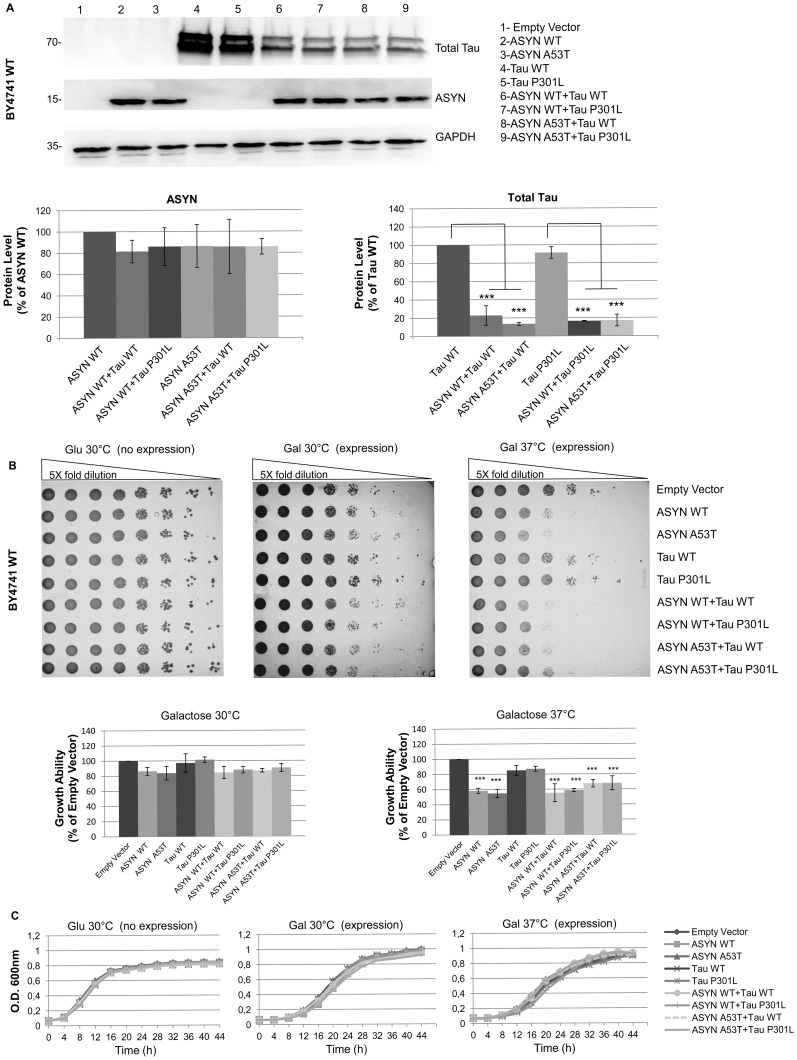
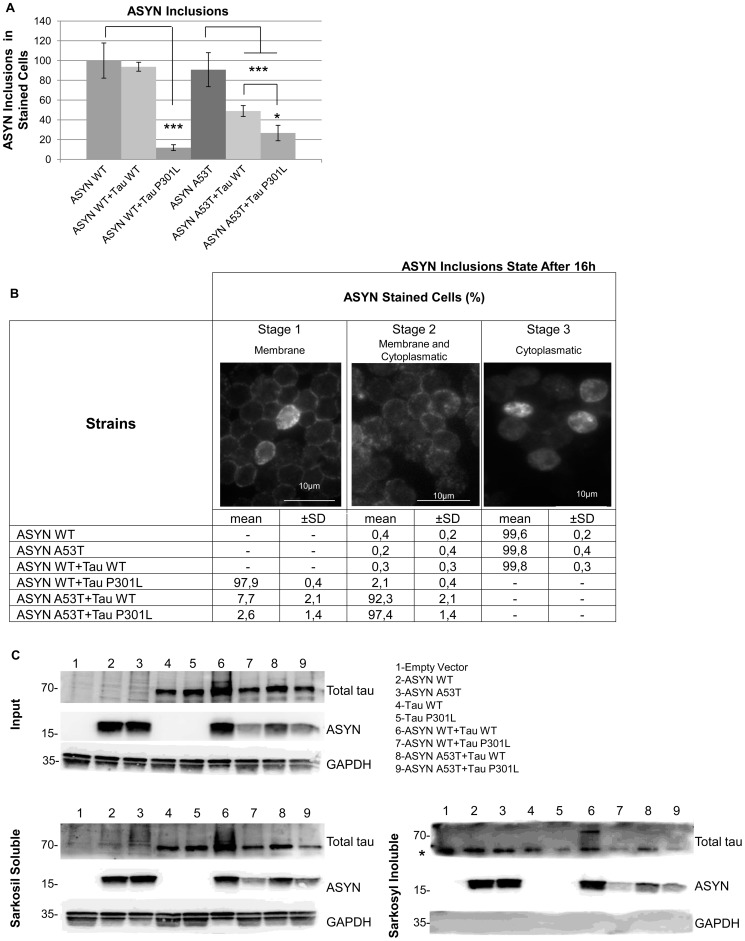
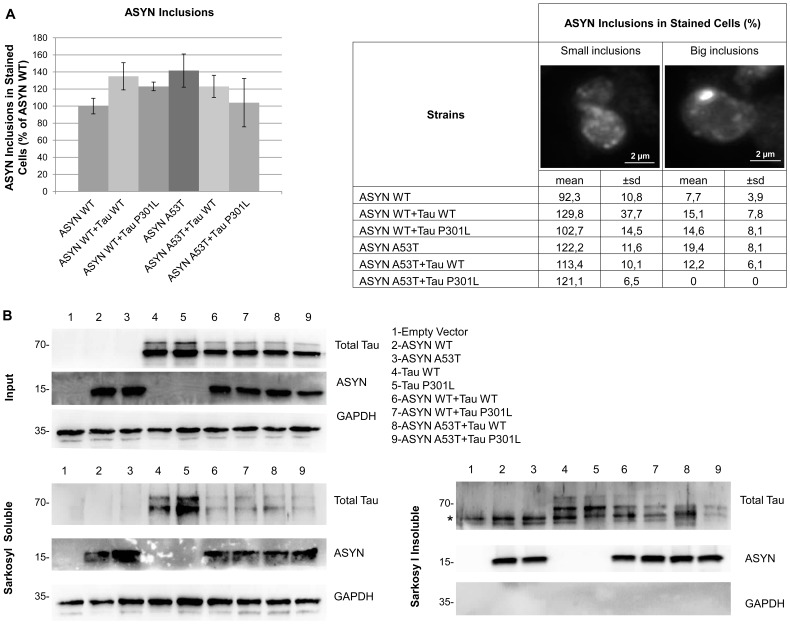
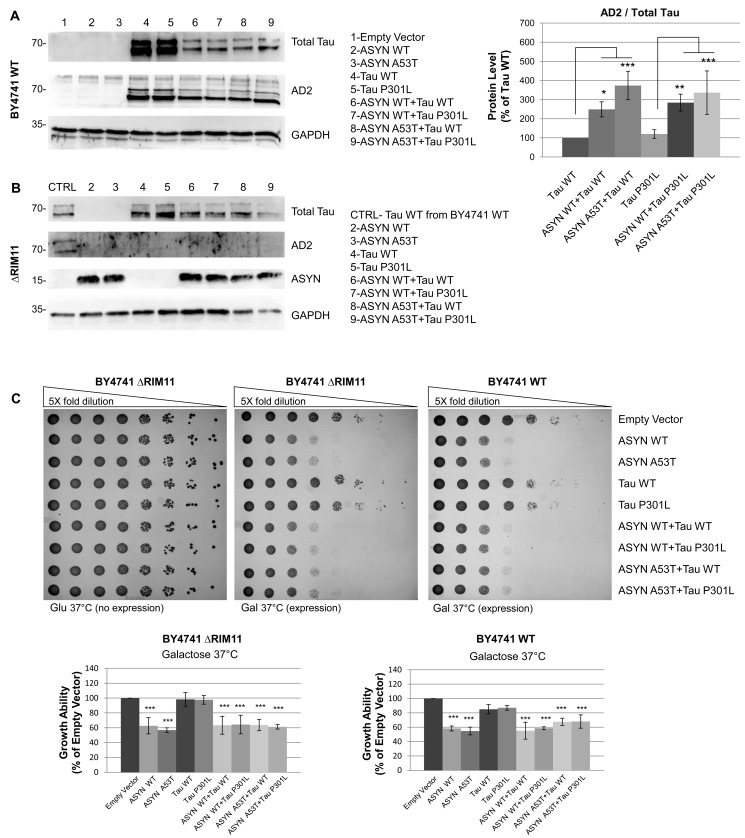
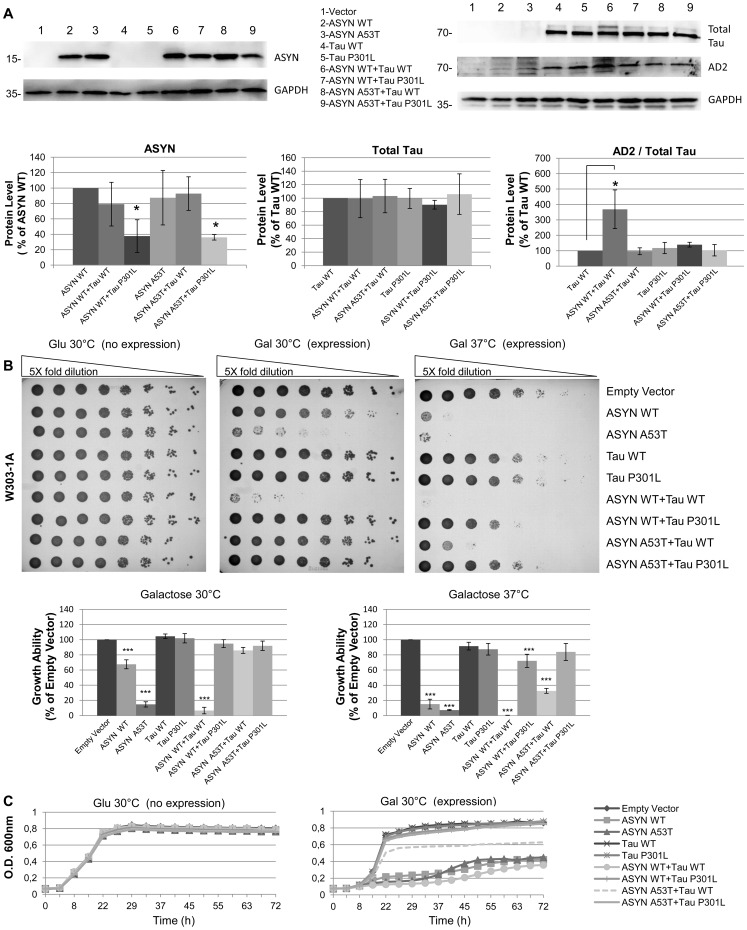
Several studies revealed consistent overlap between synucleinopathies and tauopathies, demonstrating that α-synuclein (ASYN) and tau co-localize in neurofibrillary tangles and in Lewy bodies from Alzheimer's and Parkinson's disease patients and corresponding animal models. Additionally, it has been shown that ASYN can act as an initiator of tau aggregation and phosphorylation and that these two proteins directly interact. Despite these evidences, the cellular pathway implicated in this synergistic interaction remains to be clarified. The aim of this study was to create a yeast model where the concomitant expression of ASYN and tau can be used to perform genome wide screenings for the identification of genes that modulate this interaction, in order to shed light into the pathological mechanism of cell dysfunction and to provide new targets for future therapeutic intervention. We started by validating the synergistic toxicity of tau and ASYN co-expression in yeast, by developing episomal and integrative strains expressing WT and mutant forms of both proteins, alone or in combination. The episomal strains showed no differences in growth delay upon expression of ASYN isoforms (WT or A53T) alone or in combination with tau 2N/4R isoforms (WT or P301L). However, in these strains, the presence of ASYN led to increased tau insolubility and correlated with increased tau phosphorylation in S396/404, which is mainly mediated by RIM11, the human homolog of GSK3β in yeast. On the other hand, the integrative strains showed a strong synergistic toxic effect upon co-expression of ASYN WT and tau WT, which was related to high levels of intracellular ASYN inclusions and increased tau phosphorylation and aggregation. Taken together, the strains described in the present study are able to mimic relevant pathogenic features involved in neurodegeneration and are powerful tools to identify potential target genes able to modulate the synergistic pathway driven by ASYN and tau interaction.
几项研究揭示了突触核蛋白病和tau 病之间存在一致的重叠,表明 α-突触核蛋白 (ASYN) 和 tau 共同定位于阿尔茨海默病和帕金森病患者以及相应动物模型的神经原纤维缠结和路易体中。此外,已经表明 ASYN 可以作为 tau 聚集和磷酸化的启动子,并且这两种蛋白质直接相互作用。尽管有这些证据,但涉及这种协同相互作用的细胞途径仍有待阐明。本研究的目的是创建一种酵母模型,其中同时表达 ASYN 和 tau 可用于进行全基因组筛选,以鉴定调节这种相互作用的基因,从而揭示细胞功能障碍的病理机制,并为未来的治疗干预提供新的靶点。我们首先通过开发表达 WT 和突变形式的这两种蛋白质的质体和整合菌株,来验证 tau 和 ASYN 共表达在酵母中的协同毒性,单独或组合表达。在表达 ASYN 同工型(WT 或 A53T)单独或与 tau 2N/4R 同工型(WT 或 P301L)组合时,质体菌株在生长延迟方面没有差异。然而,在这些菌株中,ASYN 的存在导致 tau 不溶性增加,并与 S396/404 处的 tau 磷酸化增加相关,这主要是由 RIM11 介导的,RIM11 是酵母中 GSK3β 的人类同源物。另一方面,整合菌株在共表达 ASYN WT 和 tau WT 时表现出强烈的协同毒性作用,这与细胞内 ASYN 包涵体水平升高以及 tau 磷酸化和聚集增加有关。总之,本研究中描述的菌株能够模拟涉及神经退行性变的相关致病特征,是鉴定能够调节由 ASYN 和 tau 相互作用驱动的协同途径的潜在靶基因的有力工具。