Department of Physiology, College of Medicine, Kaohsiung Medical University, No 100, Shih-Chuan 1st Road, Kaohsiung 807, Taiwan.
Parasit Vectors. 2013 Feb 11;6:34. doi: 10.1186/1756-3305-6-34.
Current development efforts of subunit vaccines against Toxoplasma gondii, the etiological agent of toxoplasmosis, have been focused mainly on tachyzoite surface antigen 1 (SAG1). Since microparticles made from poly (lactide-co-glycolide) (PLG) polymers have been developed as safe, potent adjuvants or delivery systems, we aimed to encapsulate recombinant SAG1 (rSAG1) with the PLG polymers to prepare PLG-encapsulated rSAG1 (PLG-rSAG1) microparticles that would sustain rSAG1 release and generate long-lasting protective immunity against T. gondii in BALB/c mice.
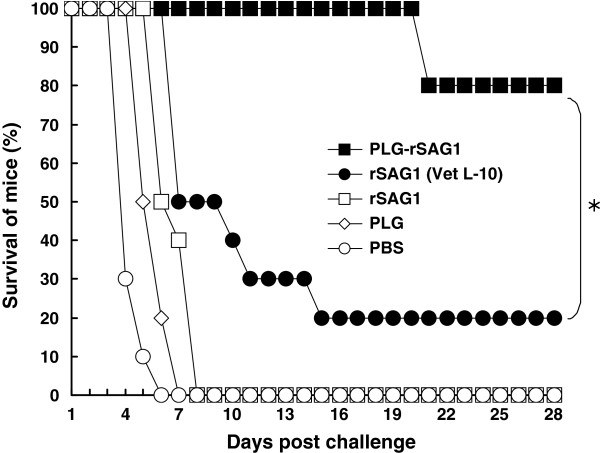
In the present study, rSAG1 was encapsulated into PLG microparticles by the double emulsion method. PLG-rSAG1 microparticles were then intraperitoneally injected twice at a 14-day interval into BALB/c mice. We examined the ability of PLG-rSAG1 microparticles to induce and prolong effective anti-Toxoplasma immune responses, in comparison with rSAG1 formulated with a Vet L-10 adjuvant (rSAG1 (Vet L-10)). Eight weeks after the last immunization, protective activities were also evaluated after a lethal subcutaneous challenge of 1 x 10(4) live T. gondii tachyzoites.
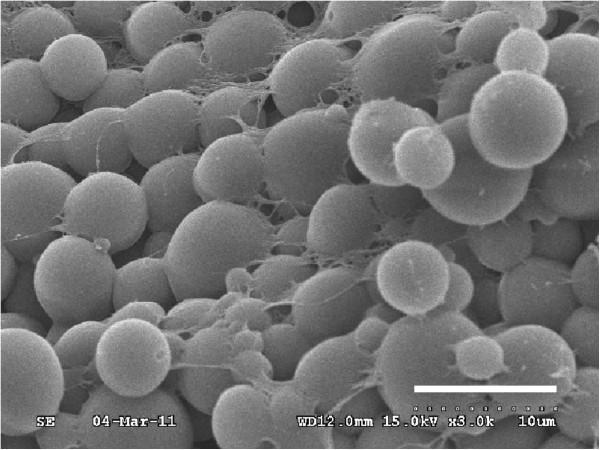
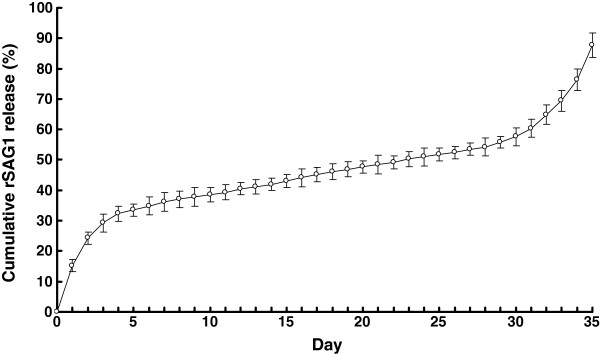
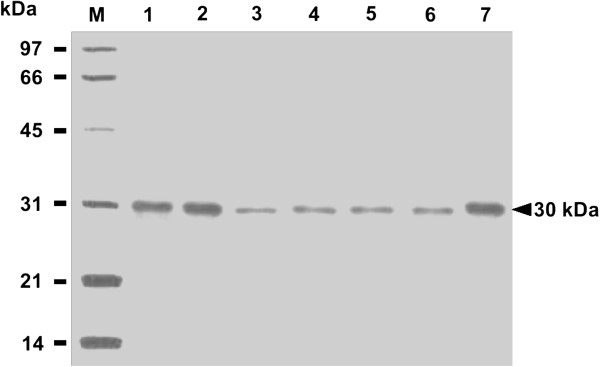
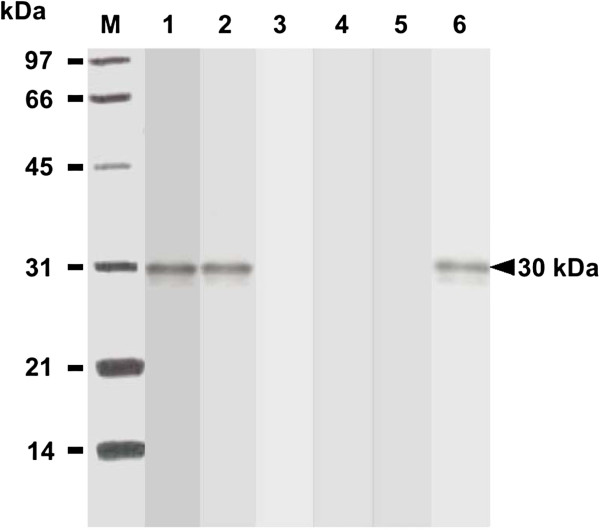
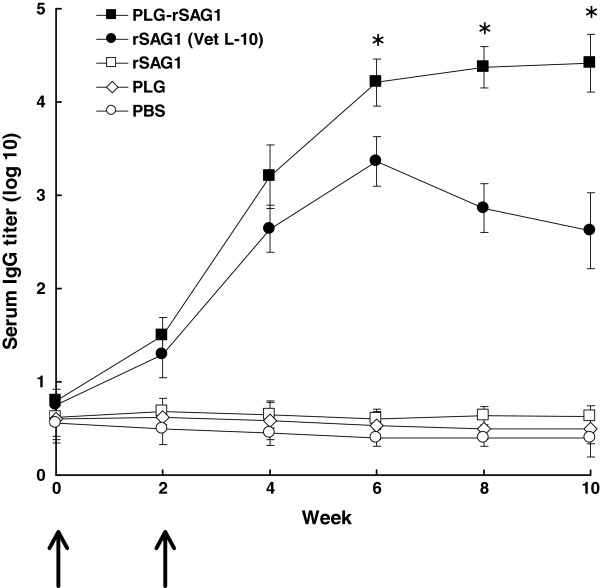
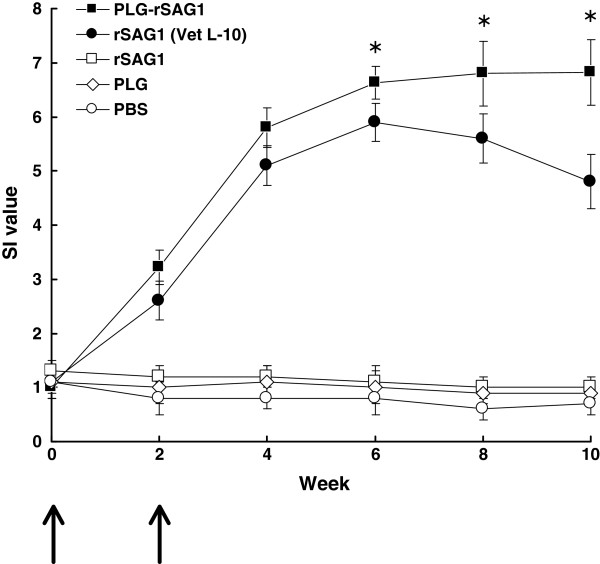
PLG-rSAG1 microparticles, 4.256.58 micrometers in diameter, showed 69%81% entrapment efficiency. The amount of released rSAG1 protein from microparticles increased gradually over a 35-day period and the protein still retained native SAG1 antigenicity. Intraperitoneal vaccination of mice with the microparticles resulted in enhanced SAG1-specific IgG titers as well as lymphocyte proliferation and, more importantly, these enhanced activities were maintained for 10 weeks. In addition, eight weeks after the last immunization, maximum production of gamma interferon was detected in mice immunized with PLG-rSAG1 microparticles. Furthermore, 80% (8/10) of mice immunized with PLG-rSAG1 microparticles survived at least 28 days after a lethal subcutaneous tachyzoite challenge.
Encapsulation of rSAG1 into PLG microparticles preserves the native SAG1 antigenicity and sustains the release of rSAG1 from microparticles. PLG-rSAG1 microparticles can effectively induce not only significant long-lasting SAG1-specific humoral and cell-mediated immune responses but also high protection against T. gondii tachyzoite infection. Our study provides a valuable basis for developing long-lasting vaccines against T. gondii for future use in humans and animals.
目前针对刚地弓形虫(弓形体病的病原体)亚单位疫苗的研发工作主要集中在速殖子表面抗原 1(SAG1)上。由于聚(丙交酯-乙交酯)(PLG)聚合物制成的微粒已被开发为安全、有效的佐剂或递药系统,因此我们旨在用 PLG 聚合物包裹重组 SAG1(rSAG1)以制备 PLG 包裹的 rSAG1(PLG-rSAG1)微粒,从而持续释放 rSAG1 并在 BALB/c 小鼠中产生针对 T. gondii 的长效保护性免疫。
在本研究中,通过双乳液法将 rSAG1 包裹在 PLG 微粒中。然后,将 PLG-rSAG1 微粒通过腹腔内注射两次,两次注射间隔为 14 天,注射入 BALB/c 小鼠体内。我们比较了 rSAG1 与 Vet L-10 佐剂(rSAG1(Vet L-10))联合使用的情况,以评估 PLG-rSAG1 微粒诱导和延长有效抗弓形虫免疫反应的能力。最后一次免疫接种 8 周后,通过皮下接种 1 x 10(4)个活弓形虫速殖子进行致死性攻击,评估保护性活动。
直径为 4.256.58μm 的 PLG-rSAG1 微粒的包封效率为 69%81%。微粒中释放的 rSAG1 蛋白逐渐增加,在 35 天内增加,并且蛋白仍保留天然 SAG1 抗原性。用微粒对小鼠进行腹腔内接种可增强 SAG1 特异性 IgG 滴度以及淋巴细胞增殖,更重要的是,这些增强的活性可维持 10 周。此外,在最后一次免疫接种 8 周后,用 PLG-rSAG1 微粒免疫的小鼠中检测到最大量的γ干扰素产生。此外,用 PLG-rSAG1 微粒免疫的 10 只小鼠中有 8 只(8/10)在皮下接种速殖子后至少 28 天存活。
将 rSAG1 包裹在 PLG 微粒中可保留天然 SAG1 的抗原性,并持续释放 rSAG1 从微粒中。PLG-rSAG1 微粒不仅可以有效诱导显著的长效 SAG1 特异性体液和细胞免疫反应,而且可以提供针对 T. gondii 速殖子感染的高保护作用。我们的研究为开发针对弓形虫的长效疫苗提供了有价值的基础,可用于未来人类和动物的使用。