Son Alexander I, Cooper Margaret A, Sheleg Michal, Sun Yuhai, Kleiman Norman J, Zhou Renping
Department of Chemical Biology, Susan Lehman-Cullman Laboratory for Cancer Research, Ernest Mario School of Pharmacy, Rutgers University, Piscataway, NJ 08854, USA.
Mol Vis. 2013;19:254-66. Epub 2013 Feb 3.
The cells of the mammalian lens must be carefully organized and regulated to maintain clarity. Recent studies have identified the Eph receptor ligand ephrin-A5 as a major contributor to lens development, as mice lacking ephrin-A5 develop abnormal lenses, resulting in cataracts. As a follow-up to our previous study on the cataracts observed in ephrin-A5(-/-) animals, we have further examined the morphological and molecular changes in the ephrin-A5(-/-) lens.
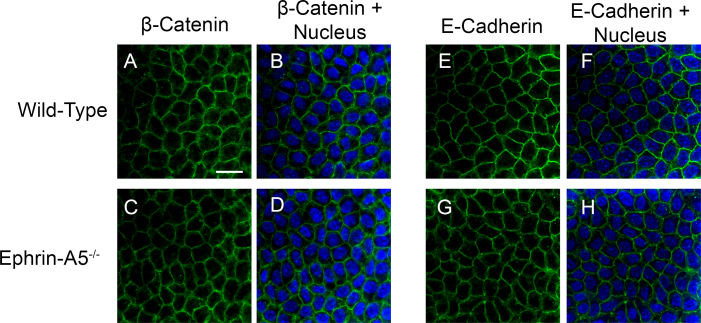
Wild-type and ephrin-A5(-/-) eyes at various ages were fixed, sectioned, and examined using histological techniques. Protein expression and localization were determined using immunohistochemistry and western blot analysis.
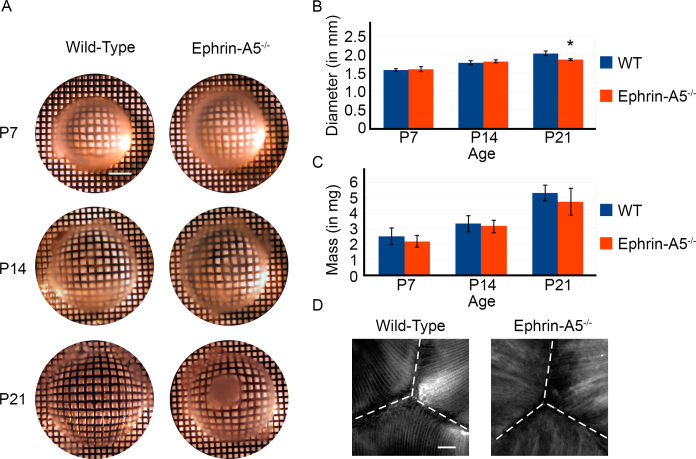
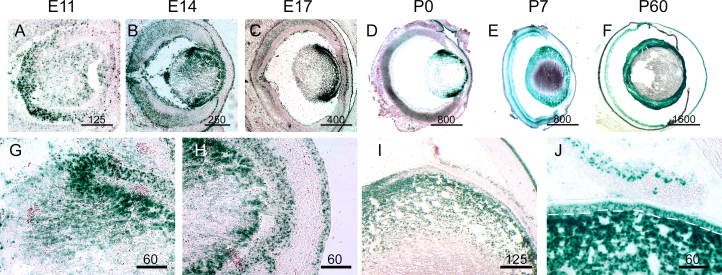
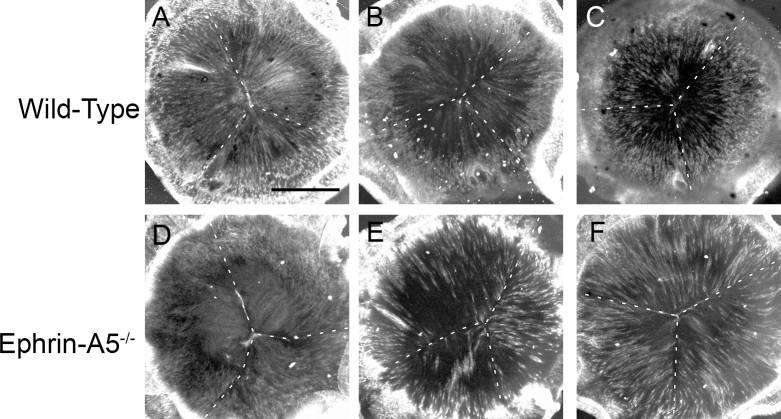
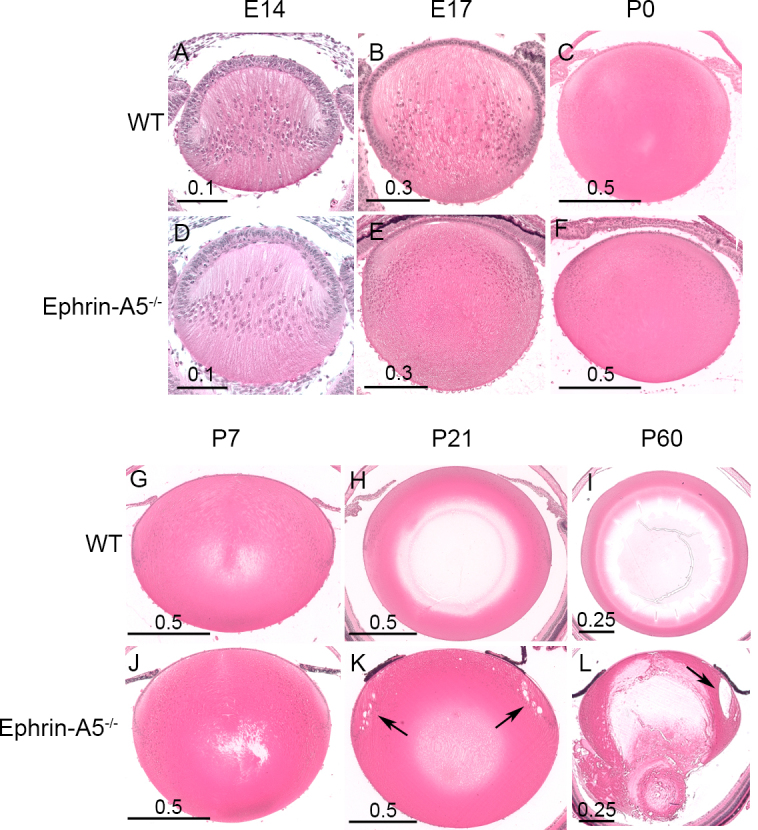
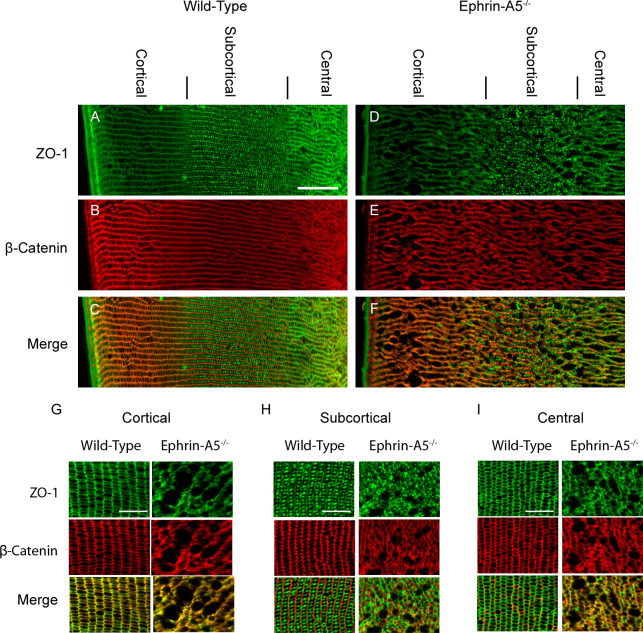
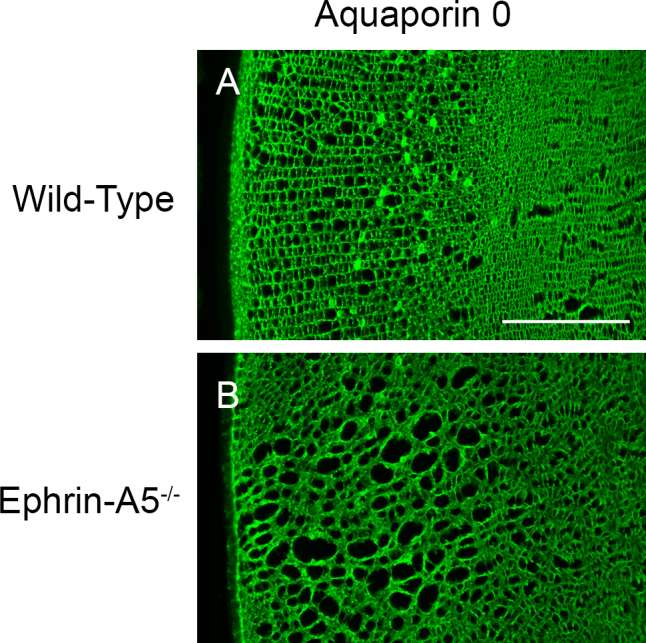
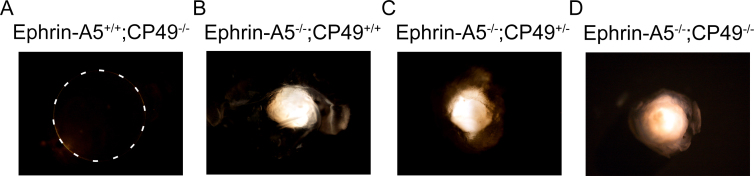
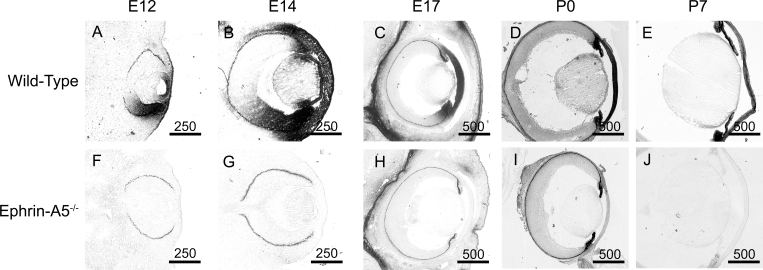
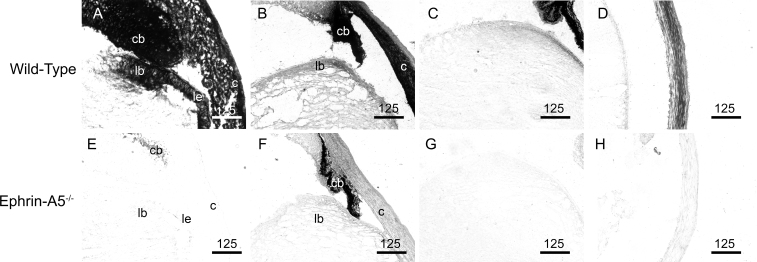
Lens abnormalities in the ephrin-A5(-/-) animals are observed at postnatal stages, with lens opacity occurring by postnatal day 21. Structural defects in the lens are first observed in the outer lens fiber cell region where cells in the ephrin-A5(-/-) lens are severely disorganized. Ephrin-A5 and the Eph receptor EphA2 are expressed during early ocular development and continue to be expressed into postnatal stages. The cataracts in the ephrin-A5(-/-) mutants occur regardless of the presence of the CP49 mutation.
In this follow-up study, we have uncovered additional details explicating the mechanisms underlying ephrin-A5 function in the lens. Furthermore, elucidation of the expression of ephrin-A5 and the Eph receptor EphA2 in the lens supports a fundamental role for this receptor-ligand complex in lens development. These observations, in concert with our previous study, strongly suggest that ephrin-A5 has a critical role in postnatal lens fiber organization to maintain lens transparency.
哺乳动物晶状体的细胞必须经过精心组织和调控以保持透明。最近的研究已确定Eph受体配体ephrin - A5是晶状体发育的主要促成因素,因为缺乏ephrin - A5的小鼠会发育出异常晶状体,进而导致白内障。作为我们之前关于在ephrin - A5(- / -)动物中观察到的白内障研究的后续,我们进一步研究了ephrin - A5(- / -)晶状体的形态和分子变化。
对不同年龄的野生型和ephrin - A5(- / -)眼睛进行固定、切片,并使用组织学技术进行检查。通过免疫组织化学和蛋白质印迹分析确定蛋白质表达和定位。
在出生后阶段观察到ephrin - A5(- / -)动物的晶状体异常,在出生后第21天出现晶状体混浊。晶状体的结构缺陷首先在外层晶状体纤维细胞区域观察到,其中ephrin - A5(- / -)晶状体中的细胞严重紊乱。Ephrin - A5和Eph受体EphA2在早期眼部发育期间表达,并持续表达至出生后阶段。无论是否存在CP49突变,ephrin - A5(- / -)突变体中都会出现白内障。
在这项后续研究中,我们发现了更多细节,阐明了ephrin - A5在晶状体中发挥功能的潜在机制。此外,对ephrin - A5和Eph受体EphA2在晶状体中表达的阐明支持了这种受体 - 配体复合物在晶状体发育中的基本作用。这些观察结果与我们之前的研究一致,强烈表明ephrin - A5在出生后晶状体纤维组织中对维持晶状体透明度起着关键作用。