Vanderplasschen Wouter, Colpaert Kathy, Autrique Mieke, Rapp Richard Charles, Pearce Steve, Broekaert Eric, Vandevelde Stijn
Department of Orthopedagogics, Ghent University, H. Dunantlaan 2, 9000 Ghent, Belgium.
ScientificWorldJournal. 2013;2013:427817. doi: 10.1155/2013/427817. Epub 2013 Jan 15.
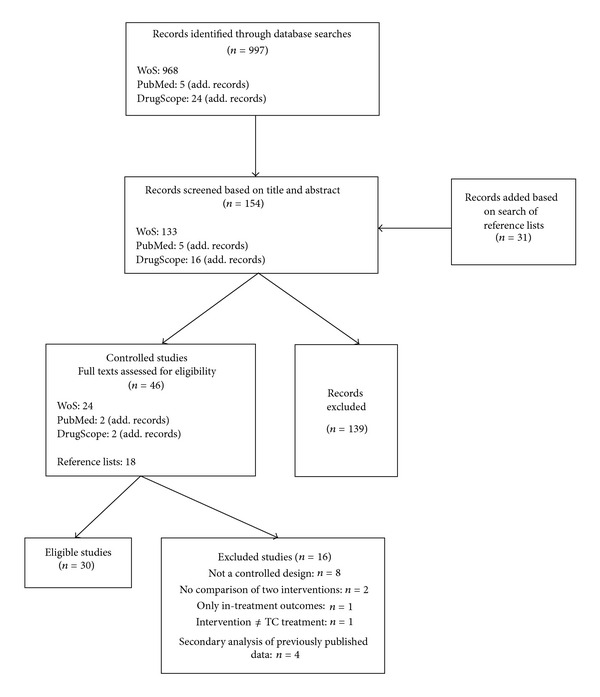
Therapeutic communities (TCs) for addictions are drug-free environments in which people with addictive problems live together in an organized and structured way to promote change toward recovery and reinsertion in society. Despite a long research tradition in TCs, the evidence base for the effectiveness of TCs is limited according to available reviews. Since most of these studies applied a selective focus, we made a comprehensive systematic review of all controlled studies that compared the effectiveness of TCs for addictions with that of a control condition. The focus of this paper is on recovery, including attention for various life domains and a longitudinal scope. We searched the following databases: ISI Web of Knowledge (WoS), PubMed, and DrugScope. Our search strategy revealed 997 hits. Eventually, 30 publications were selected for this paper, which were based on 16 original studies. Two out of three studies showed significantly better substance use and legal outcomes among TC participants, and five studies found superior employment and psychological functioning. Length of stay in treatment and participation in subsequent aftercare were consistent predictors of recovery status. We conclude that TCs can promote change regarding various outcome categories. Since recovering addicts often cycle between abstinence and relapse, a continuing care approach is advisable, including assessment of multiple and subjective outcome indicators.
成瘾治疗社区(TCs)是无毒品环境,有成瘾问题的人以有组织、结构化的方式共同生活,以促进向康复转变并重新融入社会。尽管成瘾治疗社区有着悠久的研究传统,但根据现有综述,成瘾治疗社区有效性的证据基础有限。由于这些研究大多采用选择性聚焦,我们对所有对照研究进行了全面系统的综述,这些研究将成瘾治疗社区的有效性与对照条件的有效性进行了比较。本文的重点是康复,包括关注各个生活领域和纵向范围。我们搜索了以下数据库:科学网(WoS)、PubMed和DrugScope。我们的搜索策略共检索到997条记录。最终,本文选择了30篇基于16项原始研究的出版物。三分之二的研究表明,成瘾治疗社区参与者在药物使用和法律结果方面显著更好,五项研究发现就业和心理功能更优。治疗停留时间和后续跟进护理的参与情况是康复状态的一致预测因素。我们得出结论,成瘾治疗社区可以促进在各种结果类别方面的改变。由于康复中的成瘾者经常在戒断和复发之间循环,建议采用持续护理方法,包括评估多个主观结果指标。