Université Mohammed V-Agdal, Rabat, Morocco.
Comput Math Methods Med. 2012;2012:961257. doi: 10.1155/2012/961257. Epub 2012 Dec 6.
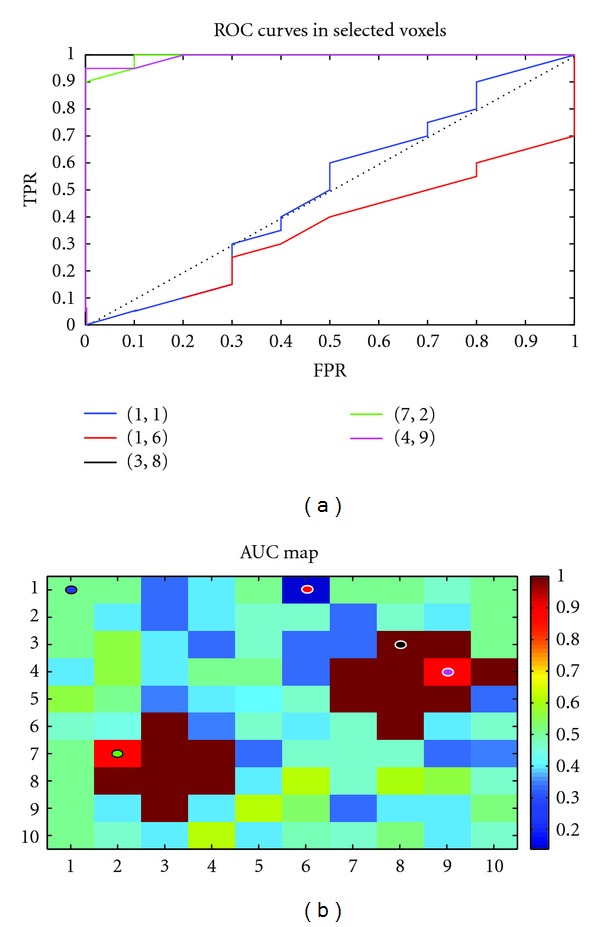
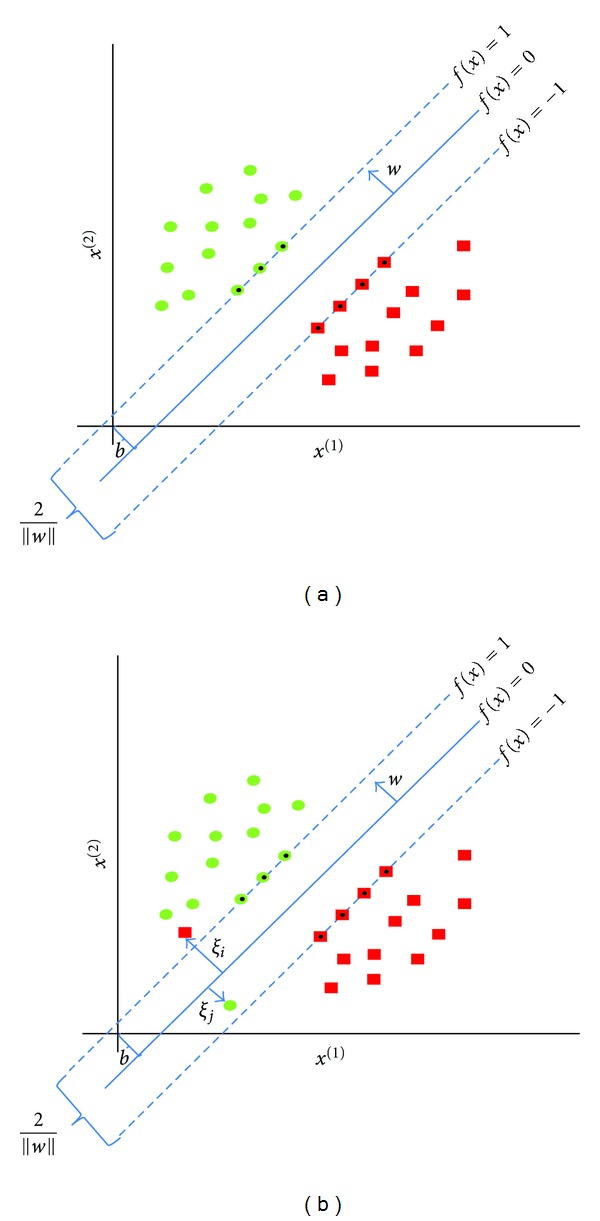
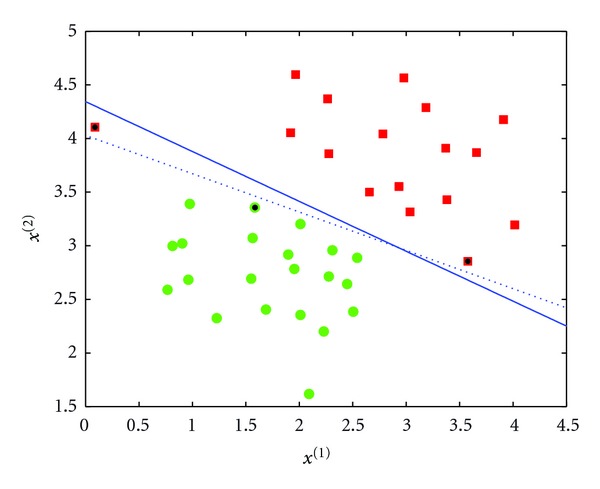
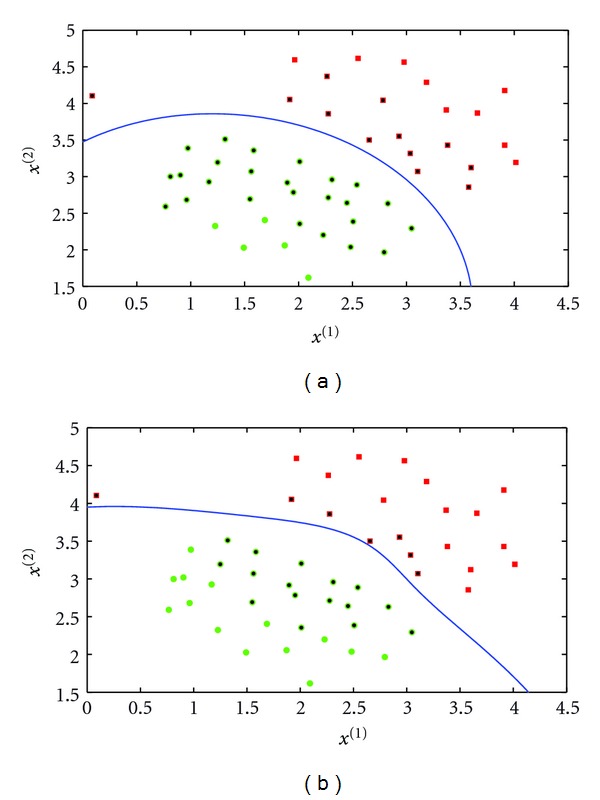
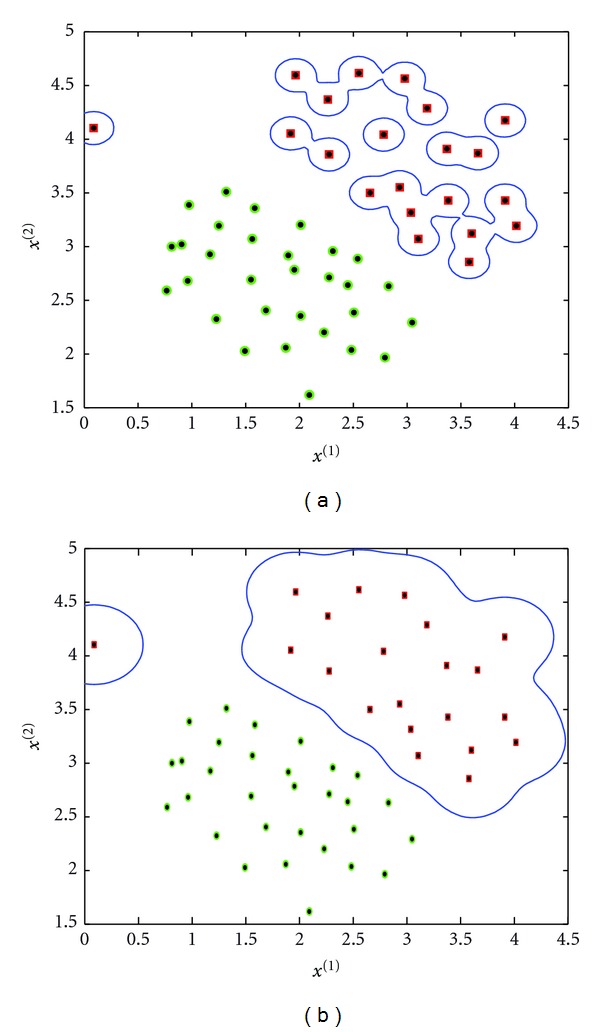
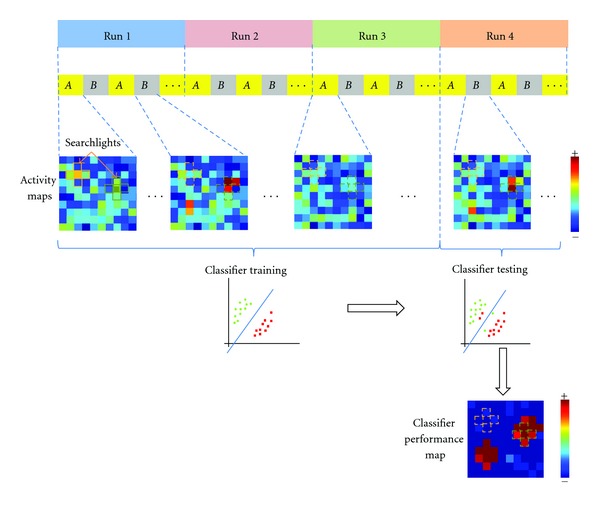
Functional magnetic resonance imaging (fMRI) exploits blood-oxygen-level-dependent (BOLD) contrasts to map neural activity associated with a variety of brain functions including sensory processing, motor control, and cognitive and emotional functions. The general linear model (GLM) approach is used to reveal task-related brain areas by searching for linear correlations between the fMRI time course and a reference model. One of the limitations of the GLM approach is the assumption that the covariance across neighbouring voxels is not informative about the cognitive function under examination. Multivoxel pattern analysis (MVPA) represents a promising technique that is currently exploited to investigate the information contained in distributed patterns of neural activity to infer the functional role of brain areas and networks. MVPA is considered as a supervised classification problem where a classifier attempts to capture the relationships between spatial pattern of fMRI activity and experimental conditions. In this paper , we review MVPA and describe the mathematical basis of the classification algorithms used for decoding fMRI signals, such as support vector machines (SVMs). In addition, we describe the workflow of processing steps required for MVPA such as feature selection, dimensionality reduction, cross-validation, and classifier performance estimation based on receiver operating characteristic (ROC) curves.
功能磁共振成像(fMRI)利用血氧水平依赖(BOLD)对比来绘制与各种脑功能相关的神经活动图,这些脑功能包括感觉处理、运动控制以及认知和情感功能。一般线性模型(GLM)方法用于通过搜索 fMRI 时程与参考模型之间的线性相关性来揭示与任务相关的脑区。GLM 方法的一个局限性是假设相邻体素之间的协方差与正在检查的认知功能无关。多体素模式分析(MVPA)是一种很有前途的技术,目前用于研究神经活动的分布式模式中包含的信息,以推断脑区和网络的功能作用。MVPA 被视为一个监督分类问题,其中分类器试图捕捉 fMRI 活动的空间模式与实验条件之间的关系。在本文中,我们回顾了 MVPA,并描述了用于解码 fMRI 信号的分类算法的数学基础,例如支持向量机(SVM)。此外,我们还描述了 MVPA 所需的处理步骤的工作流程,例如特征选择、降维、交叉验证以及基于接收者操作特征(ROC)曲线的分类器性能估计。