Olsson Erik, Klasson Niklas, Berge Josef, Eckerström Carl, Edman Ake, Malmgren Helge, Wallin Anders
Department of Neuroscience and Physiology, Institute of Psychiatry and Neurochemistry, The Sahlgrenska Academy, University of Gothenburg, 40530 Gothenburg, Sweden.
J Aging Res. 2013;2013:198471. doi: 10.1155/2013/198471. Epub 2013 Jan 16.
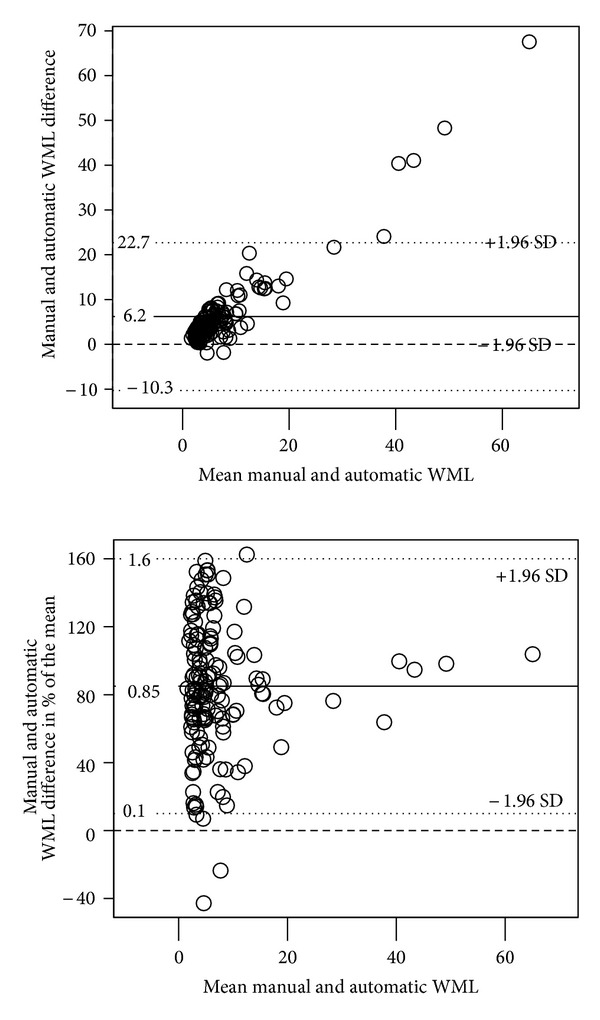
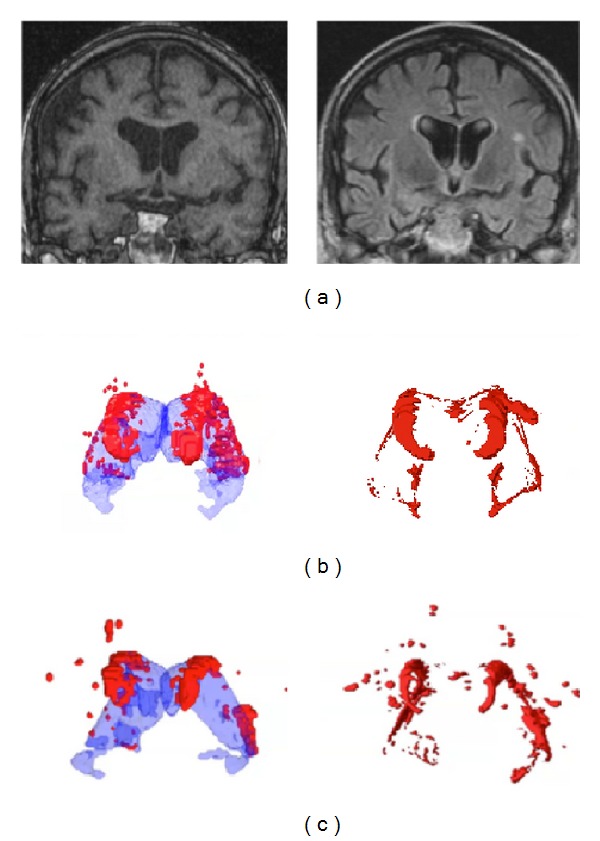
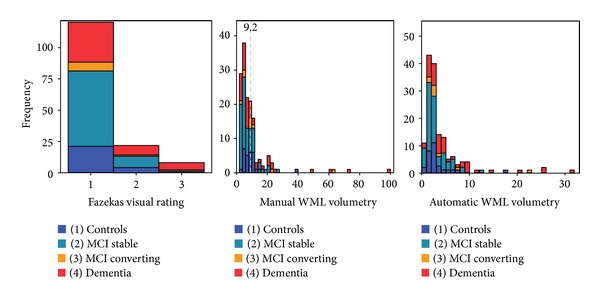
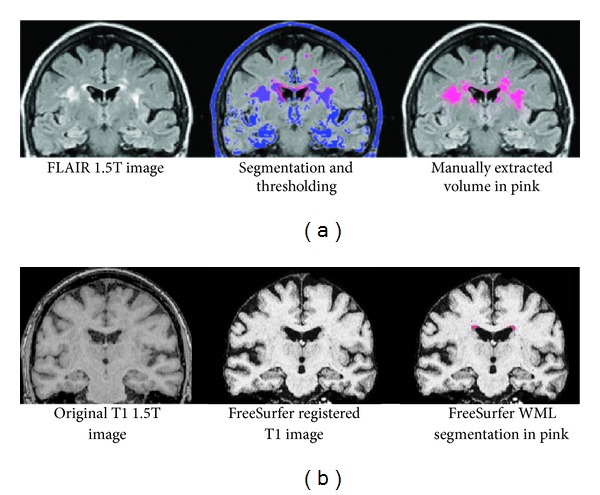
Age-related white matter lesions (WML) are a risk factor for stroke, cognitive decline, and dementia. Different requirements are imposed on methods for the assessment of WML in clinical settings and for research purposes, but reliability analysis is of major importance. In this study, WML assessment with three different methods was evaluated. In the Gothenburg mild cognitive impairment study, MRI scans from 152 participants were used to assess WML with the Fazekas visual rating scale on T2 images, a manual volumetric method on FLAIR images, and FreeSurfer volumetry on T1 images. Reliability was acceptable for all three methods. For low WML volumes (2/3 of the patients), reliability was overall lower and nonsignificant for the manual volumetric method. Unreliability in the assessment of patients with low WML with manual volumetry may mainly be due to intensity variation in the FLAIR sequence used; hence, intensity standardization and normalization methods must be used for more accurate assessments. The FreeSurfer segmentations resulted in smaller WML volumes than the volumes acquired with the manual method and showed deviations from visible hypointensities in the T1 images, which quite likely reduces validity.
年龄相关性白质病变(WML)是中风、认知衰退和痴呆的一个风险因素。临床环境和研究目的中对WML评估方法有不同要求,但可靠性分析至关重要。在本研究中,对三种不同方法的WML评估进行了评价。在哥德堡轻度认知障碍研究中,使用来自152名参与者的MRI扫描,通过T2图像上的 Fazekas视觉评分量表、FLAIR图像上的手动体积测量法以及T1图像上的FreeSurfer体积测量法来评估WML。三种方法的可靠性均可接受。对于低WML体积(2/3的患者),手动体积测量法的可靠性总体较低且无统计学意义。手动体积测量法对低WML患者评估的不可靠性可能主要归因于所使用的FLAIR序列中的强度变化;因此,必须使用强度标准化和归一化方法以进行更准确的评估。FreeSurfer分割得出的WML体积比手动方法获取的体积小,并且与T1图像中可见的低信号存在偏差,这很可能降低了有效性。