Taverna Gianluigi, Magnoni Paola, Giusti Guido, Seveso Mauro, Benetti Alessio, Hurle Rodolfo, Colombo Piergiuseppe, Minuti Francesco, Grizzi Fabio, Graziotti Pierpaolo
Department of Urology, Humanitas Clinical and Research Center, Via Manzoni 56, Rozzano, 20089 Milan, Italy.
ISRN Oncol. 2013;2013:584672. doi: 10.1155/2013/584672. Epub 2013 Jan 16.
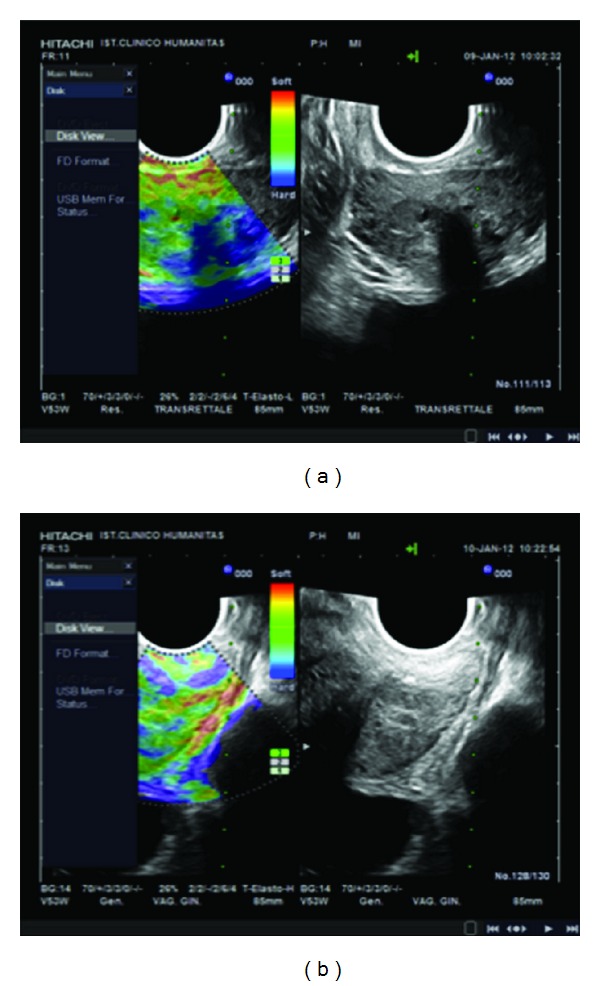
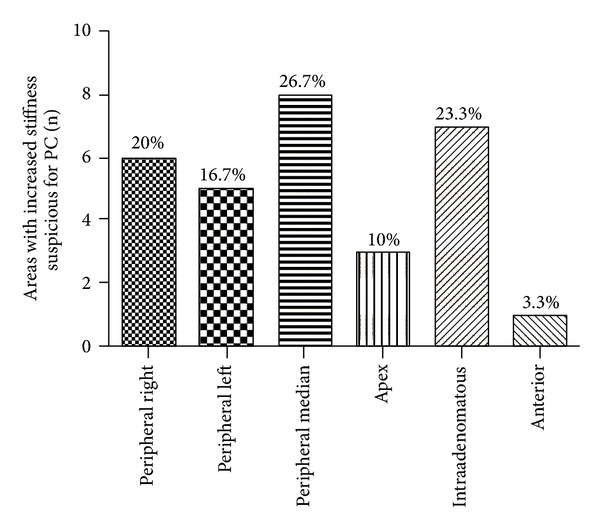
The actual gold standard for the diagnosis of prostate cancer includes the serum prostate-specific antigen, the digital rectal examination, and the ultrasound-guided systematic prostate biopsy sampling. In the last years, the real-time elastography has been introduced as an imaging technique to increase the detection rate of prostate cancer and simultaneously reduce the number of biopsies sampled for a single patient. Here, we evaluated a consecutive series of 102 patients with negative digital-rectal examination and transrectal ultrasound, and prostate-specific antigen value ranging between 2.5 ng/mL and 10 ng/mL, in order to assess the impact of real-time elastography versus the systematic biopsy on the detection of prostate cancer. We found that only 1 out of 102 patients resulted true positive for prostate cancer when analysed with real-time elastography. In the other 6 cases, real-time elastography evidenced areas positive for prostate cancer, although additional neoplastic foci were found using systematic biopsy sampling in areas evidenced by real-time elastography as negative. Although additional studies are necessary for evaluating the effectiveness of this imaging technique, the present study indicates that the limited accuracy, sensitivity, and specificity do not justify the routine application of real-time elastography in prostate cancer detection.
前列腺癌诊断的实际金标准包括血清前列腺特异性抗原、直肠指检和超声引导下的系统性前列腺活检取样。在过去几年中,实时弹性成像作为一种成像技术被引入,以提高前列腺癌的检测率,同时减少单个患者的活检取样数量。在此,我们评估了连续102例直肠指检和经直肠超声检查结果为阴性、前列腺特异性抗原值在2.5 ng/mL至10 ng/mL之间的患者,以评估实时弹性成像与系统性活检对前列腺癌检测的影响。我们发现,在使用实时弹性成像分析时,102例患者中只有1例前列腺癌检测结果为真阳性。在其他6例病例中,实时弹性成像显示出前列腺癌阳性区域,尽管在实时弹性成像显示为阴性的区域使用系统性活检取样发现了额外的肿瘤病灶。尽管评估这种成像技术的有效性还需要进一步研究,但本研究表明,其有限的准确性、敏感性和特异性并不足以证明在前列腺癌检测中常规应用实时弹性成像的合理性。