Wellcome Trust-Medical Research Council Stem Cell Institute SCI, University of Cambridge, Tennis Court Road, Cambridge CB2 1QR, UK.
Cell Rep. 2013 Feb 21;3(2):427-41. doi: 10.1016/j.celrep.2013.01.013. Epub 2013 Feb 9.
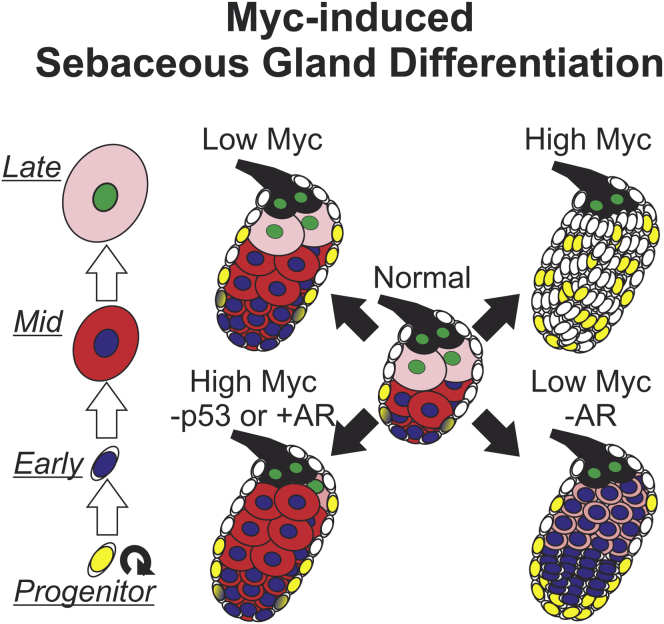
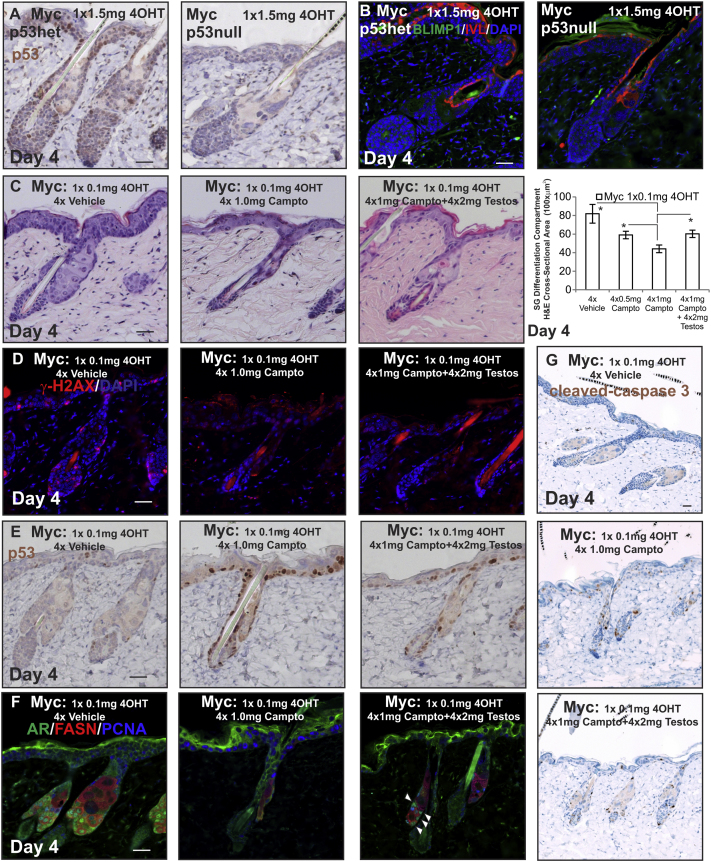
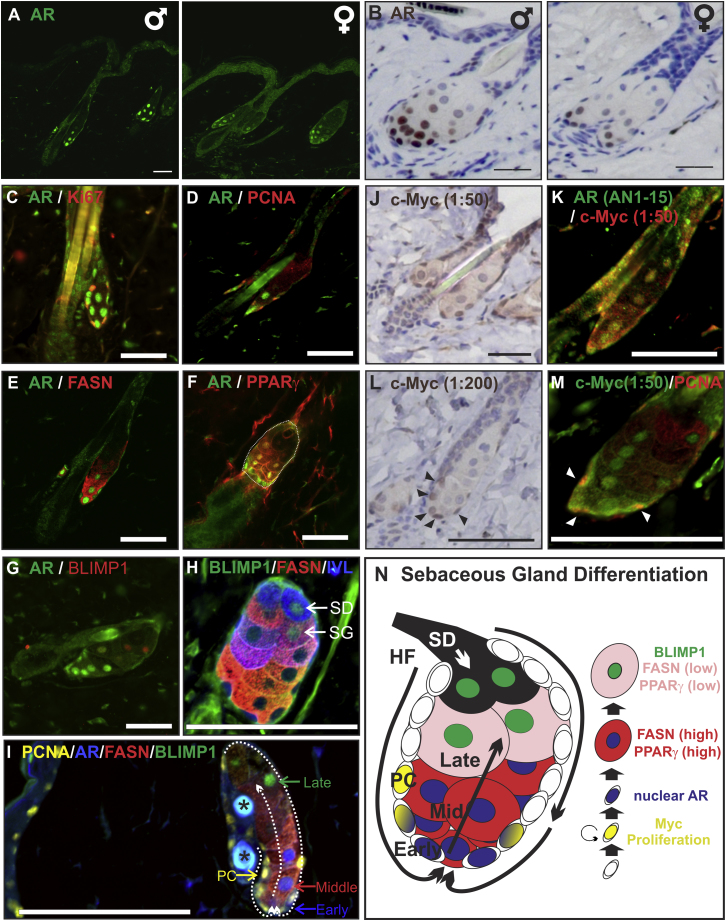
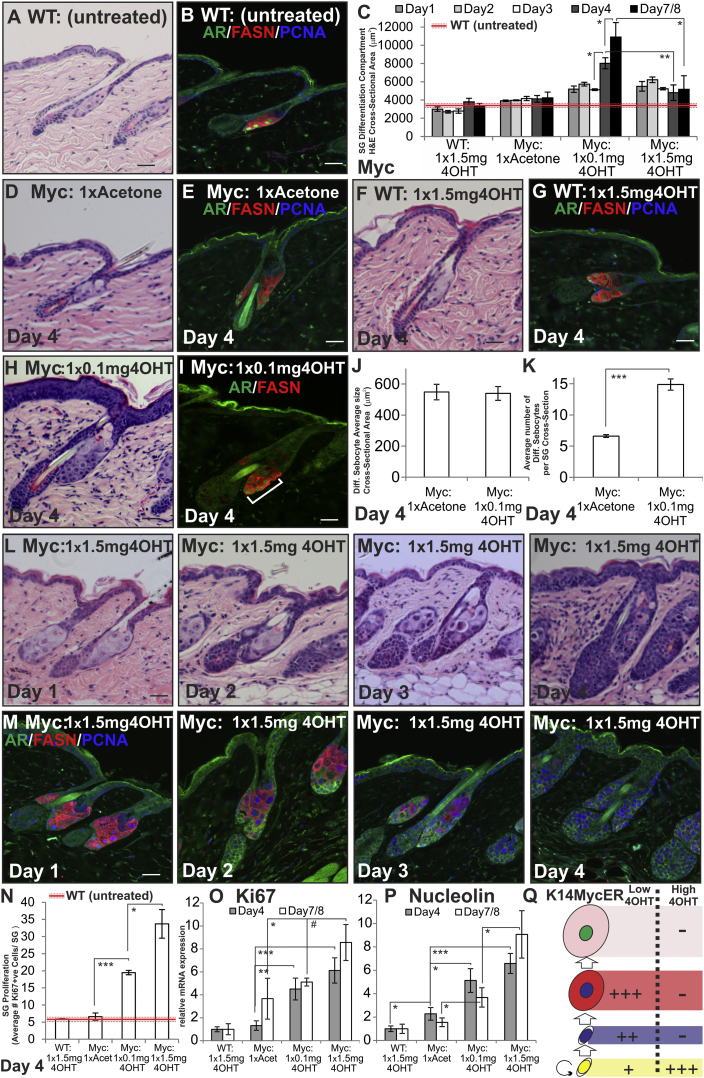
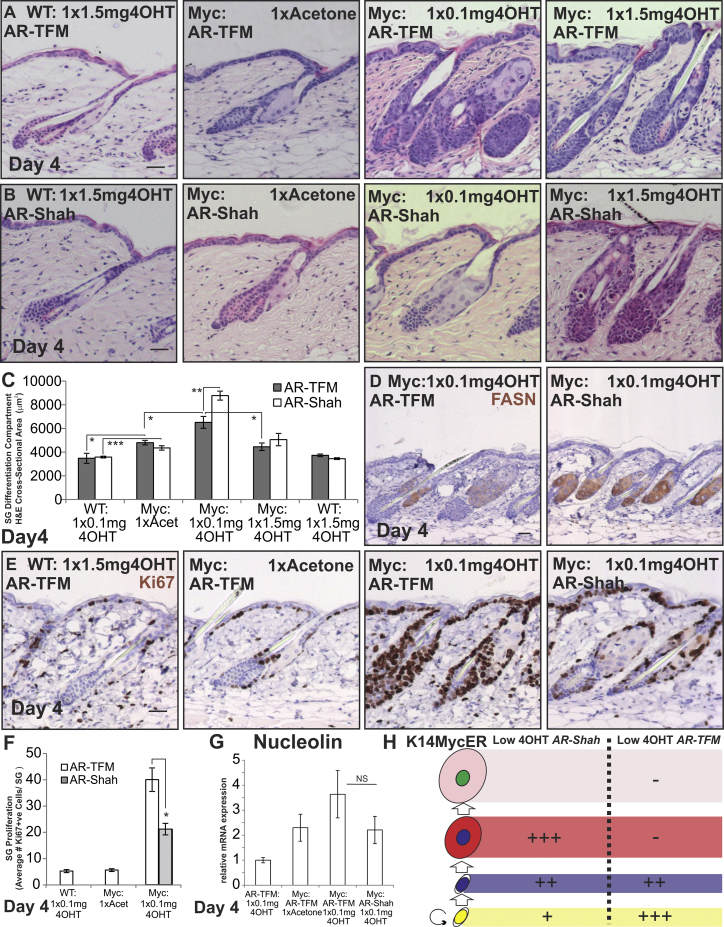
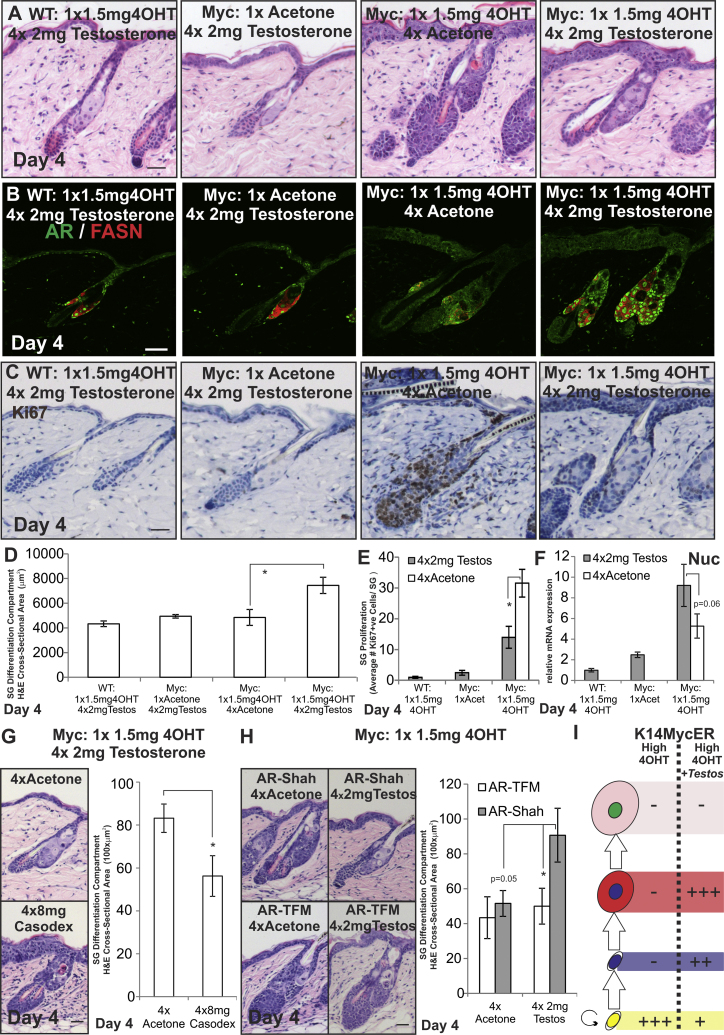
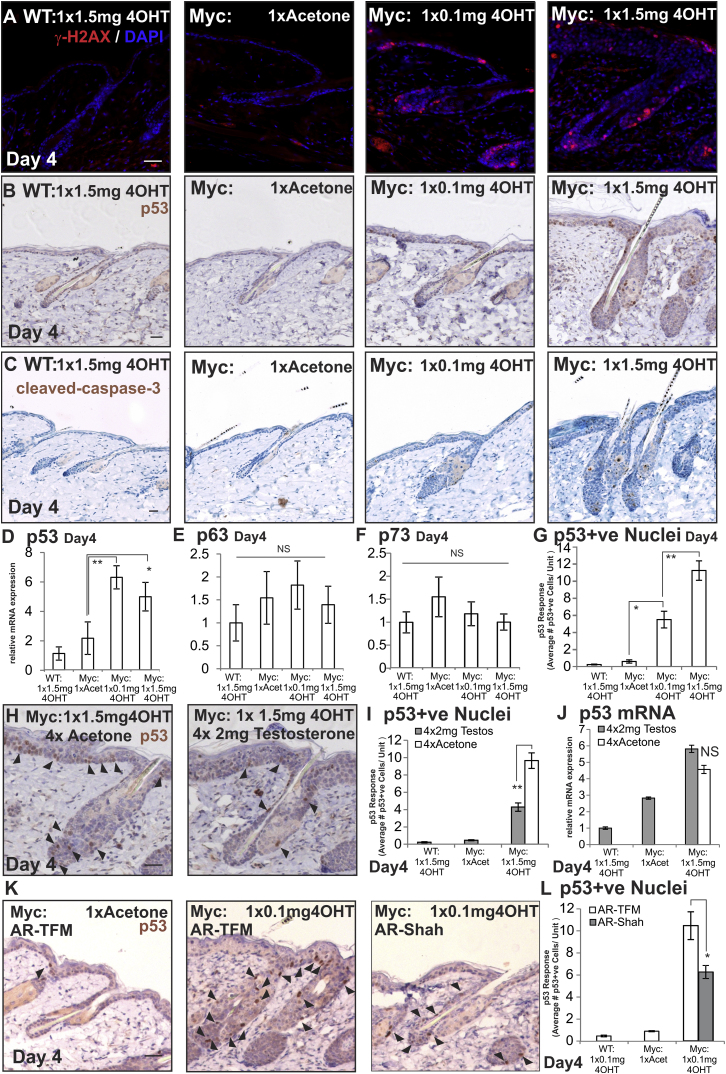
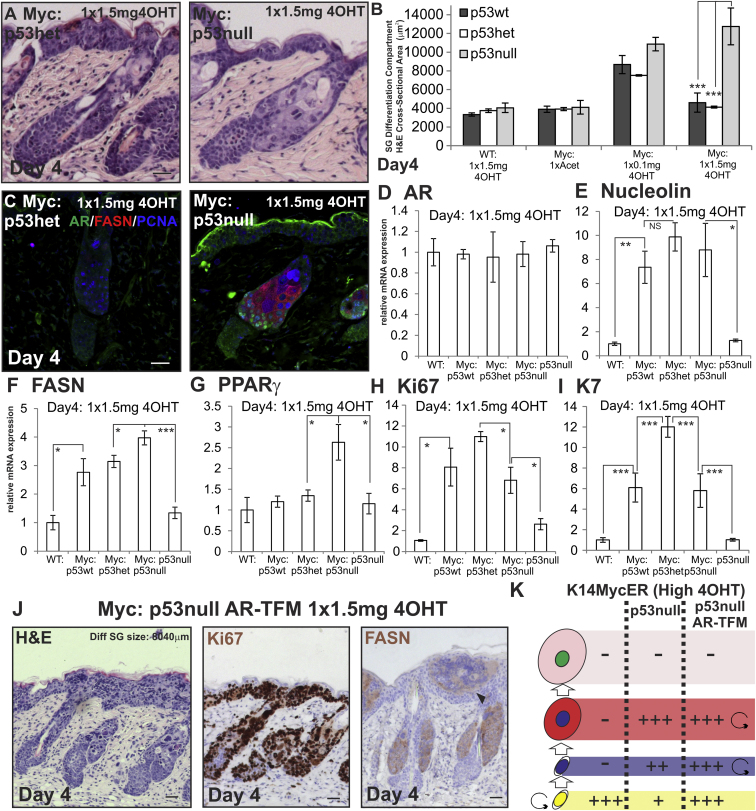
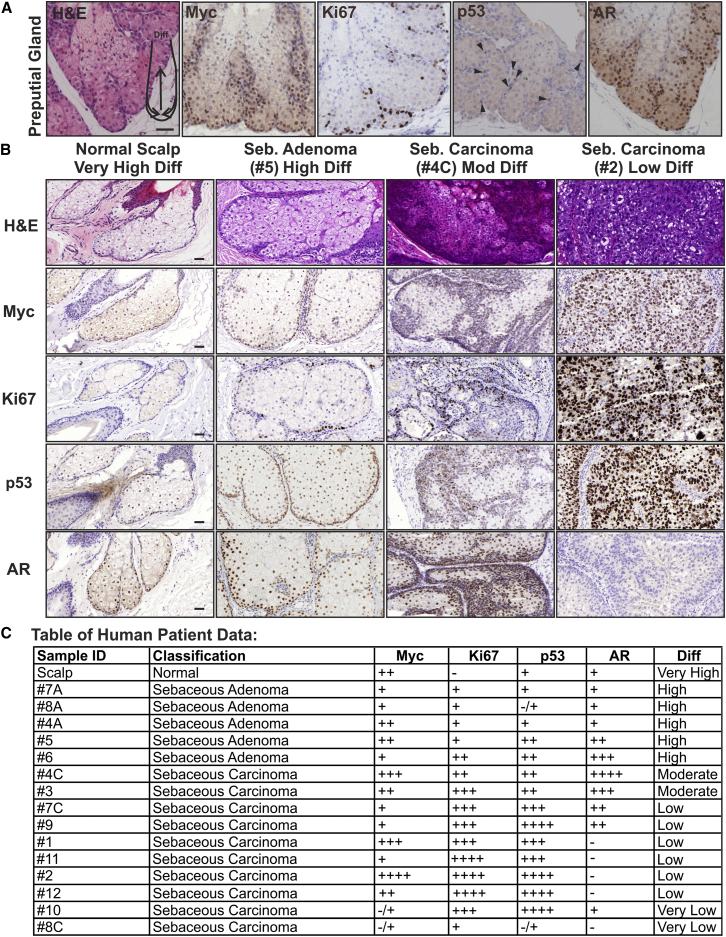
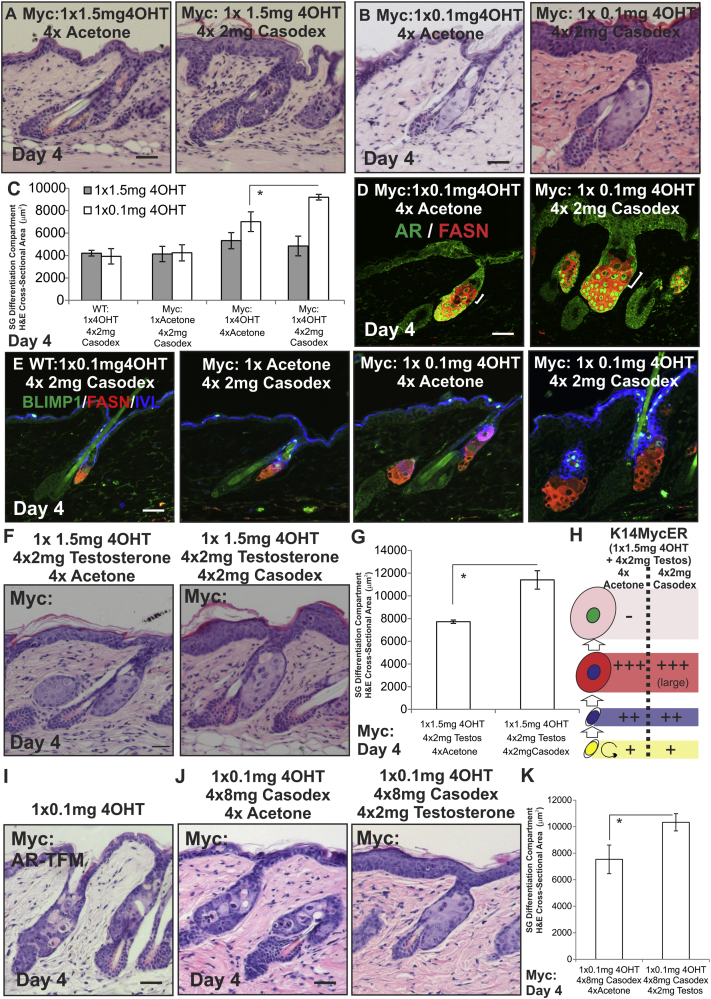
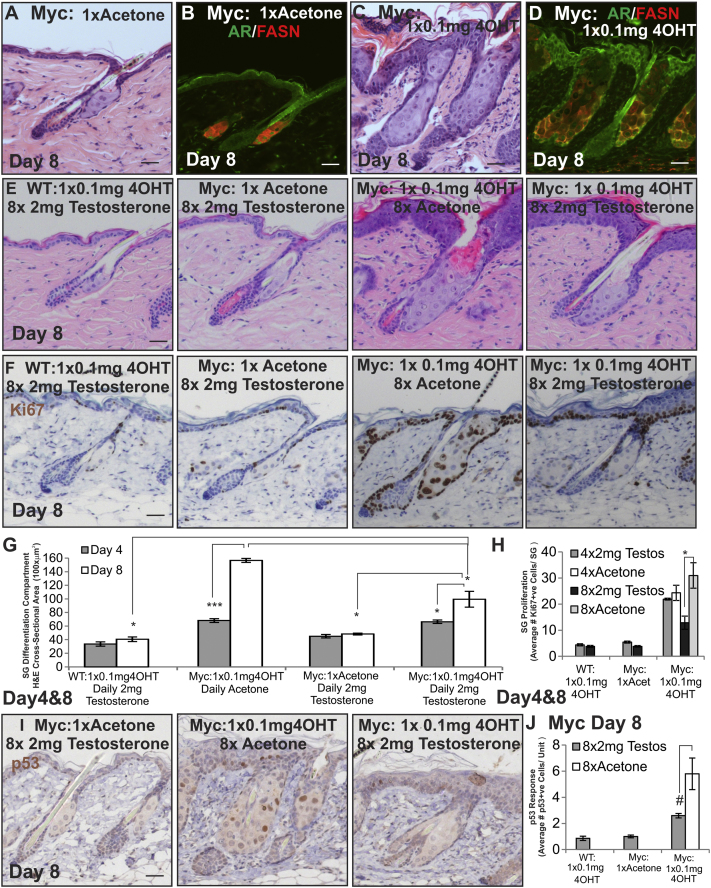
Although the sebaceous gland (SG) plays an important role in skin function, the mechanisms regulating SG differentiation and carcinoma formation are poorly understood. We previously reported that c-MYC overexpression stimulates SG differentiation. We now demonstrate roles for the androgen receptor (AR) and p53. MYC-induced SG differentiation was reduced in mice lacking a functional AR. High levels of MYC triggered a p53-dependent DNA damage response, leading to accumulation of proliferative SG progenitors and inhibition of AR signaling. Conversely, testosterone treatment or p53 deletion activated AR signaling and restored MYC-induced differentiation. Poorly differentiated human sebaceous carcinomas exhibited high p53 and low AR expression. Thus, the consequences of overactivating MYC in the SG depend on whether AR or p53 is activated, as they form a regulatory axis controlling proliferation and differentiation.
尽管皮脂腺 (SG) 在皮肤功能中起着重要作用,但调节 SG 分化和癌形成的机制还知之甚少。我们之前报道过,c-MYC 的过表达会刺激 SG 分化。我们现在证明了雄激素受体 (AR) 和 p53 的作用。缺乏功能性 AR 的小鼠中,MYC 诱导的 SG 分化减少。高水平的 MYC 触发了 p53 依赖性的 DNA 损伤反应,导致增殖性 SG 祖细胞的积累和 AR 信号的抑制。相反,睾酮处理或 p53 缺失激活了 AR 信号,并恢复了 MYC 诱导的分化。分化不良的人类皮脂腺癌表现出高 p53 和低 AR 表达。因此,在 SG 中过度激活 MYC 的后果取决于 AR 或 p53 是否被激活,因为它们形成了一个调节轴,控制增殖和分化。