Department of Otolaryngology-Head and Neck Surgery, Johns Hopkins Medical Institutions, Baltimore, MD, USA.
Int J Oncol. 2013 Apr;42(4):1427-36. doi: 10.3892/ijo.2013.1808. Epub 2013 Feb 6.
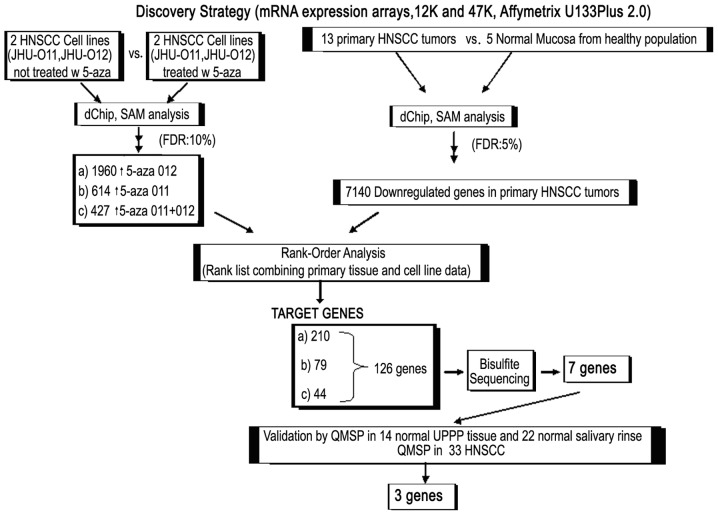
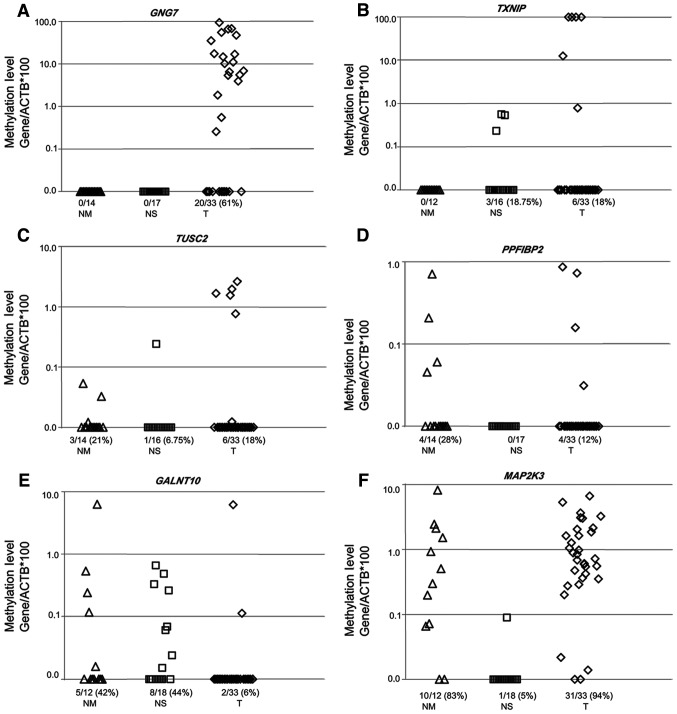
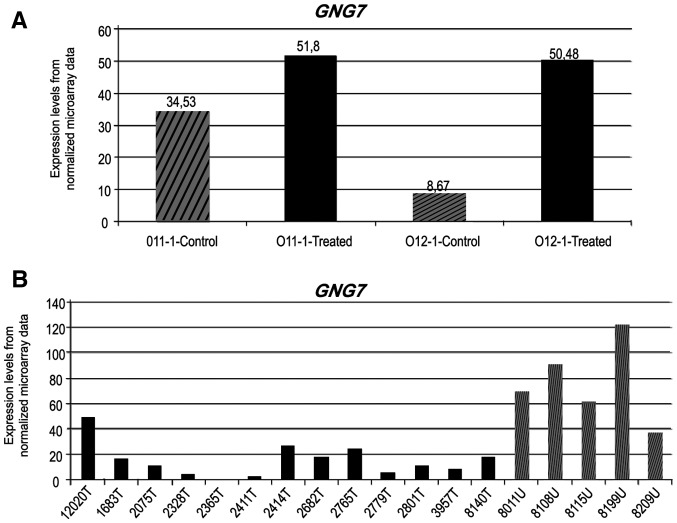
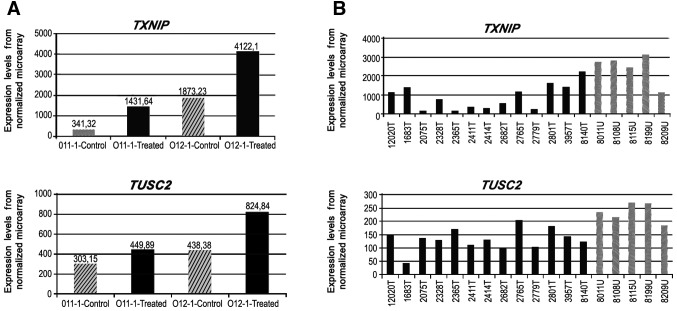
Silencing of tumor suppressor genes plays a vital role in head and neck carcinogenesis. Aberrant hypermethylation in the promoter region of some known or putative tumor suppressor genes occurs frequently during the development of various types of cancer including head and neck squamous cell carcinoma (HNSCC). In this study we used an expanded mRNA expression profiling approach followed by microarray expression analysis to identify epigenetically inactivated genes in HNSCC. Two HNSCC cell lines were treated with 5-aza-2'-deoxycytidine followed by microarray analysis to identify epigenetically silenced genes in HNSCC. We found 1,960, 614 and 427 genes were upregulated in the HNSCC cell lines JHU-012, JHU-011 and the combination of both cell lines, respectively. HNSCC tumor and normal mucosal samples were used for gene profiling by a 47K mRNA gene expression array and we found 7,140 genes were downregulated in HNSCC tumors compared to normal mucosa, as determined by microarray analysis, and were integrated with cell line data. Integrative analysis defined 126 candidate genes, of which only seven genes showed differential methylation in tumors and no methylation in normal mucosa after bisulfite sequencing. Following validation by QMSP, one gene, guanine nucleotide-binding protein γ-7 (GNG7), was confirmed to be highly methylated in tumors and unmethylated in normal mucosal and salivary rinse samples demonstrating cancer-specific methylation in HNSCC tissues. TXNIP and TUSC2 were partially methylated in tumors and normal salivary rinses but unmethylated in normal mucosa. We concluded that GNG7 is a highly specific promoter methylated gene associated with HNSCC. In addition, TXNIP and TUSC2 are also potential biomarkers for HNSCC.
肿瘤抑制基因的沉默在头颈部肿瘤发生中起着至关重要的作用。在各种类型的癌症(包括头颈部鳞状细胞癌)的发展过程中,已知或假定的肿瘤抑制基因的启动子区域经常发生异常高甲基化。在这项研究中,我们使用了一种扩展的 mRNA 表达谱分析方法,然后进行微阵列表达分析,以鉴定头颈部鳞状细胞癌中的表观遗传失活基因。用 5-氮杂-2'-脱氧胞苷处理两种头颈部鳞状细胞癌细胞系,然后进行微阵列分析,以鉴定头颈部鳞状细胞癌中的表观遗传沉默基因。我们发现,JHU-012、JHU-011 和两种细胞系的组合分别有 1960、614 和 427 个基因上调。用 47K mRNA 基因表达微阵列对头颈部鳞状细胞癌肿瘤和正常黏膜样本进行基因谱分析,我们发现与正常黏膜相比,头颈部鳞状细胞癌肿瘤中有 7140 个基因下调,通过微阵列分析确定,与细胞系数据整合。综合分析确定了 126 个候选基因,其中只有 7 个基因在肿瘤中有差异甲基化,而在正常黏膜中没有甲基化,经亚硫酸氢盐测序验证。通过 QMSP 验证后,一个基因,鸟嘌呤核苷酸结合蛋白 γ-7(GNG7),在肿瘤中高度甲基化,在正常黏膜和唾液冲洗样本中未甲基化,证明在 HNSCC 组织中存在癌症特异性甲基化。TXNIP 和 TUSC2 在肿瘤和正常唾液冲洗中部分甲基化,但在正常黏膜中未甲基化。我们得出结论,GNG7 是与 HNSCC 相关的高度特异性启动子甲基化基因。此外,TXNIP 和 TUSC2 也是 HNSCC 的潜在生物标志物。