Department of Anesthesia, Ahmadu Bello University Teaching Hospital, Shika, Zaria, Nigeria;
J Pain Res. 2013;6:71-7. doi: 10.2147/JPR.S38588. Epub 2013 Feb 7.
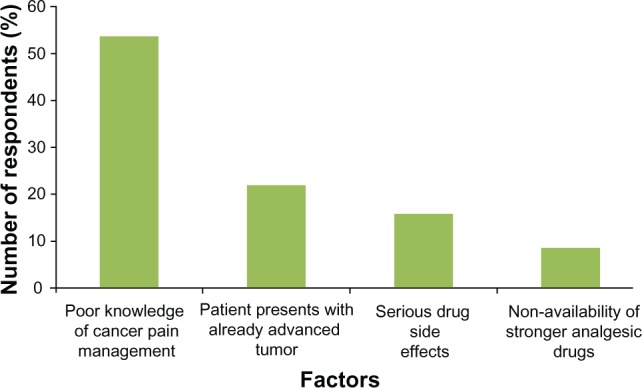
Several factors considered to be barriers to cancer pain management have been reported in the past. The knowledge of cancer pain management may be a hindrance to the proper assessment and treatment of pain in cancer patients.
This report presents an evaluation of the knowledge and practice of cancer pain management among medical practitioners in Ahmadu Bello University Teaching Hospital, Shika, Zaria.
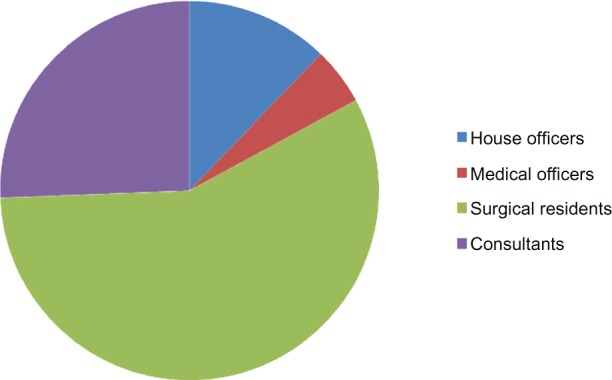
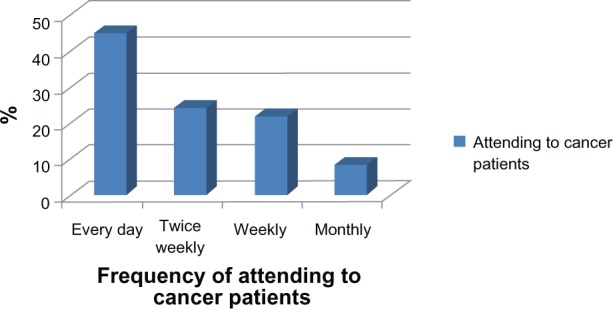
This report involves medical practitioners at the Ahmadu Bello University Teaching Hospital who are directly involved in the management of cancer patients. Information was obtained using a structured questionnaire, and the data were analyzed using SPSS (version 11.5).
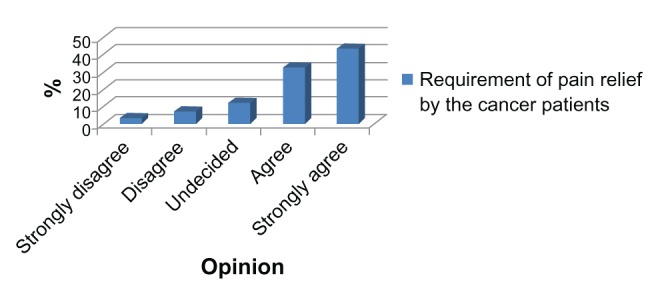
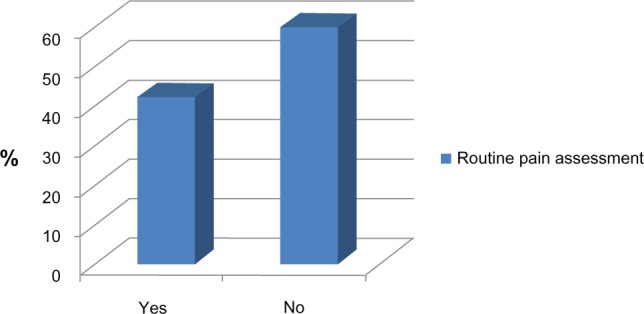
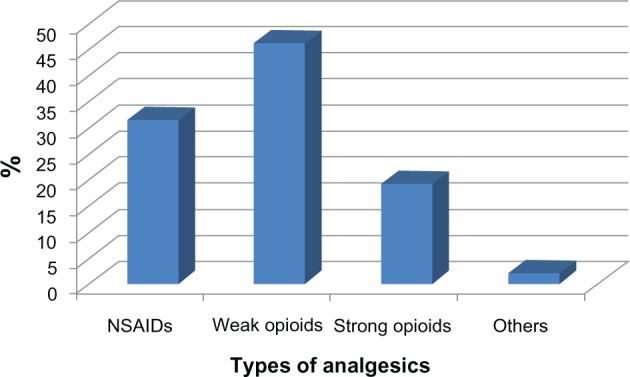
The response rate to the questionnaire was 82%, with an age range of 23 to 50 years (mean age, 34.9), and the majority of actual respondents, 55 (67%), were male. Thirty-six (44%) strongly agreed that cancer patients require pain relief. Yet only 40% of the respondents routinely conducted pain assessments among cancer patients, while 51% only treated when patients complained of pain. Concerning the type of analgesic commonly used for cancer patients, 43% used weak opioids, 32% used NSAIDs, and only 20% used strong opioids. Seventy-five respondents (91.5%) had no formal training on pain management.
The knowledge of pain management for cancer patients among medical personnel at the Ahmadu Bello University Teaching Hospital appears to be elementary. We recommend that formal training in the form of lectures, seminars, and workshops on cancer pain management should be part of continuing medical education in low-resource settings like the Ahmadu Bello University Teaching Hospital.
过去曾报道过一些被认为是癌症疼痛管理障碍的因素。对癌症疼痛管理的了解可能会妨碍对癌症患者疼痛的适当评估和治疗。
本报告评估了扎里亚希卡的艾哈迈杜·贝洛大学教学医院的医务人员对癌症疼痛管理的知识和实践情况。
本报告涉及直接参与癌症患者管理的艾哈迈杜·贝洛大学教学医院的医务人员。使用结构化问卷获取信息,并使用 SPSS(版本 11.5)分析数据。
对问卷的回应率为 82%,年龄范围为 23 至 50 岁(平均年龄为 34.9),实际受访者中,男性占多数,为 55 人(67%)。36 人(44%)强烈认为癌症患者需要缓解疼痛。然而,只有 40%的受访者经常对癌症患者进行疼痛评估,而 51%的受访者仅在患者抱怨疼痛时进行治疗。关于常用于癌症患者的镇痛剂类型,43%使用弱阿片类药物,32%使用非甾体抗炎药,只有 20%使用强阿片类药物。75 名受访者(91.5%)没有接受过疼痛管理方面的正规培训。
艾哈迈杜·贝洛大学教学医院医务人员对癌症患者疼痛管理的知识似乎还处于初级阶段。我们建议,在像艾哈迈杜·贝洛大学教学医院这样的资源匮乏的环境中,应将癌症疼痛管理方面的正式培训(如讲座、研讨会和讲习班)纳入继续医学教育的一部分。