Department of Biology, Loyola University Chicago, Chicago, Illinois, United States of America.
PLoS One. 2013;8(2):e55629. doi: 10.1371/journal.pone.0055629. Epub 2013 Feb 6.
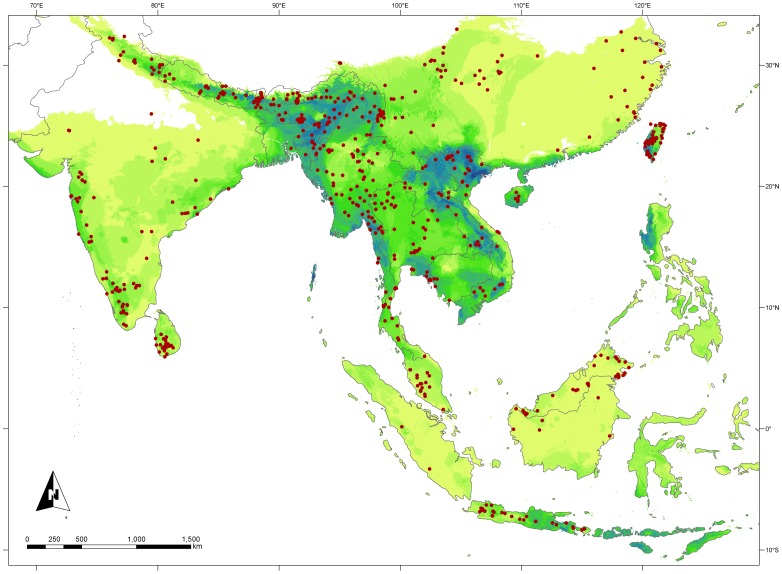
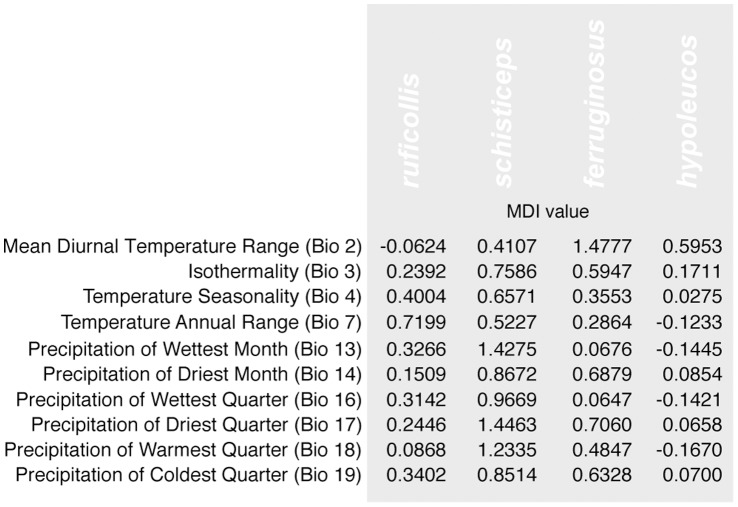
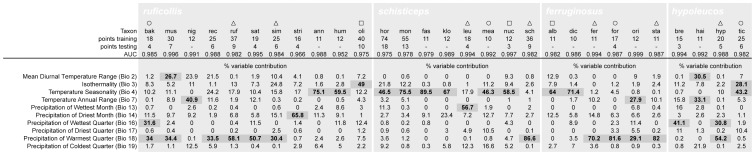
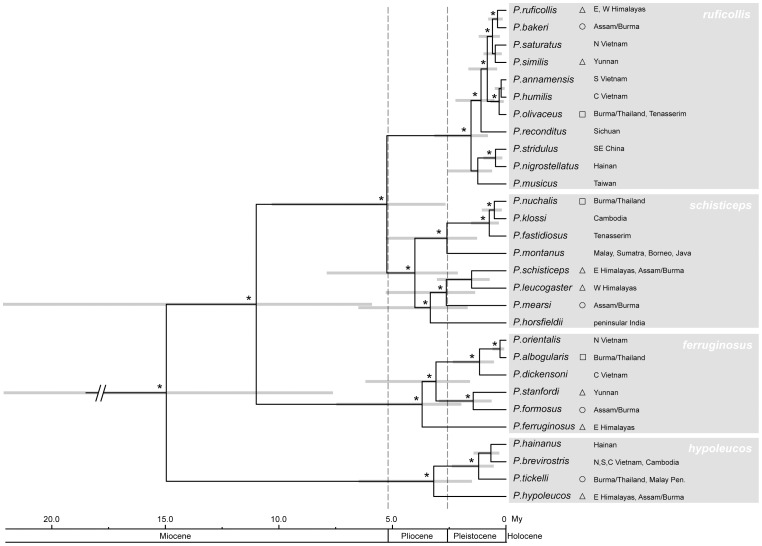
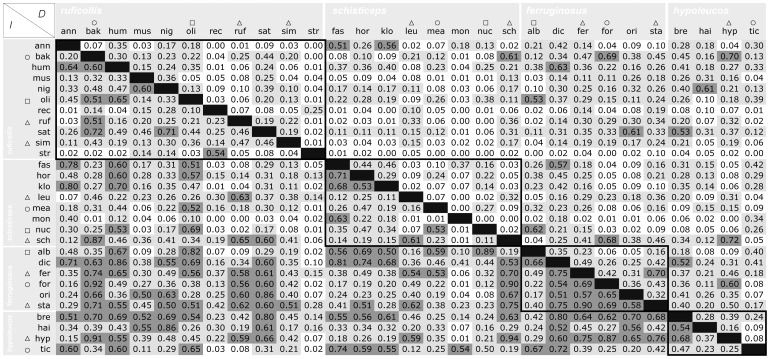
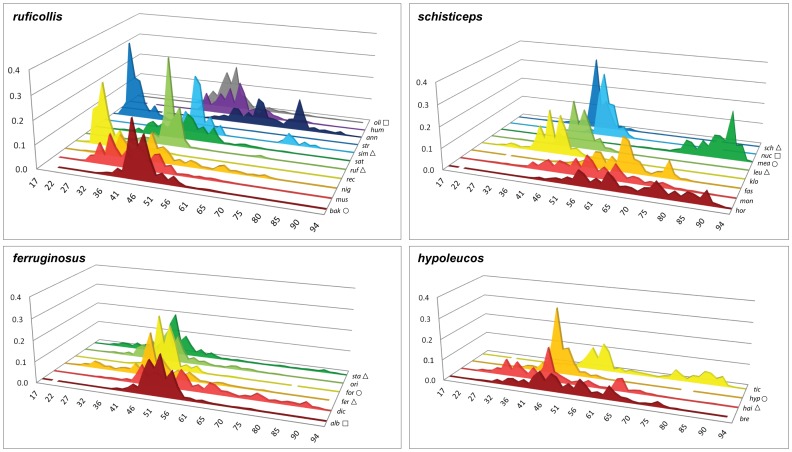
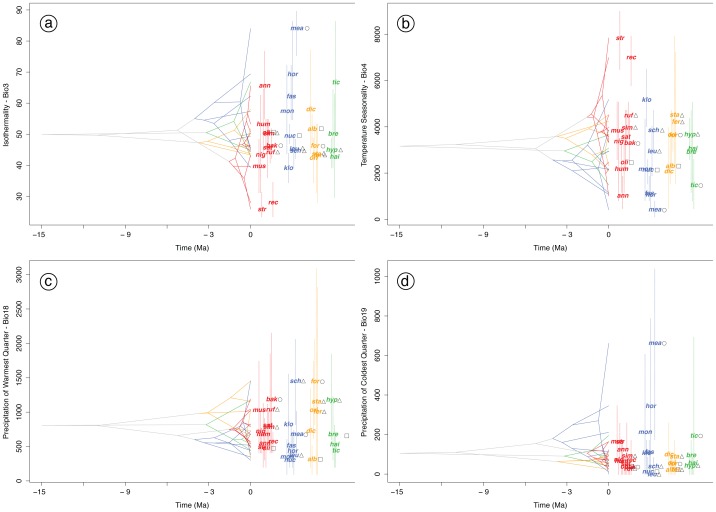
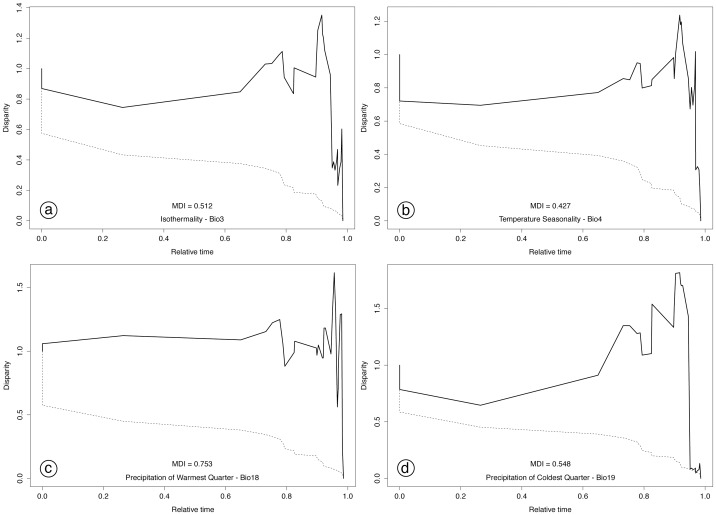
We present the first extensive and integrative analysis of niche evolution based on climatic variables and a dated molecular phylogeny of a heterogeneous avian group of Southeast Asian scimitar babblers of the genus Pomatorhinus. The four main clades of scimitar babblers have species that co-occur in similar areas across southern Asia but some have diverged at different timeframes, with the most recently evolved clade harboring the highest number of species. Ecological niche models and analysis of contributing variables within a phylogenetic framework indicate instances of convergent evolution of members of different clades onto similar ecological parameter space, as well as divergent evolution of members from within clades. Pomatorhinus species from different clades occupying Himalayan foothills show convergence towards similar climatic tolerances, whereas within a clade, allopatric sister-species occurring in the Himalayas have diverged to occupy different climatic parameter spaces. Comparisons of climatic tolerances of Himalayan foothills taxa with species distributed further south in Assam/Burma and Burma/Thailand indicate convergence towards similar parameter spaces in several climatic variables. Niche overlap was observed to be lower among species of the youngest clade (ruficollis) and higher among species of older clades (ferruginosus). Analysis of accumulation of ecological disparity through time indicates rapid divergence within recent time frames. As a result, Himalayan taxa originating at different temporal scales within the four main scimitar babbler clades have differentiated ecologically only in recently diverged taxa. Our study suggests that the repeated orogenic and climatic fluctuations of the Pliocene and Pleistocene within mainland Southeast Asia served as an important ecological speciation driver within scimitar babblers, by providing opportunities for rapid geographic expansion and filling of novel environmental niches.
我们呈现了首次基于气候变量和东南亚剑嘴鹛属(Pomatorhinus)异质鸟类的分子系统发育进行的生态位进化的广泛综合分析。剑嘴鹛的四个主要分支都有在整个南亚相似地区共同出现的物种,但有些分支在不同的时间框架内发生了分化,其中进化时间最晚的分支拥有最多的物种。生态位模型和系统发育框架内的贡献变量分析表明,不同分支成员的趋同进化以及分支内成员的趋异进化都存在实例。来自不同分支的栖息在喜马拉雅山麓的剑嘴鹛物种表现出对相似生态容忍度的趋同,而在一个分支内,分布在喜马拉雅山脉的异域姐妹种已经分化到不同的气候参数空间。与分布在更南部的阿萨姆邦/缅甸和缅甸/泰国的物种相比,喜马拉雅山麓的分类群的气候容忍度比较表明,在几个气候变量中存在趋同的参数空间。在最年轻的分支(ruficollis)中,物种间的生态位重叠较低,而在较老的分支(ferruginosus)中,物种间的生态位重叠较高。通过时间分析生态差异的积累表明,在最近的时间框架内发生了快速的分化。因此,起源于四个主要剑嘴鹛分支内不同时间尺度的喜马拉雅分类群仅在最近分化的分类群中在生态上发生了分化。我们的研究表明,上新世和更新世期间东南亚大陆的多次造山和气候波动是剑嘴鹛生态分化的一个重要驱动因素,为快速的地理扩张和新环境生态位的填补提供了机会。