Northwest Fisheries Science Center, National Marine Fisheries Service, National Oceanic and Atmospheric Administration, Seattle, Washington, USA.
PLoS One. 2013;8(2):e55726. doi: 10.1371/journal.pone.0055726. Epub 2013 Feb 7.
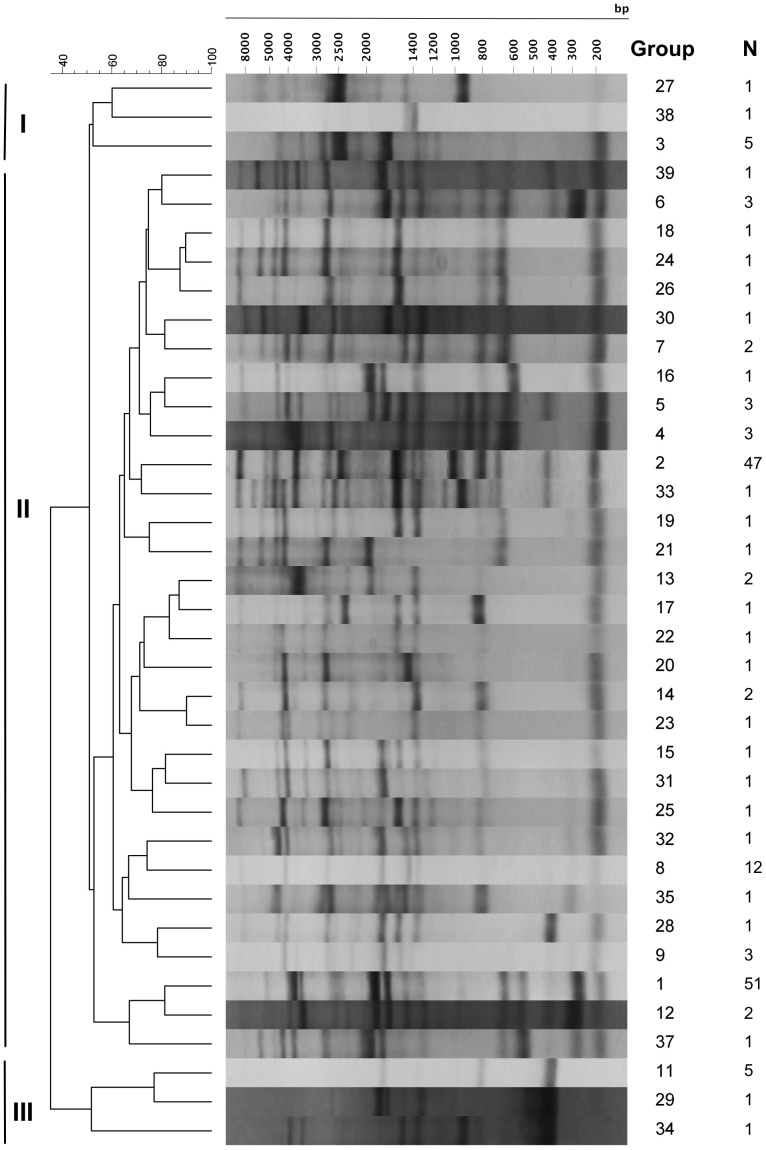
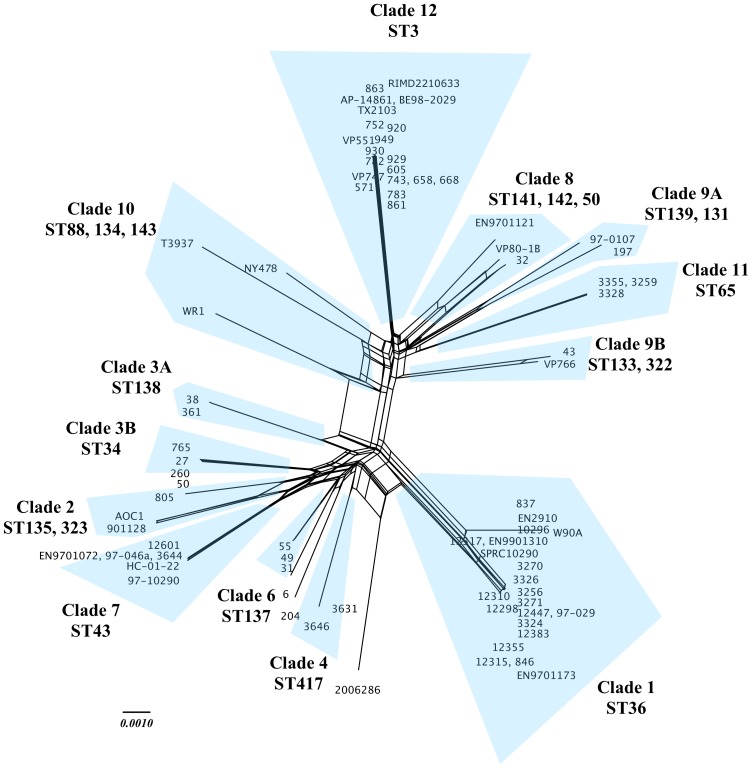
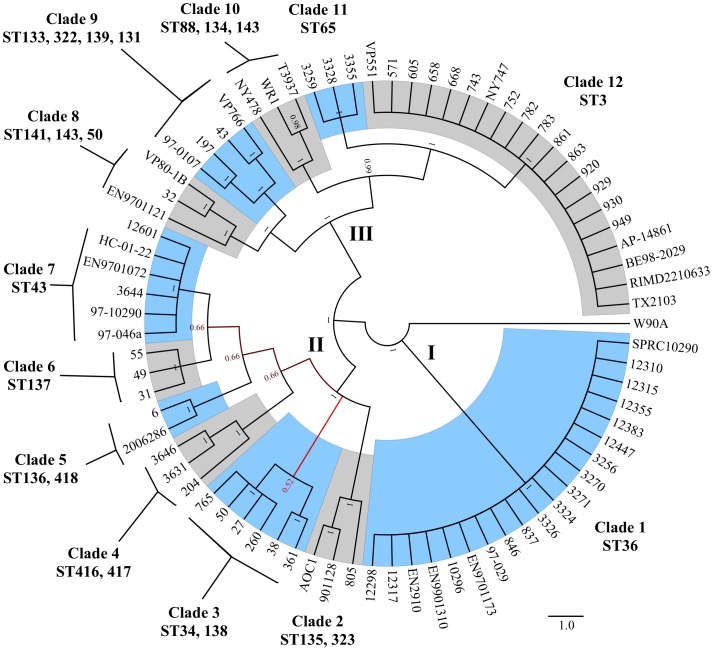
Vibrio parahaemolyticus is a common marine bacterium and a leading cause of seafood-borne bacterial gastroenteritis worldwide. Although this bacterium has been the subject of much research, the population structure of cold-water populations remains largely undescribed. We present a broad phylogenetic analysis of clinical and environmental V. parahaemolyticus originating largely from the Pacific Northwest coast of the United States. Repetitive extragenic palindromic PCR (REP-PCR) separated 167 isolates into 39 groups and subsequent multilocus sequence typing (MLST) separated a subset of 77 isolates into 24 sequence types. The Pacific Northwest population exhibited a semi-clonal structure attributed to an environmental clade (ST3, N = 17 isolates) clonally related to the pandemic O3:K6 complex and a clinical clade (ST36, N = 20 isolates) genetically related to a regionally endemic O4:K12 complex. Further, the identification of at least five additional clinical sequence types (i.e., ST43, 50, 65, 135 and 417) demonstrates that V. parahaemolyticus gastroenteritis in the Pacific Northwest is polyphyletic in nature. Recombination was evident as a significant source of genetic diversity and in particular, the recA and dtdS alleles showed strong support for frequent recombination. Although pandemic-related illnesses were not documented during the study, the environmental occurrence of the pandemic clone may present a significant threat to human health and warrants continued monitoring. It is evident that V. parahaemolyticus population structure in the Pacific Northwest is semi-clonal and it would appear that multiple sequence types are contributing to the burden of disease in this region.
副溶血性弧菌是一种常见的海洋细菌,也是全球食源性细菌性胃肠炎的主要致病菌。尽管该细菌已经进行了大量研究,但冷水种群的种群结构在很大程度上仍未被描述。我们对主要来自美国太平洋西北海岸的临床和环境副溶血性弧菌进行了广泛的系统发育分析。重复扩展基因回文 PCR(REP-PCR)将 167 个分离株分为 39 个组,随后的多位点序列分型(MLST)将 77 个分离株的一个子集分为 24 个序列型。太平洋西北种群表现出半克隆结构,归因于一个与大流行 O3:K6 复合群密切相关的环境分支(ST3,N=17 个分离株)和一个与区域流行 O4:K12 复合群密切相关的临床分支(ST36,N=20 个分离株)。此外,至少鉴定出另外五个临床序列型(即 ST43、50、65、135 和 417)表明,太平洋西北地区的副溶血性弧菌胃肠炎本质上是多系的。重组是遗传多样性的一个重要来源,特别是 recA 和 dtdS 等位基因强烈支持频繁的重组。尽管在研究期间没有记录到与大流行相关的疾病,但大流行相关克隆在环境中的出现可能对人类健康构成重大威胁,需要继续监测。显然,太平洋西北地区副溶血性弧菌的种群结构是半克隆的,似乎有多个序列型对该地区的疾病负担有贡献。