1. Department of Imaging and Pathology, Biomedical Sciences Group; KU Leuven, Belgium. ; 2. Molecular Small Animal Imaging Center, Faculty of Medicine; KU Leuven, Belgium.
J Cancer. 2013;4(2):133-45. doi: 10.7150/jca.5635. Epub 2013 Jan 22.
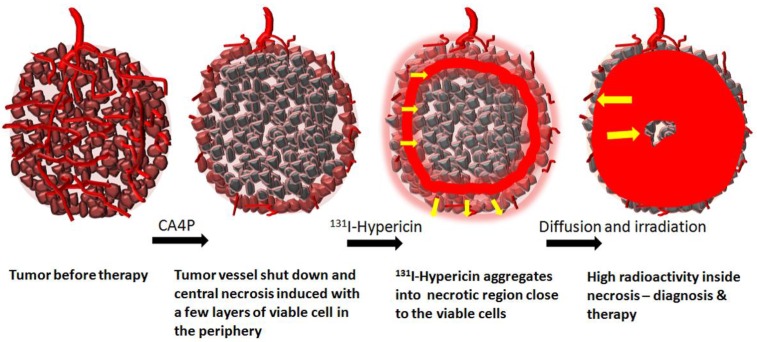
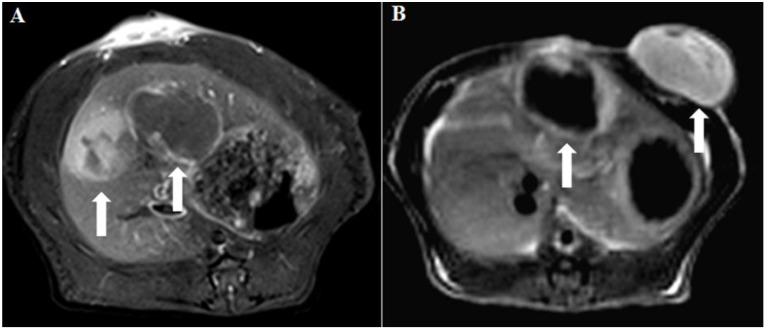
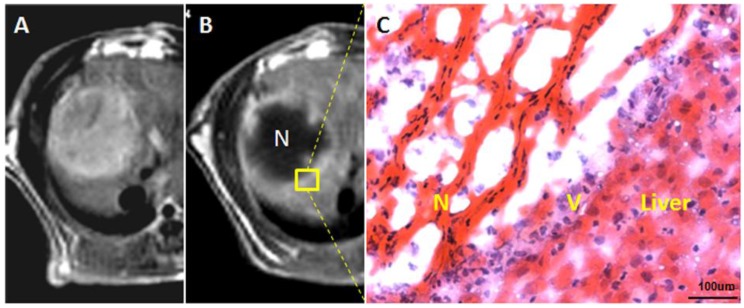
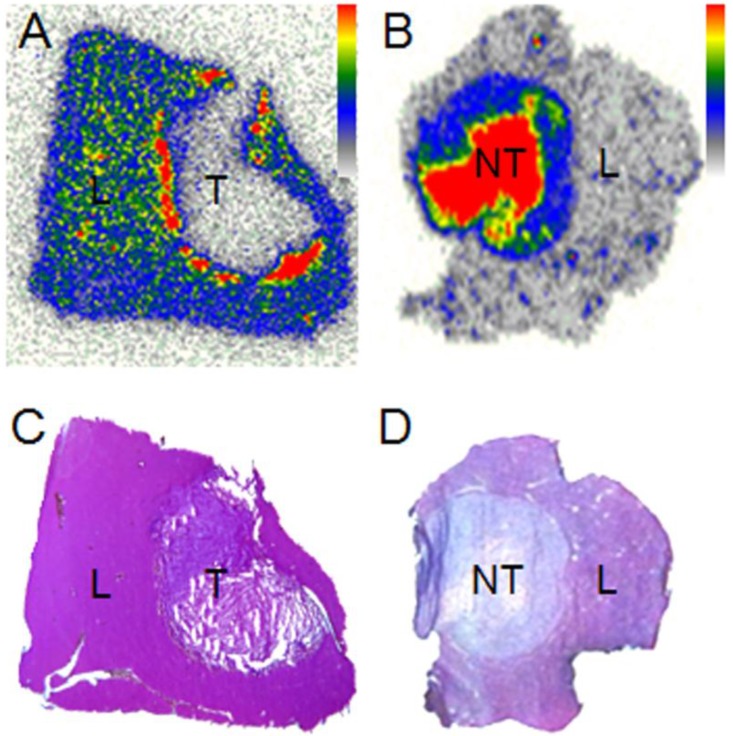
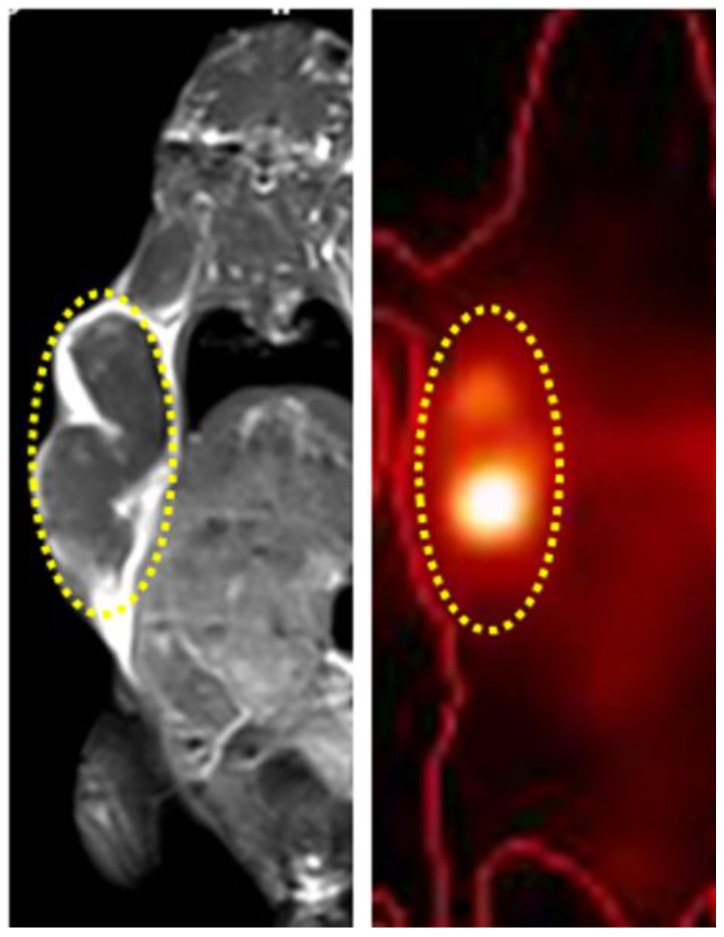
Hitting the evasive tumor cells proves challenging in targeted cancer therapies. A general and unconventional anticancer approach namely small molecule sequential dual-targeting theragnostic strategy (SMSDTTS) has recently been introduced with the aims to target and debulk the tumor mass, wipe out the residual tumor cells, and meanwhile enable cancer detectability. This dual targeting approach works in two steps for systemic delivery of two naturally derived drugs. First, an anti-tubulin vascular disrupting agent, e.g., combretastatin A4 phosphate (CA4P), is injected to selectively cut off tumor blood supply and to cause massive necrosis, which nevertheless always leaves peripheral tumor residues. Secondly, a necrosis-avid radiopharmaceutical, namely (131)I-hypericin ((131)I-Hyp), is administered the next day, which accumulates in intratumoral necrosis and irradiates the residual cancer cells with beta particles. Theoretically, this complementary targeted approach may biologically and radioactively ablate solid tumors and reduce the risk of local recurrence, remote metastases, and thus cancer mortality. Meanwhile, the emitted gamma rays facilitate radio-scintigraphy to detect tumors and follow up the therapy, hence a simultaneous theragnostic approach. SMSDTTS has now shown promise from multicenter animal experiments and may demonstrate unique anticancer efficacy in upcoming preliminary clinical trials. In this short review article, information about the two involved agents, the rationale of SMSDTTS, its preclinical antitumor efficacy, multifocal targetability, simultaneous theragnostic property, and toxicities of the dose regimens are summarized. Meanwhile, possible drawbacks, practical challenges and future improvement with SMSDTTS are discussed, which hopefully may help to push forward this strategy from preclinical experiments towards possible clinical applications.
靶向癌症治疗中,击中逃避的肿瘤细胞极具挑战性。最近提出了一种通用且非常规的抗癌方法,即小分子序贯双重靶向治疗策略 (SMSDTTS),旨在靶向和缩小肿瘤体积,消灭残留的肿瘤细胞,同时提高癌症的可检测性。这种双重靶向方法通过系统递送来实现两种天然药物的靶向作用。首先,注射抗微管血管破坏剂,例如,考布他汀 A4 磷酸盐 (CA4P),选择性地切断肿瘤的血液供应并导致大量坏死,但这总是会留下外周肿瘤残留。其次,第二天给予坏死靶向放射性药物,即(131)碘-金丝桃素 ((131)I-Hyp),它在肿瘤坏死部位积聚并通过β粒子照射残留的癌细胞。从理论上讲,这种互补的靶向方法可以从生物学和放射学上消融实体瘤,降低局部复发、远处转移和癌症死亡率的风险。同时,发射的伽马射线有助于放射闪烁成像来检测肿瘤并跟踪治疗,因此是一种同时的治疗诊断方法。SMSDTTS 已在多中心动物实验中显示出前景,并可能在即将进行的初步临床试验中显示出独特的抗癌疗效。在这篇简短的综述文章中,总结了两种相关药物的信息、SMSDTTS 的原理、其临床前抗肿瘤疗效、多焦点靶向性、同时的治疗诊断特性以及剂量方案的毒性。同时,讨论了 SMSDTTS 的可能缺点、实际挑战和未来改进,希望有助于将该策略从临床前实验推向可能的临床应用。