Liu Yewei, Wang Shuncong, Zhao Xiaohui, Feng Yuanbo, Bormans Guy, Swinnen Johan, Oyen Raymond, Huang Gang, Ni Yicheng, Li Yue
KU Leuven, Biomedical Group, Campus Gasthuisberg, 3000 Leuven, Belgium.
Shanghai Key Laboratory of Molecular Imaging, Shanghai University of Medicine and Health Sciences, Shanghai 201318, China.
Diagnostics (Basel). 2020 Jan 31;10(2):78. doi: 10.3390/diagnostics10020078.
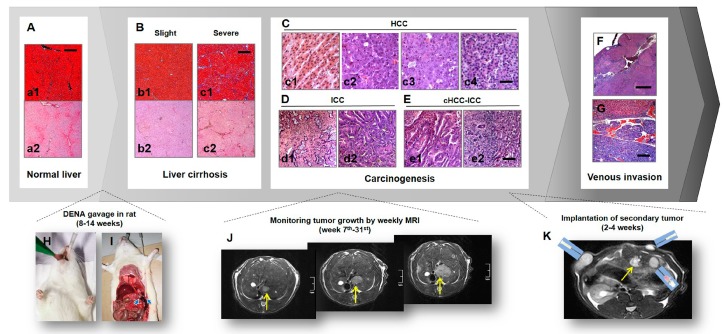
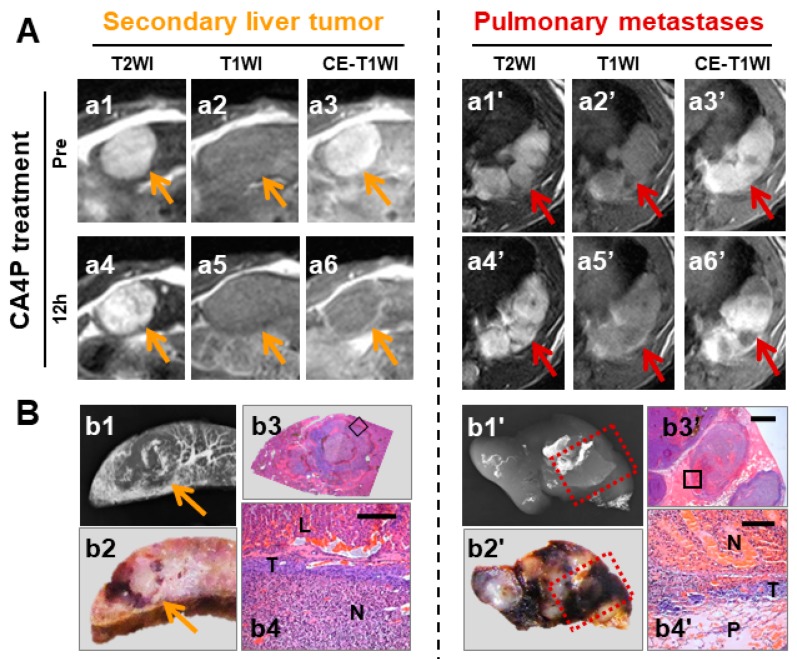
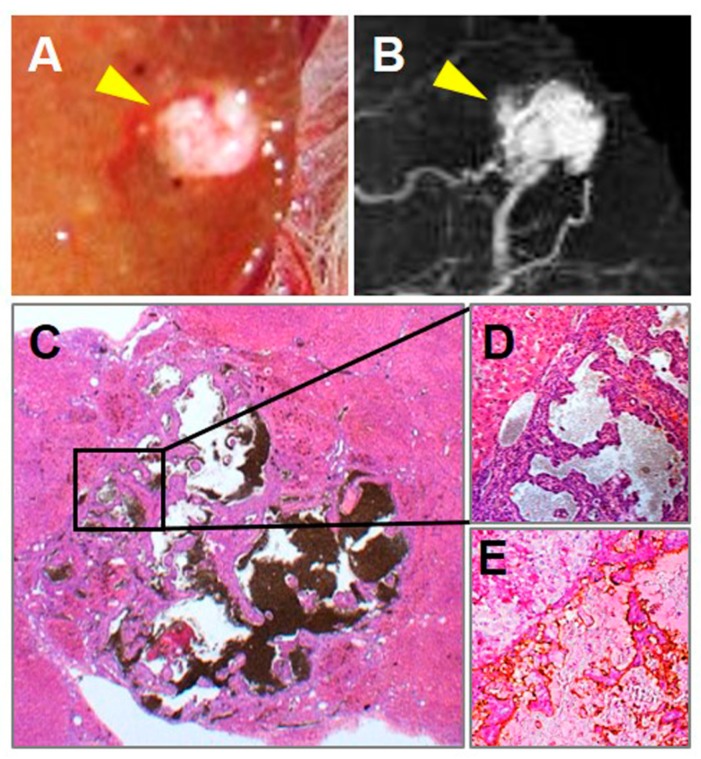
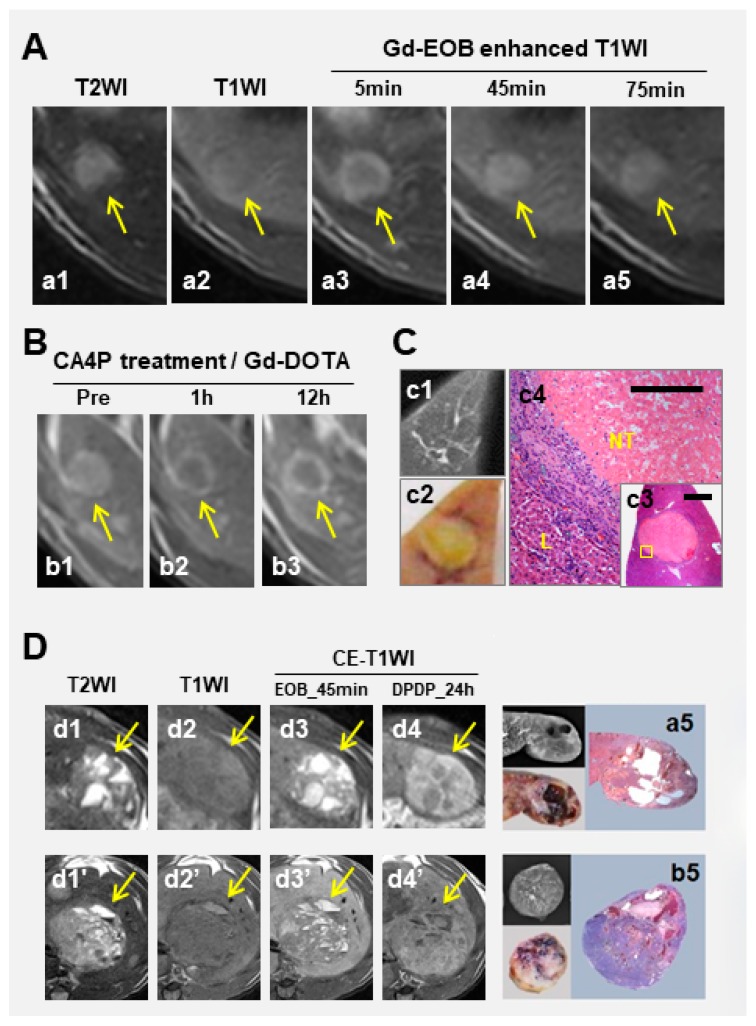
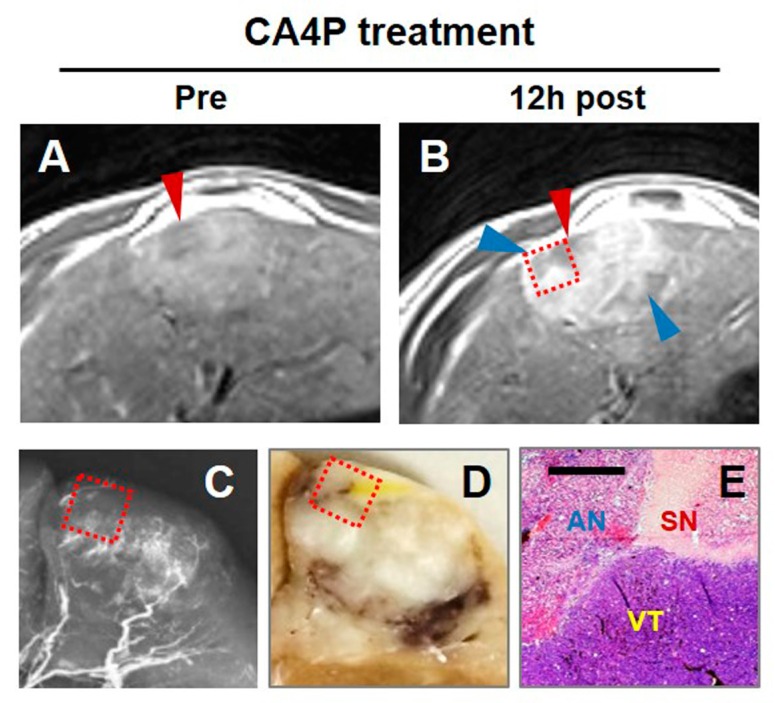
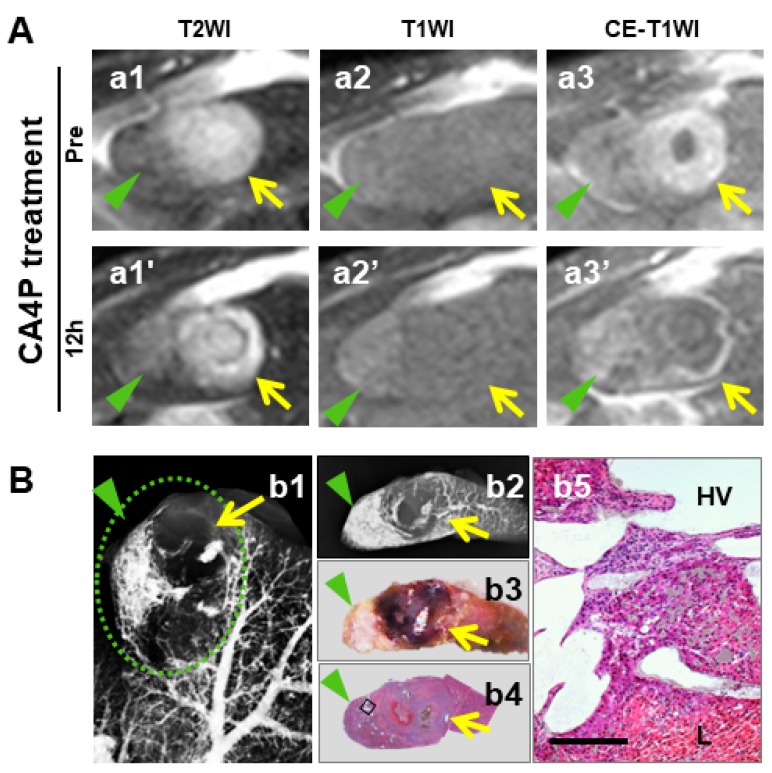
Vascular disrupting agents (VDAs) have entered clinical trials for over 15 years. As the leading VDA, combretastatin A4 phosphate (CA4P) has been evaluated in combination with chemotherapy and molecular targeting agents among patients with ovarian cancer, lung cancer and thyroid cancer, but still remains rarely explored in human liver cancers. To overcome tumor residues and regrowth after CA4P monotherapy, a novel dual targeting pan-anticancer theragnostic strategy, i.e., OncoCiDia, has been developed and shown promise previously in secondary liver tumor models. Animal model of primary liver cancer is time consuming to induce, but of value for more closely mimicking human liver cancers in terms of tumor angiogenesis, histopathological heterogeneity, cellular differentiation, tumor components, cancer progression and therapeutic response. Being increasingly adopted in VDA researches, multiparametric magnetic resonance imaging (MRI) provides imaging biomarkers to reflect in vivo tumor responses to drugs. In this article as a chapter of a doctoral thesis, we overview the construction and clinical relevance of primary and secondary liver cancer models in rodents. Target selection for CA4P therapy assisted by enhanced MRI using hepatobiliary contrast agents (CAs), and therapeutic efficacy evaluated by using MRI with a non-specific contrast agent, dynamic contrast enhanced (DCE) imaging, diffusion weighted imaging (DWI) are also described. We then summarize diverse responses among primary hepatocellular carcinomas (HCCs), secondary liver and pancreatic tumors to CA4P, which appeared to be related to tumor size, vascularity, and cellular differentiation. In general, imaging-histopathology correlation studies allow to conclude that CA4P tends to be more effective in secondary liver tumors and in more differentiated HCCs, but less effective in less differentiated HCCs and implanted pancreatic tumor. Notably, cirrhotic liver may be responsive to CA4P as well. All these could be instructive for future clinical trials of VDAs.
血管破坏剂(VDAs)进入临床试验已超过15年。作为主要的血管破坏剂,磷酸考布他汀A4(CA4P)已在卵巢癌、肺癌和甲状腺癌患者中与化疗及分子靶向药物联合进行了评估,但在人类肝癌中的研究仍很少。为克服CA4P单药治疗后的肿瘤残留和复发,已开发出一种新型双靶点泛抗癌诊疗策略,即OncoCiDia,并且此前在继发性肝肿瘤模型中已显示出前景。原发性肝癌动物模型诱导耗时,但在肿瘤血管生成、组织病理学异质性、细胞分化、肿瘤成分、癌症进展及治疗反应方面,对于更紧密模拟人类肝癌具有重要价值。多参数磁共振成像(MRI)在VDAs研究中越来越多地被采用,它能提供成像生物标志物以反映体内肿瘤对药物的反应。在本文作为博士论文的一章中,我们概述了啮齿动物原发性和继发性肝癌模型的构建及临床相关性。还描述了使用肝胆对比剂(CAs)增强MRI辅助CA4P治疗的靶点选择,以及使用非特异性对比剂磁共振成像、动态对比增强(DCE)成像、扩散加权成像(DWI)评估治疗效果。然后我们总结了原发性肝细胞癌(HCCs)、继发性肝肿瘤和胰腺肿瘤对CA4P的不同反应,这些反应似乎与肿瘤大小、血管分布及细胞分化有关。总体而言,成像 - 组织病理学相关性研究表明,CA4P在继发性肝肿瘤和分化程度较高的HCCs中往往更有效,但在分化程度较低的HCCs和植入性胰腺肿瘤中效果较差。值得注意的是,肝硬化肝脏对CA4P也可能有反应。所有这些对未来VDAs的临床试验都具有指导意义。