Institute of Nanobiotechnology, School of Materials Science and Engineering, Tianjin University and Tianjin Key Laboratory of Composites and Functional Materials, Tianjin 300072, China.
Theranostics. 2013;3(2):99-108. doi: 10.7150/thno.5361. Epub 2013 Jan 18.
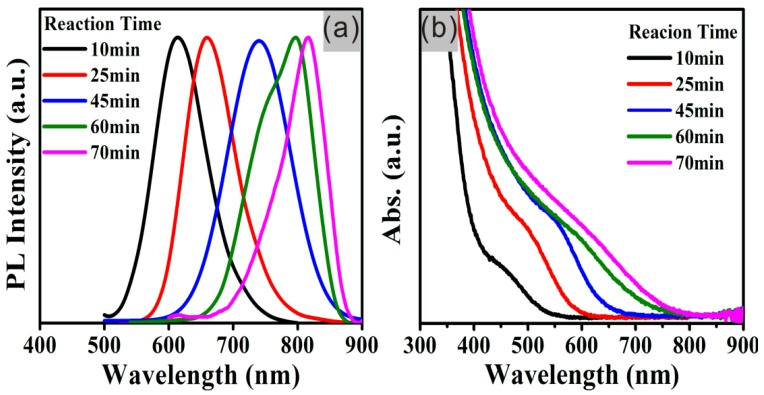
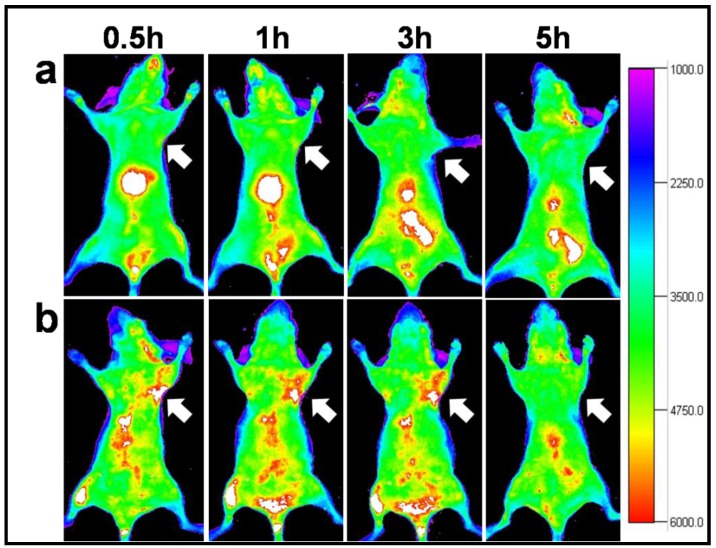
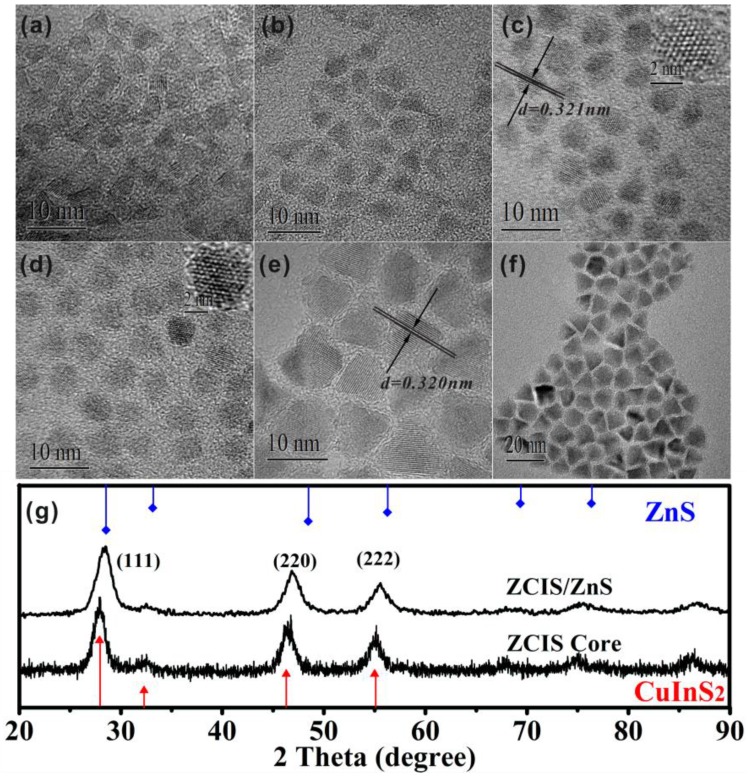
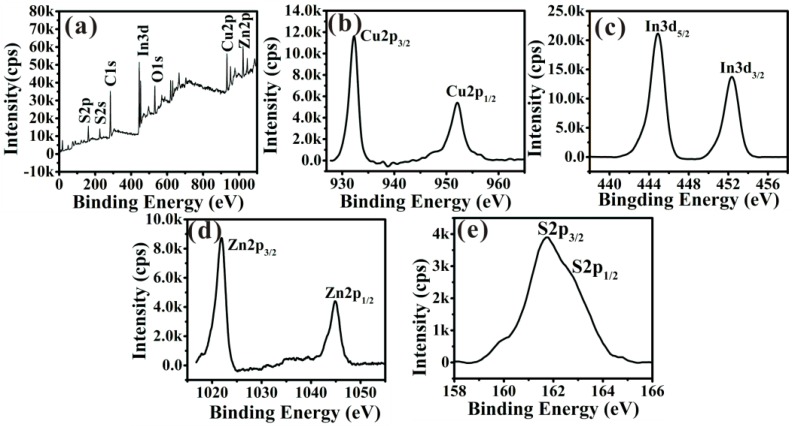
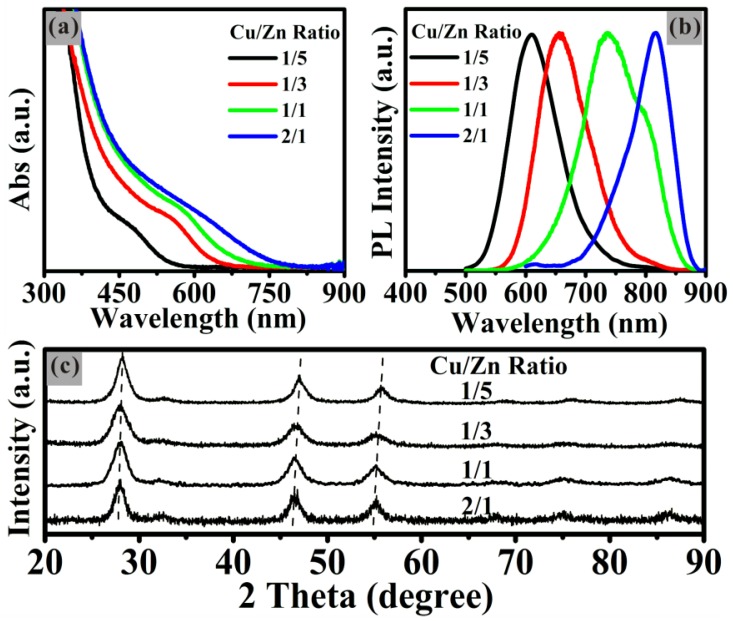
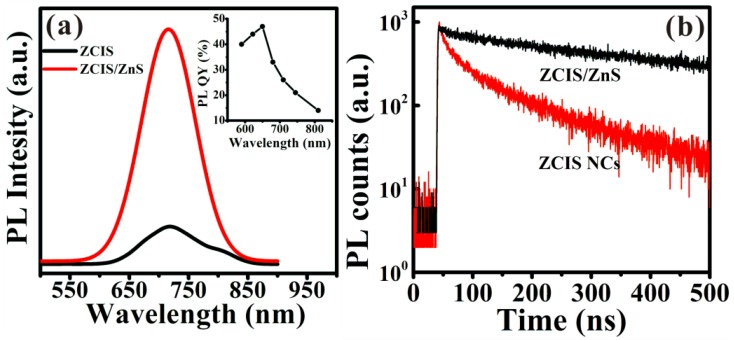
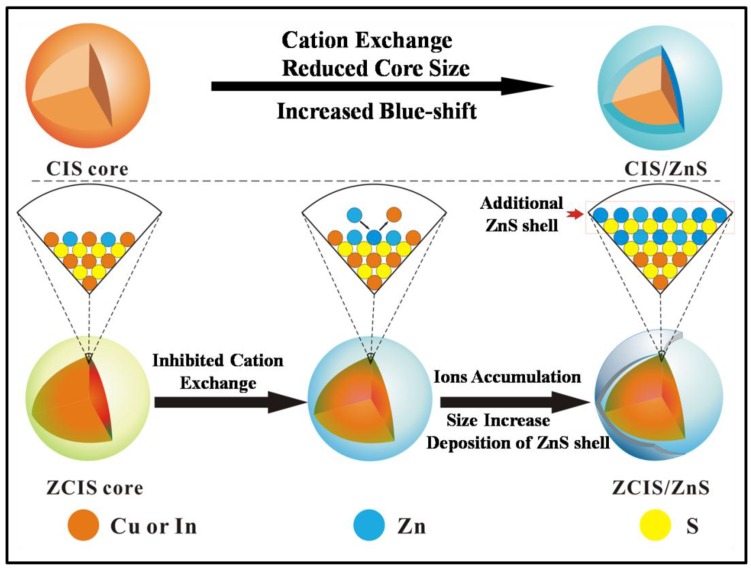
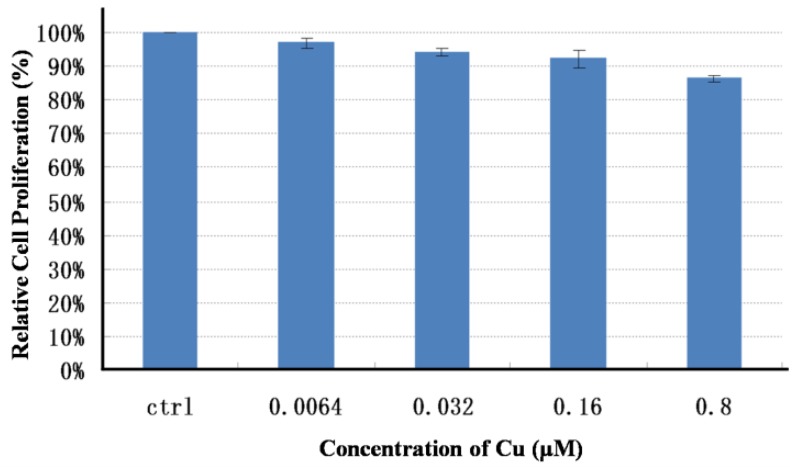
A facile strategy is reported here for synthesis of Zn-Cu-In-S/ZnS (ZCIS/ZnS) core/shell QDs to address the synthetic issues that the unexpected blue-shift of CuInS(2)-based nanocrystals. In this strategy, Zn(2+) ions are intentionally employed for the synthesis of alloyed ZCIS core QDs before ZnS shell coating, which contributes to the reduced blue-shift in photoluminescence (PL) emission. The experimental results demonstrate this elaborate facile strategy is effective for the reduction of blue-shift during shell growth. Particularly, a hypothesis is proposed and proved for explanation of this effective strategy. Namely, both cation exchange inhibition and ions accumulation are involved during the synthesis of ZCIS/ZnS QDs. Furthermore, the obtained near infrared (NIR) ZCIS/ZnS QDs are transferred into aqueous phase by a polymer coating technique and coupled with cyclic Arg-Gly-Asp peptide (cRGD) peptides. After confirmation of biocompability by cytotoxicity test on normal 3T3 cells, these QDs are injected via tail vein into nude mice bearing U87 MG tumor. The result indicates that the signals detected in the tumor region are much more distinguishing injected with ZCIS/ZnS-cRGD QDs than that injected with ZCIS/ZnS QDs.
这里报道了一种简便的策略,用于合成 Zn-Cu-In-S/ZnS(ZCIS/ZnS)核/壳量子点,以解决基于 CuInS(2) 的纳米晶体意外蓝移的合成问题。在该策略中,在 ZnS 壳层涂覆之前,故意使用 Zn(2+) 离子来合成合金化的 ZCIS 核 QD,这有助于减少光致发光(PL)发射中的蓝移。实验结果表明,这种精心设计的简便策略对于减少壳层生长过程中的蓝移是有效的。特别是,提出并证明了一个假设来解释这种有效的策略。即,在 ZCIS/ZnS QD 的合成过程中涉及阳离子交换抑制和离子积累。此外,通过聚合物涂层技术将获得的近红外(NIR)ZCIS/ZnS QD 转化为水相,并与环状 Arg-Gly-Asp 肽(cRGD)肽偶联。在通过正常 3T3 细胞的细胞毒性试验确认生物相容性后,将这些 QD 通过尾静脉注射到携带 U87 MG 肿瘤的裸鼠中。结果表明,与注射 ZCIS/ZnS QD 相比,注射 ZCIS/ZnS-cRGD QD 后在肿瘤区域检测到的信号更加明显。