State Key Laboratory of Reproductive Biology, Institute of Zoology, Chinese Academy of Sciences, Beijing, China.
Cell Death Dis. 2013 Feb 21;4(2):e502. doi: 10.1038/cddis.2013.1.
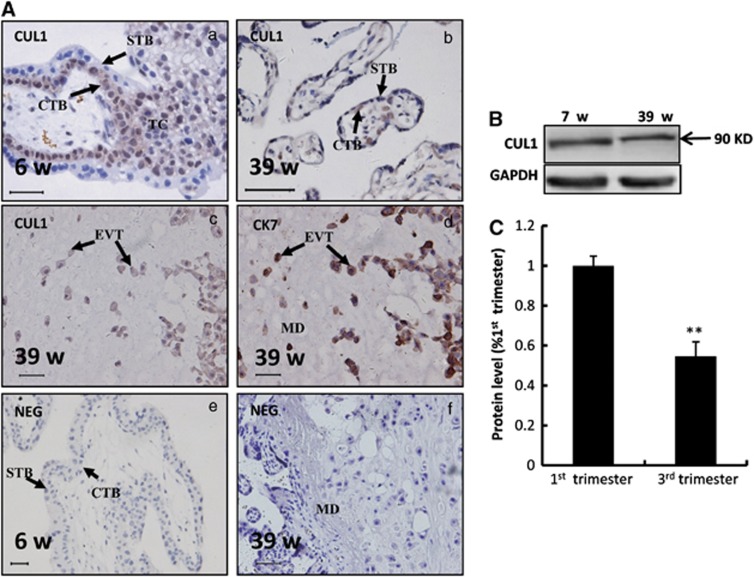
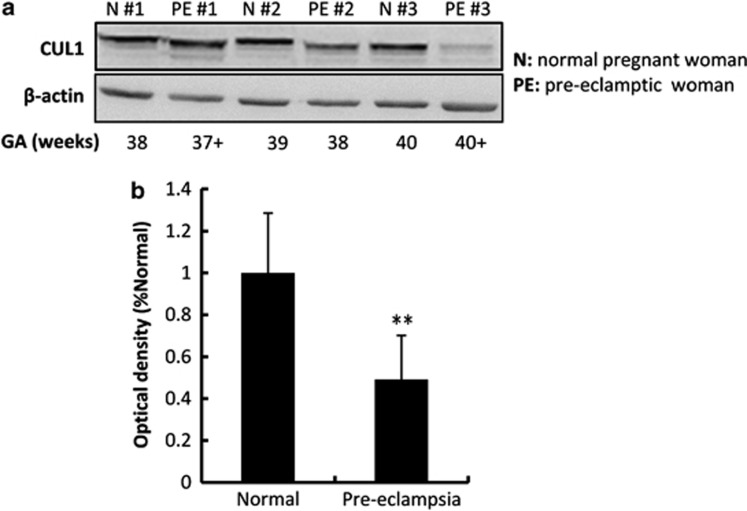
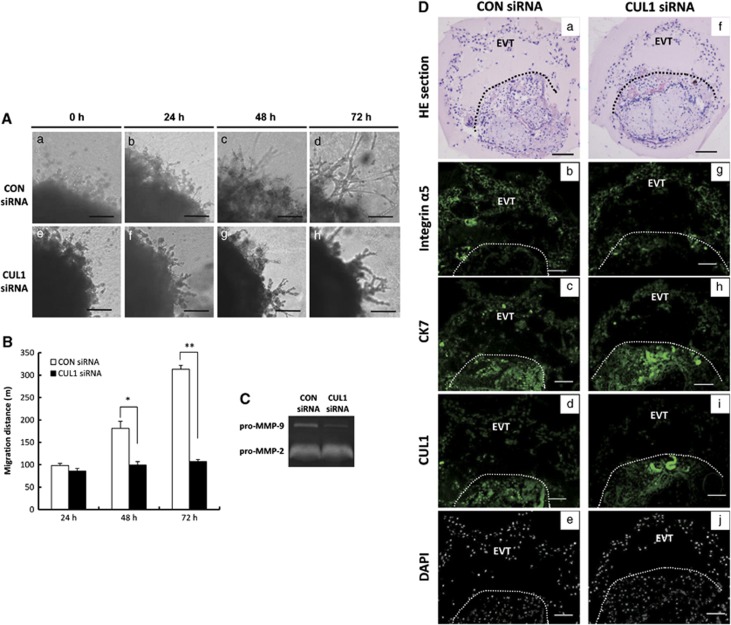
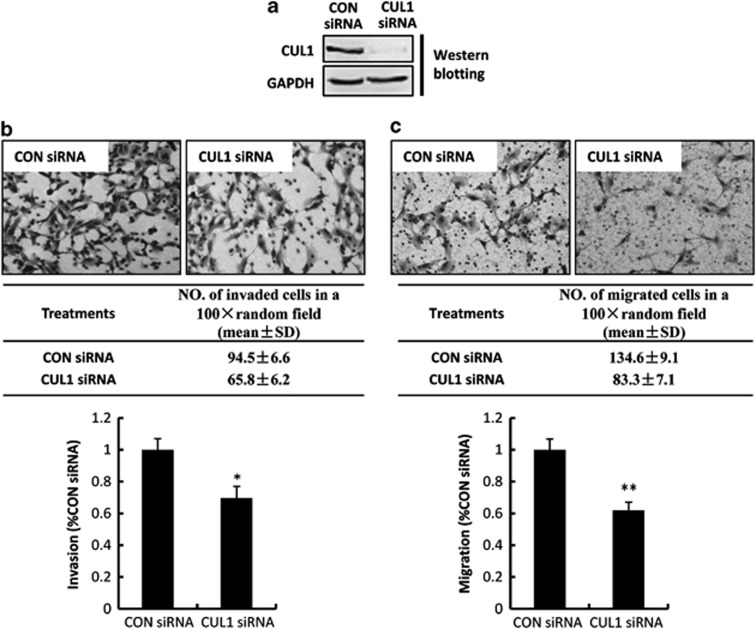
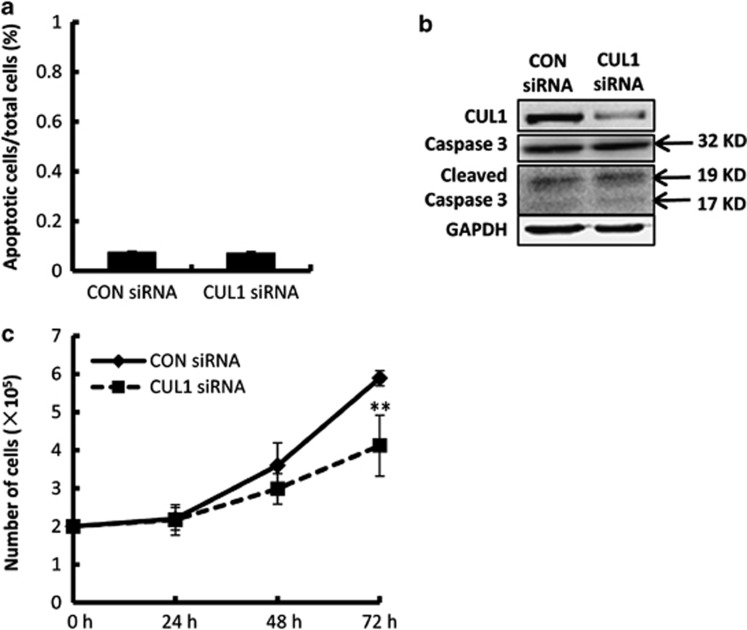
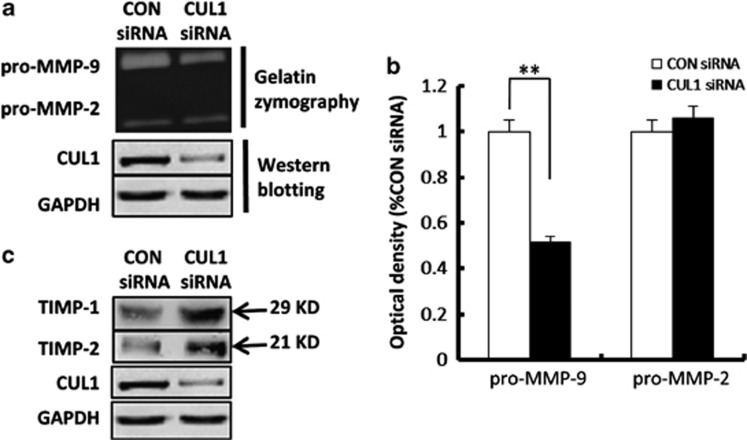
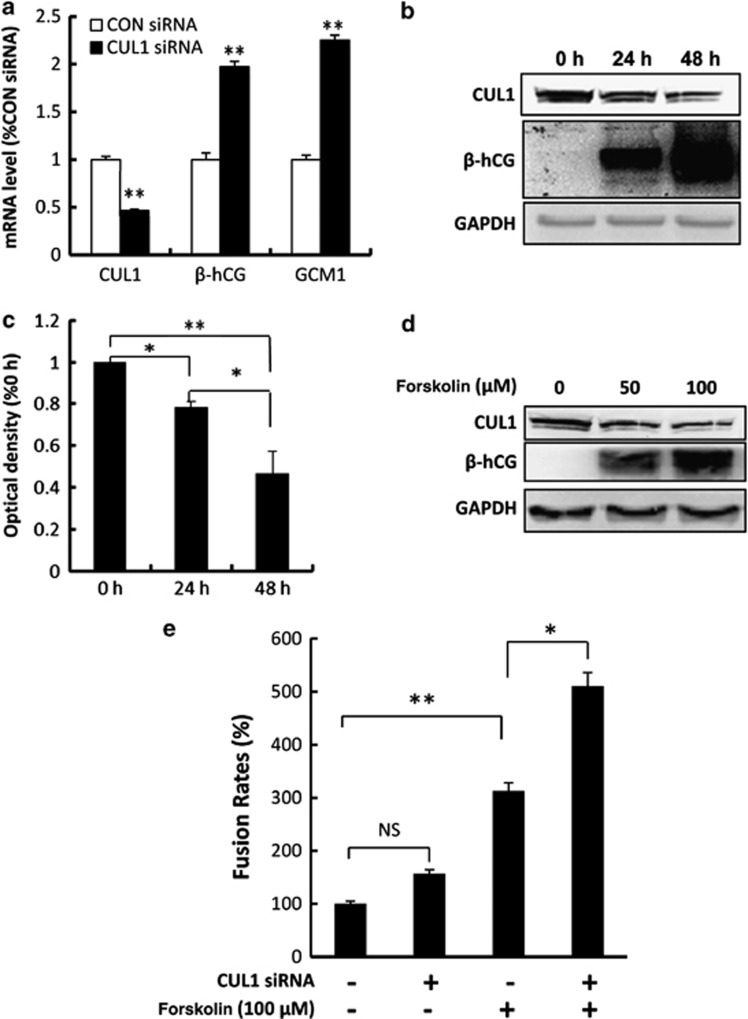
Human trophoblast progenitor cells differentiate via two distinct pathways, to become the highly invasive extravillous cytotrophoblast (CTB) cells (EVT) or fuse to form syncytiotrophoblast. Inadequate trophoblast differentiation results in poor placenta perfusion, or even complications such as pre-eclampsia (PE). Cullin1 (CUL1), a scaffold protein in cullin-based ubiquitin ligases, plays an important role in early embryonic development. However, the role of CUL1 in trophoblast differentiation during placenta development has not been examined. Here we show that CUL1 was expressed in CTB cells and EVT in the first trimester human placentas by immunohistochemistry. CUL1 siRNA significantly inhibited outgrowth of extravillous explants in vitro, as well as invasion and migration of HTR8/SVneo cells of EVT origin. This inhibition was accompanied by decreased gelatinolytic activities of matrix metalloproteinase (MMP)-9 and increased expression of tissue inhibitors of MMPs (TIMP-1 and -2). Consistently, exogenous CUL1 promoted invasion and migration of HTR8/SVneo cells. Notably, CUL1 was gradually decreased during trophoblast syncytialization and CUL1 siRNA significantly enhanced forskolin-induced fusion of choriocarcinoma BeWo cells. CUL1 protein levels in human pre-eclamptic placental villi were significantly lower as compared to their matched control placentas. Taken together, our results suggest that CUL1 promotes human trophoblast cell invasion and dysregulation of CUL1 expression may be associated with PE.
人类滋养细胞祖细胞通过两条不同的途径分化,成为高度侵袭性的绒毛外滋养细胞(CTB)细胞(EVT)或融合形成合体滋养层。滋养细胞分化不足会导致胎盘灌注不良,甚至出现子痫前期(PE)等并发症。Cullin1(CUL1)是 Cullin 基泛素连接酶中的支架蛋白,在早期胚胎发育中发挥重要作用。然而,CUL1 在胎盘发育过程中的滋养细胞分化中的作用尚未被研究。在这里,我们通过免疫组织化学染色显示 CUL1 在人早孕胎盘的 CTB 细胞和 EVT 中表达。CUL1 siRNA 显著抑制体外绒毛外植体的生长,以及 EVT 来源的 HTR8/SVneo 细胞的侵袭和迁移。这种抑制伴随着基质金属蛋白酶(MMP)-9 的明胶酶活性降低和组织抑制剂 MMPs(TIMP-1 和 -2)的表达增加。一致地,外源性 CUL1 促进 HTR8/SVneo 细胞的侵袭和迁移。值得注意的是,CUL1 在滋养细胞合胞体化过程中逐渐减少,CUL1 siRNA 显著增强了绒毛膜癌 BeWo 细胞中福司可林诱导的融合。与匹配的对照组胎盘相比,子痫前期患者胎盘绒毛中 CUL1 蛋白水平显著降低。总之,我们的研究结果表明,CUL1 促进了人滋养细胞的侵袭,CUL1 表达的失调可能与 PE 有关。