Irsicaixa AIDS Research Institute - HIVACAT, Hospital Universitari Germans Trias y Pujol, Badalona, Spain.
J Transl Med. 2013 Feb 22;11:48. doi: 10.1186/1479-5876-11-48.
HIV-1 infection generates numerous abnormalities in the B cell compartment which can be partly reversed by antiretroviral therapy. Our aim was to evaluate the effects that re-exposure to HIV antigens might have on the frequency and functionality of antibody secreting cells (ASC) in patients undergoing structured treatment interruptions (STI). As re-exposure to viral antigens may also boost the production of (neutralizing) antibodies, we also assessed the neutralizing activities during STI cycles.
Retrospective study of 10 patients undergoing 3 cycles of STI with 2 weeks on and 4 weeks off HAART. ASC frequencies were determined by flow cytometry in samples obtained at the beginning and the end of STI. Neutralization capacity, total IgG concentration and anti-gp120-IgG titres were evaluated.
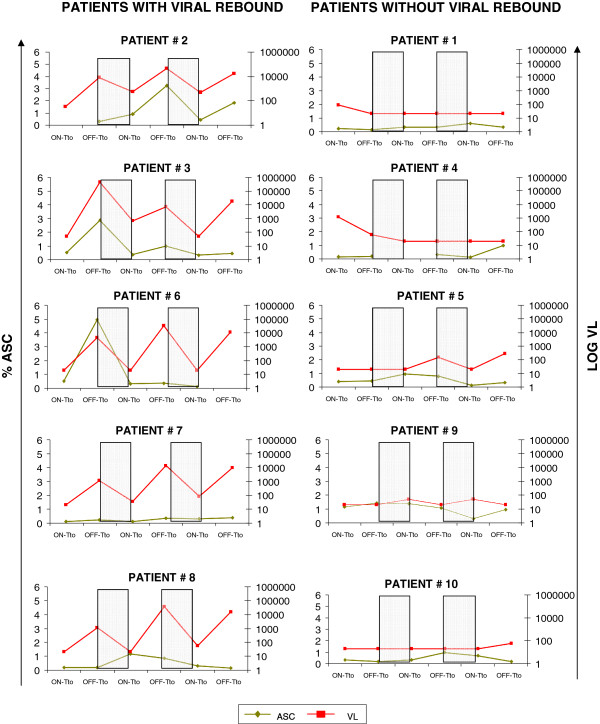
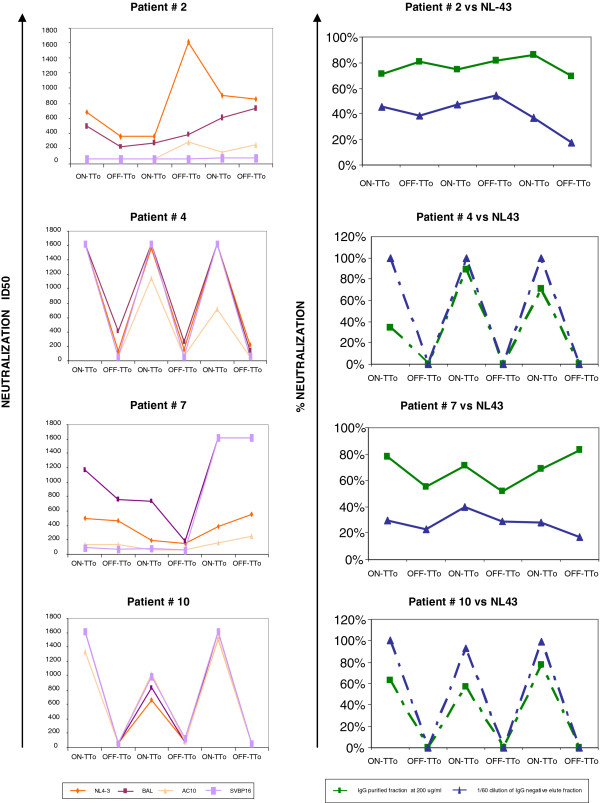
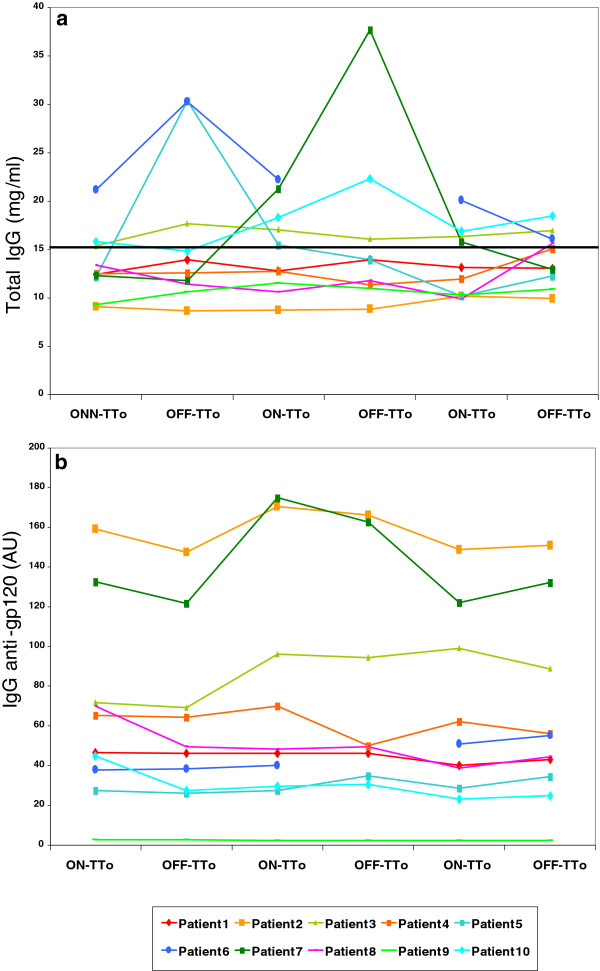
As expected, median viral loads were higher at the end of STI compared to on-HAART time points. The level of CD27 and CD38 expressing ACS followed the same pattern; with ASC being elevated up to 16 fold in some patients (median increase of 3.5% ± 4.13). Eight out of 10 patients maintained stable total IgG levels during the study. After purifying IgG fractions from plasma, HIV-neutralizing activity was observed in the two subjects with highest anti-gp120 titers. In one of these patients the neutralizing activity remained constant while the other showed elevated neutralizing Ab after first STI and once treatment was reinitiated after the 2nd STI.
Our data suggest that STI and its associated transient increases in viral load drive the frequencies of ASC in an antigen-specific manner. In some subjects, this re-exposure to autologous virus boosts the presence of neutralizing antibodies, similar to what is seen after influenza vaccination. STI may not boost clinically beneficial nAb levels but offers opportunities to isolate nAb producing cells at considerably higher levels than in subjects with completely suppressed viral replication.
HIV-1 感染会导致 B 细胞群发生许多异常,这些异常在抗逆转录病毒治疗(ART)后部分得到逆转。我们的目的是评估重新接触 HIV 抗原对接受结构化治疗中断(STI)的患者中抗体分泌细胞(ASC)的频率和功能的影响。由于重新接触病毒抗原也可能会增加(中和)抗体的产生,因此我们也在 STI 周期中评估了中和活性。
回顾性研究了 10 名接受 3 个 STI 周期的患者,每个周期包括 2 周的 HAART 和 4 周的停药期。在 STI 开始和结束时通过流式细胞术确定 ASC 频率。评估了中和能力、总 IgG 浓度和抗 gp120-IgG 滴度。
正如预期的那样,与 HAART 时间点相比,STI 结束时的中位病毒载量更高。CD27 和 CD38 表达 ACS 的水平也遵循相同的模式;在一些患者中,ASC 升高了高达 16 倍(中位数增加 3.5%±4.13)。在研究期间,8 名患者中有 10 名患者维持稳定的总 IgG 水平。从血浆中纯化 IgG 后,在 2 名具有最高抗 gp120 滴度的患者中观察到 HIV 中和活性。在其中一名患者中,中和活性保持不变,而另一名患者在首次 STI 后和第二次 STI 重新开始治疗后显示出升高的中和 Ab。
我们的数据表明,STI 及其相关的病毒载量短暂增加以抗原特异性方式驱动 ASC 的频率。在某些患者中,这种重新接触自身病毒会增加中和抗体的存在,类似于流感疫苗接种后的情况。STI 可能不会增加具有临床益处的 nAb 水平,但为分离 nAb 产生细胞提供了机会,这些细胞的水平比完全抑制病毒复制的患者高得多。