Department of Cancer Biology, University of Massachusetts Medical School, Worcester, MA, USA.
EMBO Mol Med. 2013 Apr;5(4):488-508. doi: 10.1002/emmm.201202078. Epub 2013 Feb 21.
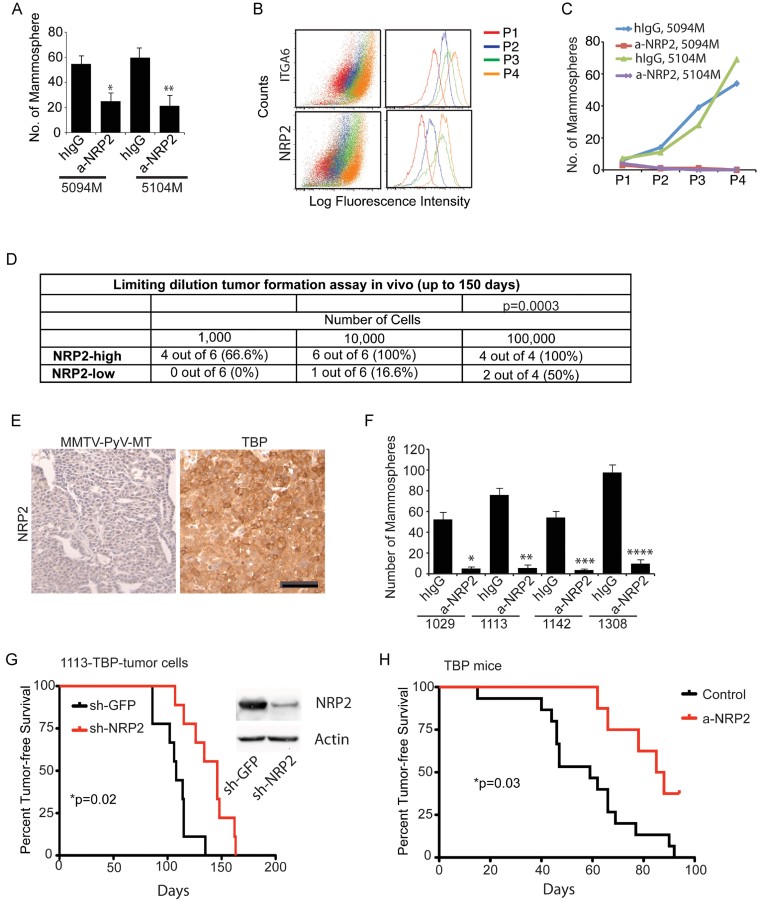
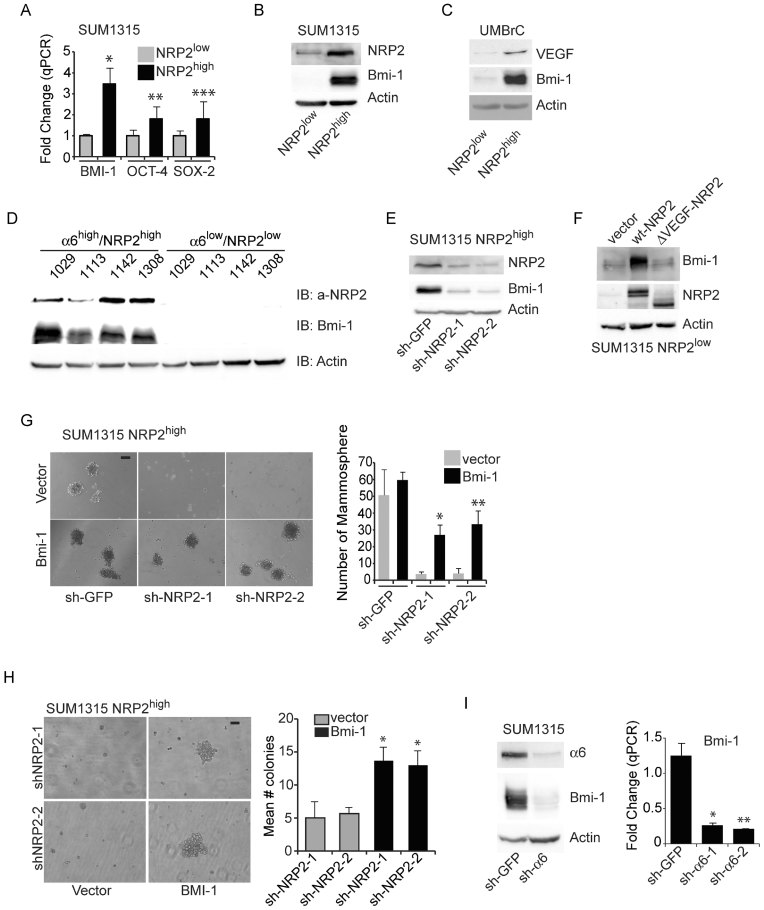
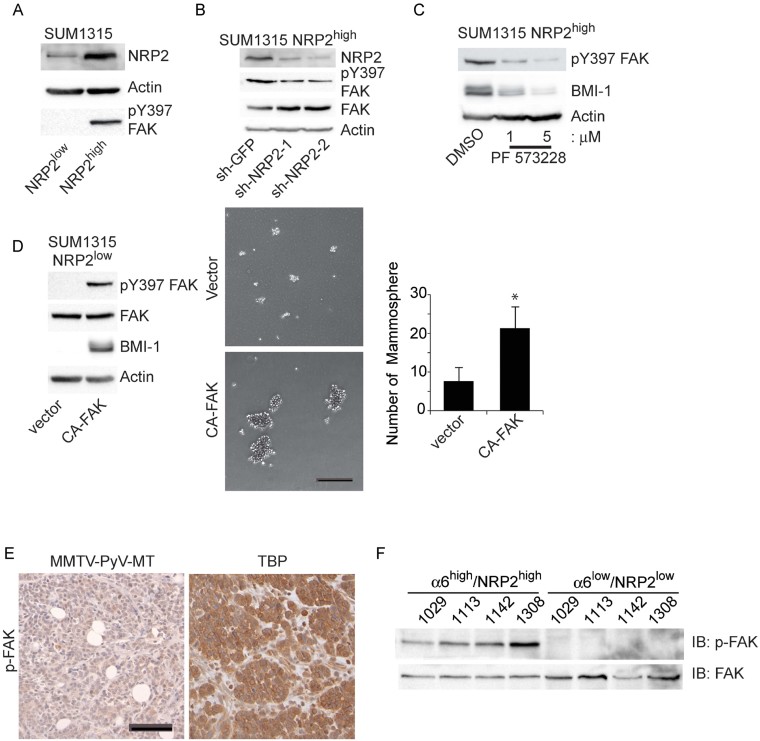
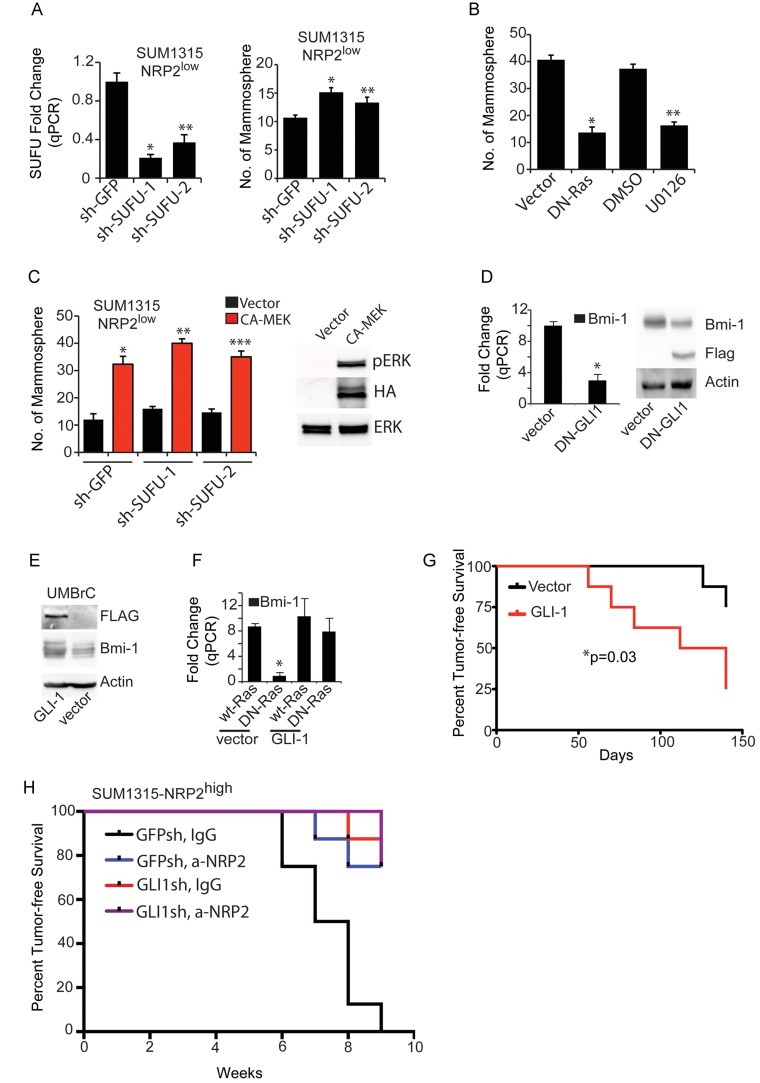
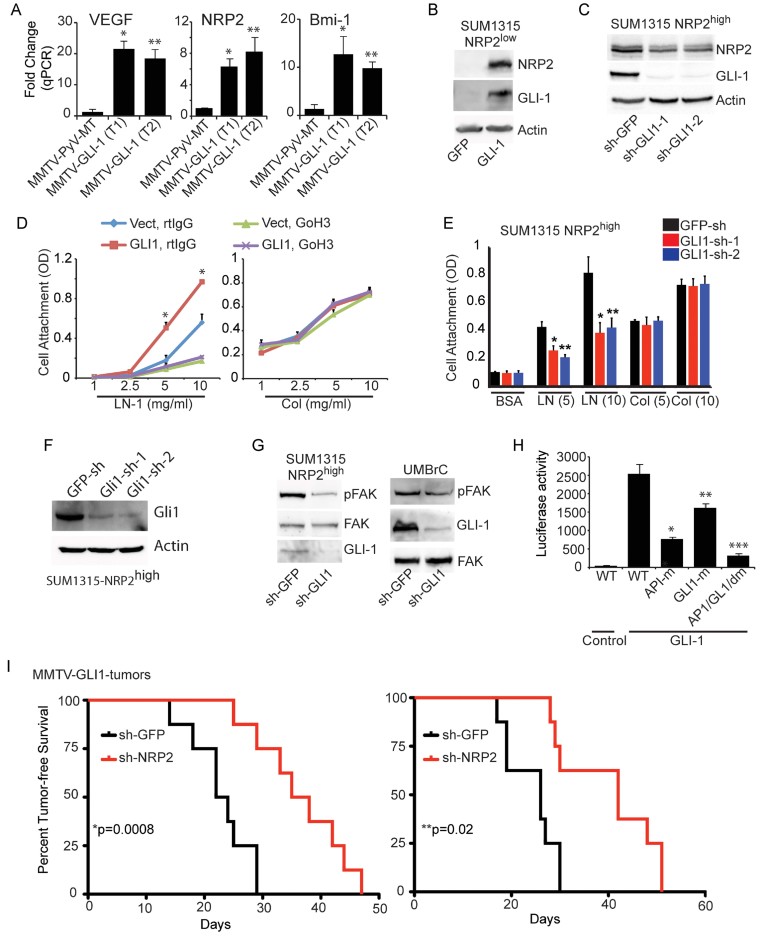
The characterization of cells with tumour initiating potential is significant for advancing our understanding of cancer and improving therapy. Aggressive, triple-negative breast cancers (TNBCs) are enriched for tumour-initiating cells (TICs). We investigated that hypothesis that VEGF receptors expressed on TNBC cells mediate autocrine signalling that contributes to tumour initiation. We discovered the VEGF receptor neuropilin-2 (NRP2) is expressed preferentially on TICs, involved in the genesis of TNBCs and necessary for tumour initiation. The mechanism by which NRP2 signalling promotes tumour initiation involves stimulation of the α6β1 integrin, focal adhesion kinase-mediated activation of Ras/MEK signalling and consequent expression of the Hedgehog effector GLI1. GLI1 also induces BMI-1, a key stem cell factor, and it enhances NRP2 expression and the function of α6β1, establishing an autocrine loop. NRP2 can be targeted in vivo to retard tumour initiation. These findings reveal a novel autocrine pathway involving VEGF/NRP2, α6β1 and GLI1 that contributes to the initiation of TNBC. They also support the feasibility of NRP2-based therapy for the treatment of TNBC that targets and impedes the function of TICs.
具有肿瘤起始潜力的细胞的特征对于深入了解癌症和改善治疗方法具有重要意义。侵袭性、三阴性乳腺癌(TNBC)富含肿瘤起始细胞(TIC)。我们研究了这样一个假设,即 TNBC 细胞上表达的血管内皮生长因子受体(VEGF receptor)介导自分泌信号,有助于肿瘤起始。我们发现,VEGF 受体神经纤毛蛋白-2(NRP2)优先表达于 TIC 上,参与 TNBC 的发生,并且是肿瘤起始所必需的。NRP2 信号促进肿瘤起始的机制涉及刺激α6β1 整合素、粘着斑激酶介导的 Ras/MEK 信号的激活以及 Hedgehog 效应物 GLI1 的表达。GLI1 还诱导 BMI-1,一种关键的干细胞因子,并增强 NRP2 表达和α6β1 的功能,建立一个自分泌环。NRP2 可以在体内被靶向以延缓肿瘤起始。这些发现揭示了一种涉及 VEGF/NRP2、α6β1 和 GLI1 的新型自分泌途径,有助于 TNBC 的起始。它们还支持基于 NRP2 的治疗方法的可行性,用于治疗 TNBC,该方法靶向并阻碍 TIC 的功能。