
动脉粥样硬化中的DNA损伤与修复:当前见解与未来展望
DNA damage and repair in atherosclerosis: current insights and future perspectives.
作者信息
Cervelli Tiziana, Borghini Andrea, Galli Alvaro, Andreassi Maria Grazia
机构信息
Institute of Clinical Physiology, CNR (The National Research Council), via Moruzzi 1, 56124 Pisa, Italy.
出版信息
Int J Mol Sci. 2012 Dec 11;13(12):16929-44. doi: 10.3390/ijms131216929.
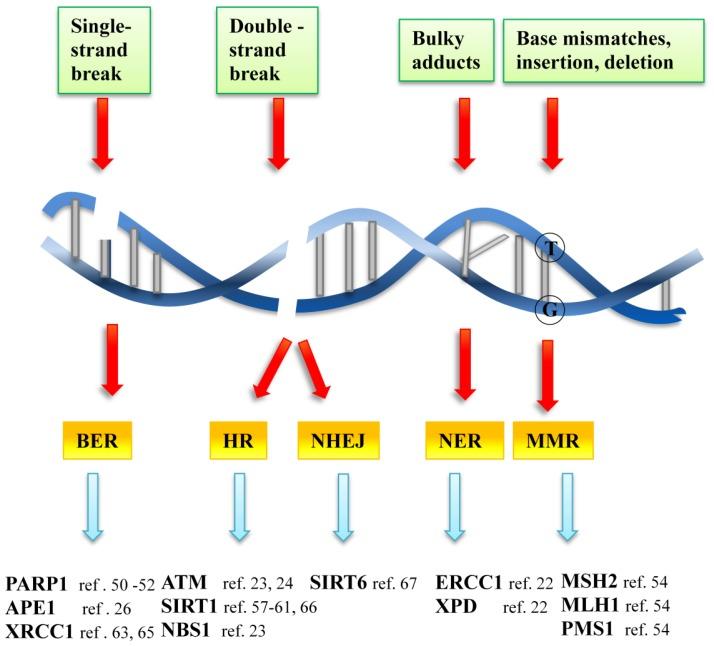
Atherosclerosis is the leading cause of morbidity and mortality among Western populations. Over the past two decades, considerable evidence has supported a crucial role for DNA damage in the development and progression of atherosclerosis. These findings support the concept that the prolonged exposure to risk factors (e.g., dyslipidemia, smoking and diabetes mellitus) leading to reactive oxygen species are major stimuli for DNA damage within the plaque. Genomic instability at the cellular level can directly affect vascular function, leading to cell cycle arrest, apoptosis and premature vascular senescence. The purpose of this paper is to review current knowledge on the role of DNA damage and DNA repair systems in atherosclerosis, as well as to discuss the cellular response to DNA damage in order to shed light on possible strategies for prevention and treatment.
动脉粥样硬化是西方人群发病和死亡的主要原因。在过去二十年中,大量证据支持DNA损伤在动脉粥样硬化发生和发展中起关键作用。这些发现支持了这样一种概念,即长期暴露于导致活性氧的危险因素(如血脂异常、吸烟和糖尿病)是斑块内DNA损伤的主要刺激因素。细胞水平的基因组不稳定可直接影响血管功能,导致细胞周期停滞、细胞凋亡和血管过早衰老。本文的目的是综述关于DNA损伤和DNA修复系统在动脉粥样硬化中的作用的现有知识,并讨论细胞对DNA损伤的反应,以便阐明可能的预防和治疗策略。

 Zotero 插件