Department of Energy and Refrigerating Air-Conditioning Engineering, National Taipei University of Technology, No. 1, Sec. 3,Chung-Hsiao E. Rd., Taipei 106, Taiwan.
Sensors (Basel). 2012 Nov 22;12(12):16116-43. doi: 10.3390/s121216116.
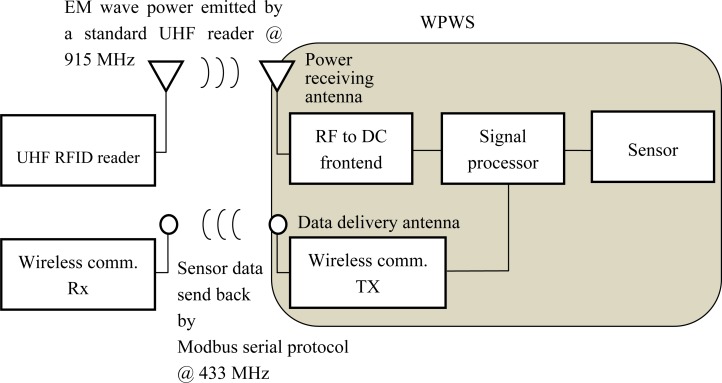
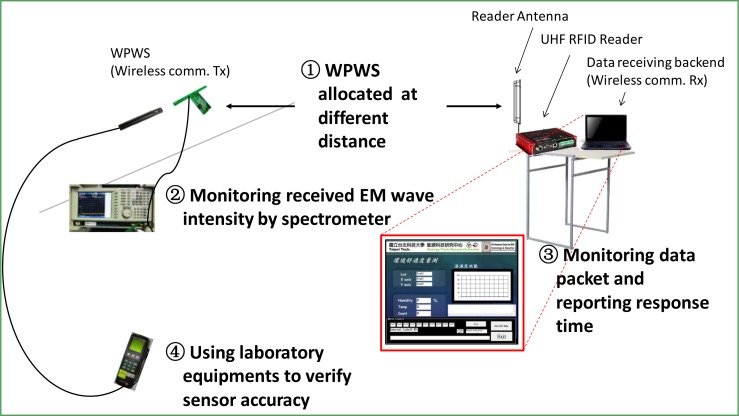
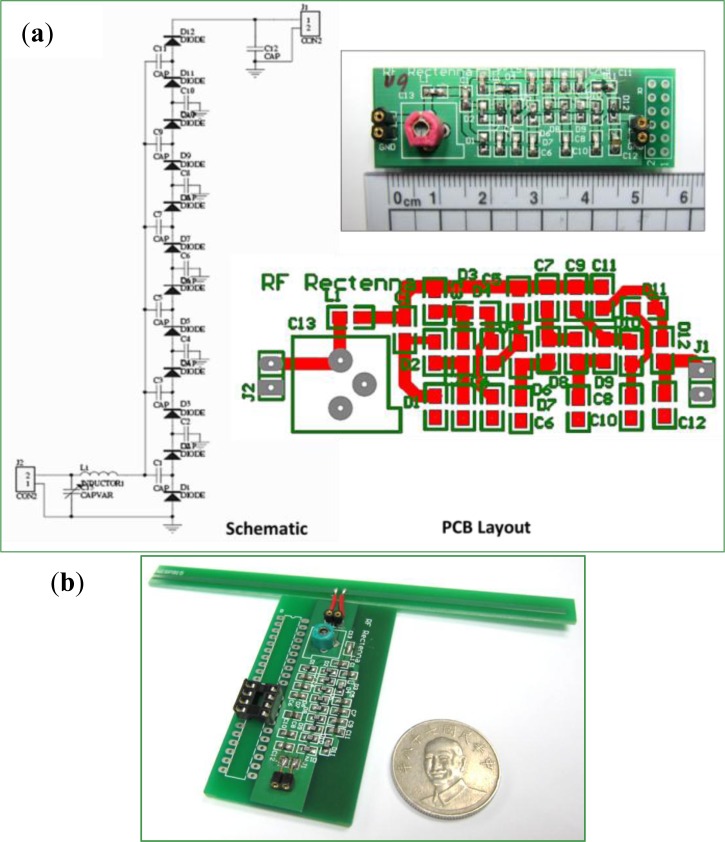
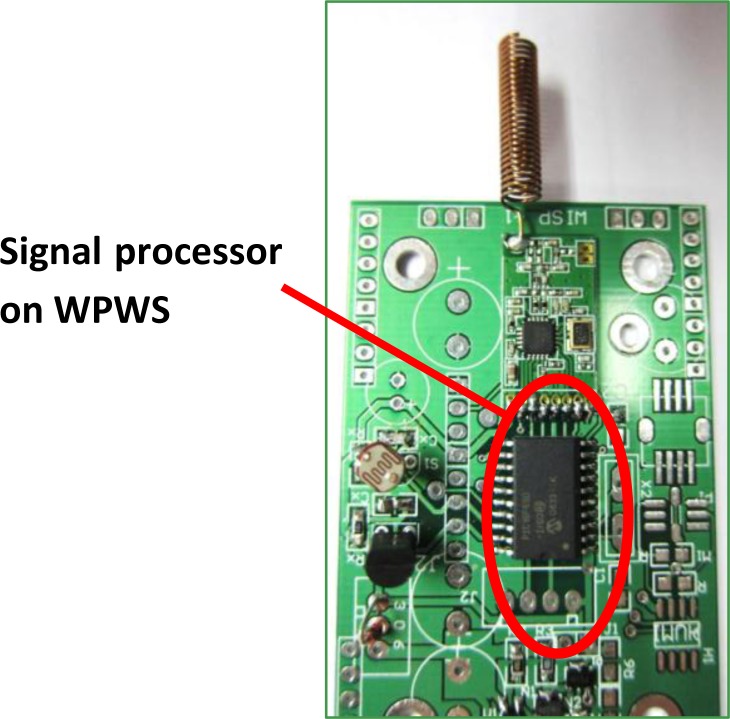
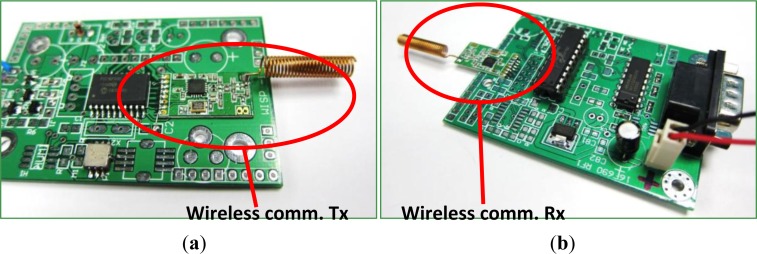
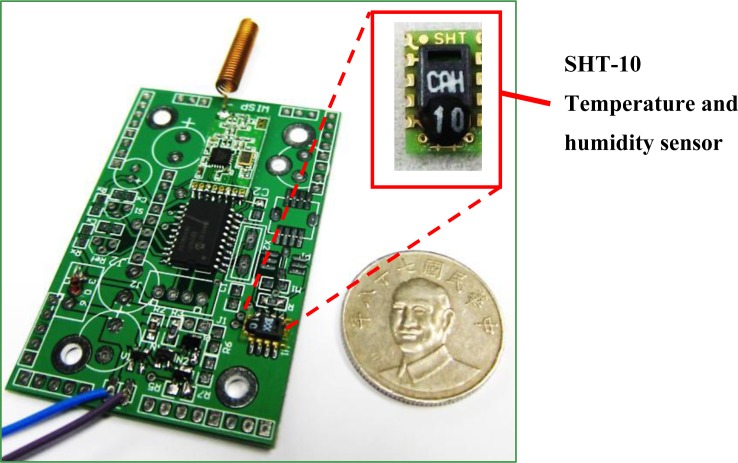
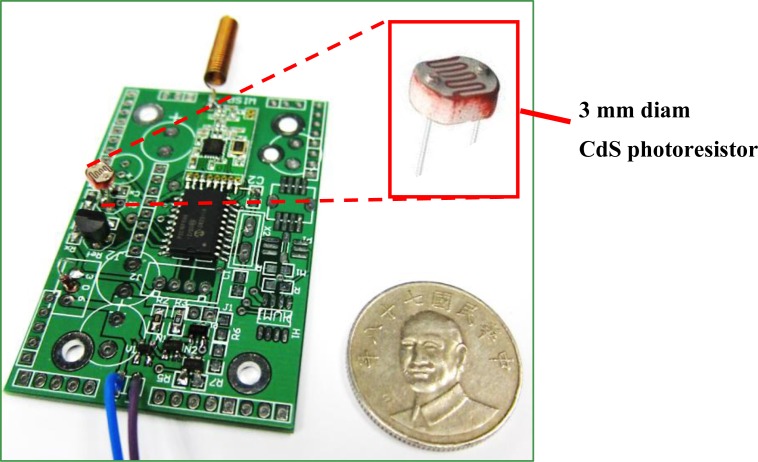
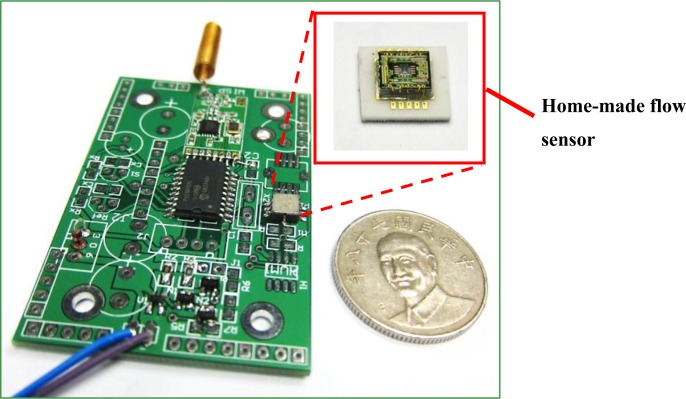
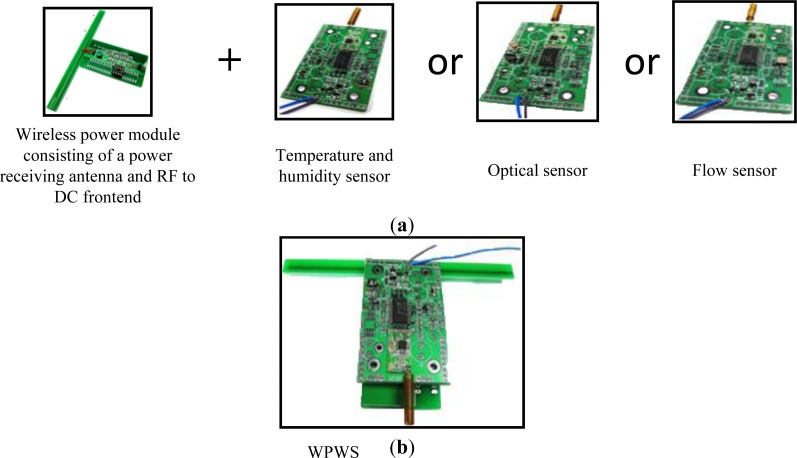
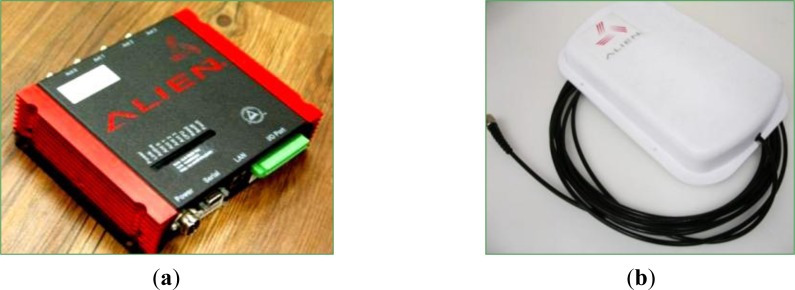
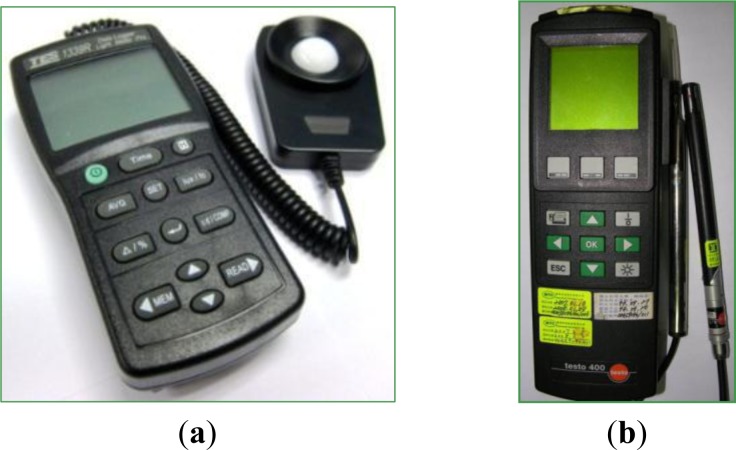
Through harvesting energy by wireless charging and delivering data by wireless communication, this study proposes the concept of a wireless sensor enabled by wireless power (WPWS) and reports the fabrication of a prototype for functional tests. One WPWS node consists of wireless power module and sensor module with different chip-type sensors. Its main feature is the dual antenna structure. Following RFID system architecture, a power harvesting antenna was designed to gather power from a standard reader working in the 915 MHz band. Referring to the Modbus protocol, the other wireless communication antenna was integrated on a node to send sensor data in parallel. The dual antenna structure integrates both the advantages of an RFID system and a wireless sensor. Using a standard UHF RFID reader, WPWS can be enabled in a distributed area with a diameter up to 4 m. Working status is similar to that of a passive tag, except that a tag can only be queried statically, while the WPWS can send dynamic data from the sensors. The function is the same as a wireless sensor node. Different WPWSs equipped with temperature and humidity, optical and airflow velocity sensors are tested in this study. All sensors can send back detection data within 8 s. The accuracy is within 8% deviation compared with laboratory equipment. A wireless sensor network enabled by wireless power should be a totally wireless sensor network using WPWS. However, distributed WPWSs only can form a star topology, the simplest topology for constructing a sensor network. Because of shielding effects, it is difficult to apply other complex topologies. Despite this limitation, WPWS still can be used to extend sensor network applications in hazardous environments. Further research is needed to improve WPWS to realize a totally wireless sensor network.
通过无线充电来获取能量,以及通过无线通信来传输数据,本研究提出了一种由无线供电(Wireless Power,WP)驱动的无线传感器(Wireless Sensor,WS)的概念,并报告了一个用于功能测试的原型制作。一个 WPWS 节点由无线供电模块和带有不同芯片类型传感器的传感器模块组成。其主要特点是双天线结构。遵循 RFID 系统架构,设计了一个功率采集天线,用于从工作在 915 MHz 频段的标准读取器中收集能量。参照 Modbus 协议,另一个无线通信天线被集成到一个节点上,用于并行发送传感器数据。双天线结构集成了 RFID 系统和无线传感器的优点。使用标准的 UHF RFID 读取器,WPWS 可以在直径达 4 米的分布式区域中启用。工作状态类似于无源标签,只是标签只能静态查询,而 WPWS 可以从传感器发送动态数据。其功能与无线传感器节点相同。本研究中测试了配备温度和湿度、光学和气流速度传感器的不同 WPWS。所有传感器都可以在 8 秒内发送回检测数据。其精度与实验室设备相比偏差在 8%以内。由无线供电驱动的无线传感器网络应该是一个完全无线的传感器网络,使用 WPWS。然而,分布式 WPWS 只能形成星型拓扑,这是构建传感器网络的最简单拓扑。由于屏蔽效应,很难应用其他复杂的拓扑结构。尽管存在这种限制,WPWS 仍然可以用于扩展在危险环境中的传感器网络应用。需要进一步的研究来改进 WPWS,以实现一个完全无线的传感器网络。