Ahmad Khodadad, Fatemeh Farahmand, Mehri Najafi, Maryam Shoaran
Department of Pediatrics, Tehran University of Medical Sciences, Tehran, Iran ; Children's Medical Center, Pediatrics Center of Excellence, Tehran, Iran ; Growth and Development Research Center, Tehran University of Medical Sciences, Tehran, Iran.
Iran J Pediatr. 2013 Feb;23(1):79-84.
Helicobacter pylori is recognized as a major etiological factor in the pathogenesis of gastritis and peptic ulcer disease. H. Pylori eradication has a failure rate of more than 30% in pediatric patients, particularly because of poor compliance, antibiotic resistance and occurrence of side-effects. This study was aimed to determine whether adding the probiotics to a standard anti-H. pylori regimen could minimize the gastrointestinal side-effect prevalence and improve the eradication rate.
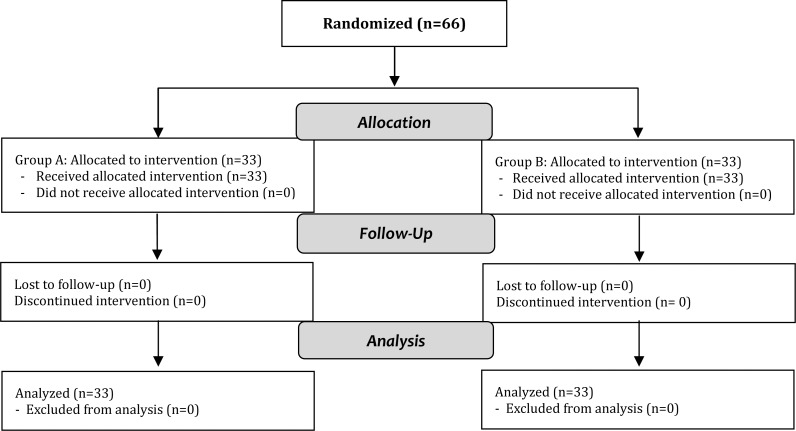
Double-blind randomized placebo controlled study conducted at Children's Medical Center in Tehran, Iran. Sixty six H. pylori positive children were treated with a triple drug treatment protocol (omeprazole+amoxycillin+furazolidon) and randomly allocated to receive either probiotic or placebo. All patients underwent esophagogastroduodendoscopy. H. pylori infection was diagnosed by either rapid urease test (RUT) or histology. H. pylori status was assessed after 4-8 weeks of the completion of treatment with stool H. pylori antigen test. The side effects of the treatment were determined in each group.
Mean age of patients was 9.09 (range 3-14) years, 44 (65.7%) patients were boys (sex ratio 2:1). All 66 patients completed the course of treatment and follow-up. The rate of H. pylori eradication was significantly higher in probiotic group (P=0.04). In probiotic supplemented children there was a lower rate of nausea/vomiting (P=0.02) and diarrhea (P=0.039) during treatment.
This study showed that probiotics have positive effect on the eradication of H. pylori infection. Adjuvant therapy with probiotic is recommended in order to reduce the frequency of antibiotic induced side-effects during treatment with antibiotics.
幽门螺杆菌被认为是胃炎和消化性溃疡病发病机制中的主要病因。在儿科患者中,幽门螺杆菌根除治疗的失败率超过30%,尤其是由于依从性差、抗生素耐药性和副作用的发生。本研究旨在确定在标准抗幽门螺杆菌治疗方案中添加益生菌是否可以将胃肠道副作用的发生率降至最低,并提高根除率。
在伊朗德黑兰儿童医学中心进行双盲随机安慰剂对照研究。66名幽门螺杆菌阳性儿童接受三联药物治疗方案(奥美拉唑+阿莫西林+呋喃唑酮),并随机分配接受益生菌或安慰剂。所有患者均接受了食管胃十二指肠镜检查。通过快速尿素酶试验(RUT)或组织学诊断幽门螺杆菌感染。在治疗完成4-8周后,用粪便幽门螺杆菌抗原试验评估幽门螺杆菌感染状况。确定每组治疗的副作用。
患者的平均年龄为9.09岁(范围3-14岁),44名(65.7%)患者为男孩(性别比2:1)。所有66名患者均完成了治疗疗程和随访。益生菌组的幽门螺杆菌根除率显著更高(P=0.04)。补充益生菌的儿童在治疗期间恶心/呕吐(P=0.02)和腹泻(P=0.039)的发生率较低。
本研究表明益生菌对根除幽门螺杆菌感染有积极作用。建议采用益生菌辅助治疗,以减少抗生素治疗期间抗生素引起的副作用的发生频率。