Maier Lisa-Katharina, Fischer Susan, Stoll Britta, Brendel Jutta, Pfeiffer Friedhelm, Dyall-Smith Mike, Marchfelder Anita
Biology II; Ulm University; Ulm, Germany.
Mob Genet Elements. 2012 Sep 1;2(5):228-232. doi: 10.4161/mge.22530.
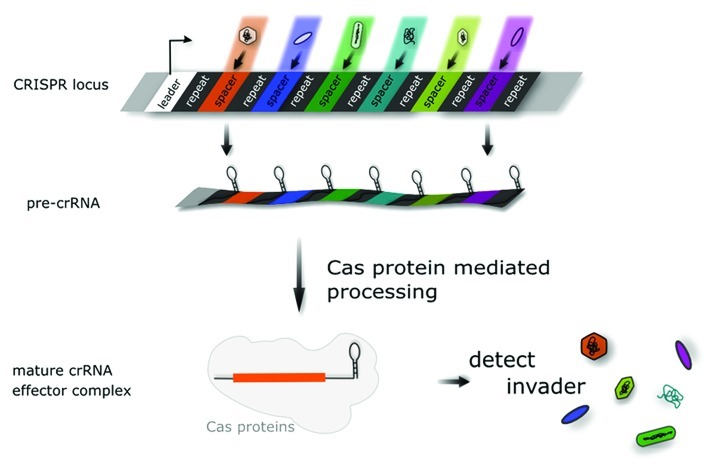
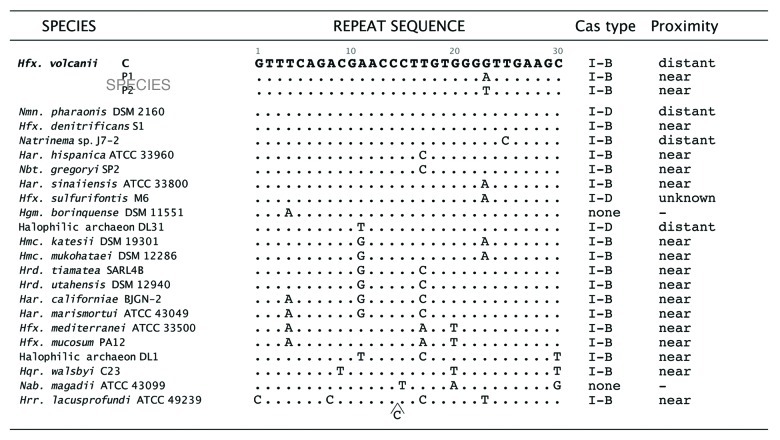
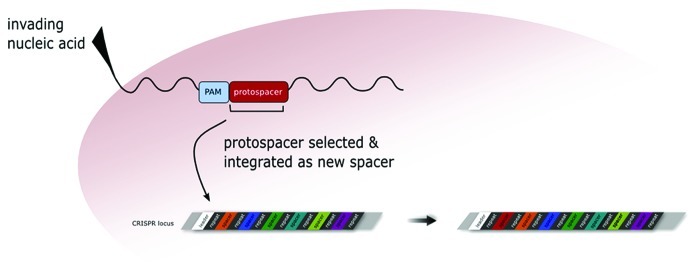
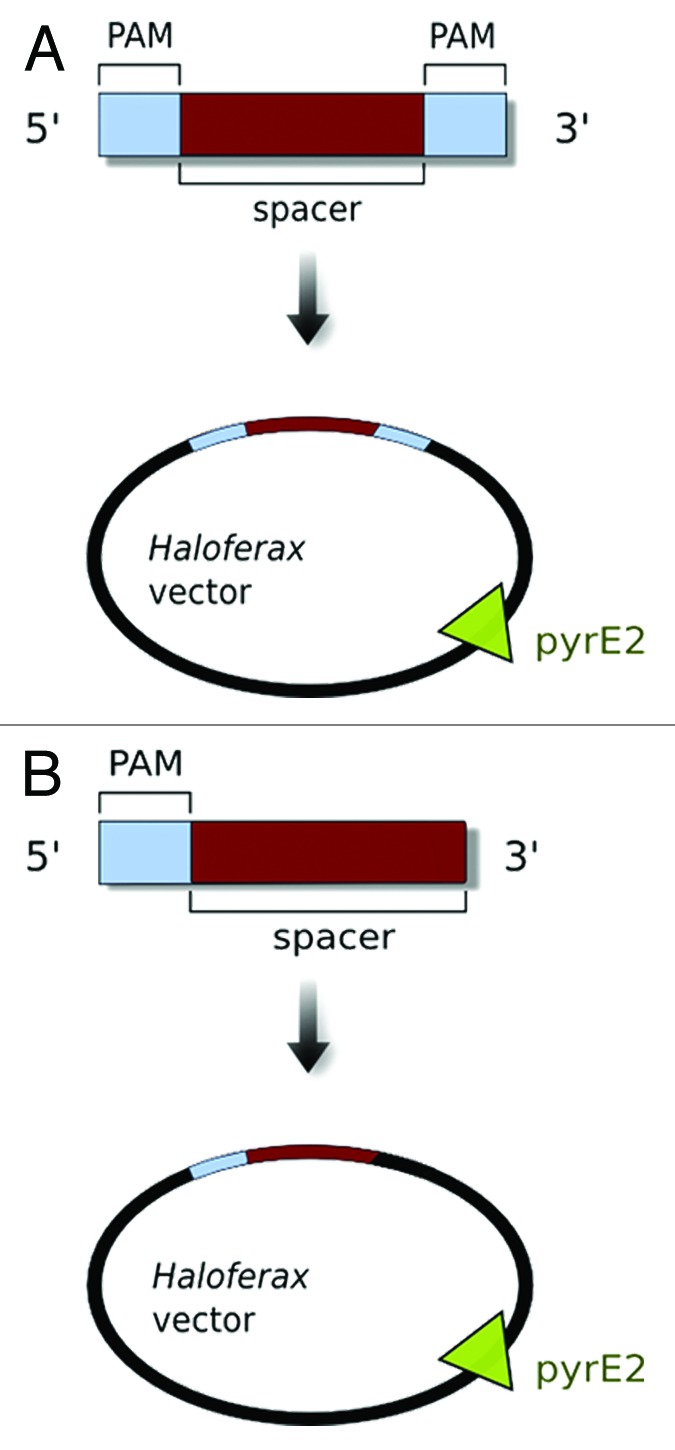
Prokaryotes have developed several strategies to defend themselves against foreign genetic elements. One of those defense mechanisms is the recently identified CRISPR/Cas system, which is used by approximately half of all bacterial and almost all archaeal organisms. The CRISPR/Cas system differs from the other defense strategies because it is adaptive, hereditary and it recognizes the invader by a sequence specific mechanism. To identify the invading foreign nucleic acid, a crRNA that matches the invader DNA is required, as well as a short sequence motif called protospacer adjacent motif (PAM). We recently identified the PAM sequences for the halophilic archaeon , and found that several motifs were active in triggering the defense reaction. In contrast, selection of protospacers from the invader seems to be based on fewer PAM sequences, as evidenced by comparative sequence data. This suggests that the selection of protospacers has stricter requirements than the defense reaction. Comparison of CRISPR-repeat sequences carried by sequenced haloarchaea revealed that in more than half of the species, the repeat sequence is conserved and that they have the same CRISPR/Cas type.
原核生物已经发展出多种策略来抵御外来遗传元件。其中一种防御机制是最近发现的CRISPR/Cas系统,大约一半的细菌和几乎所有的古细菌都使用该系统。CRISPR/Cas系统与其他防御策略不同,因为它具有适应性、遗传性,并且通过序列特异性机制识别入侵者。为了识别入侵的外来核酸,需要一个与入侵者DNA匹配的crRNA,以及一个称为原间隔相邻基序(PAM)的短序列基序。我们最近确定了嗜盐古菌的PAM序列,并发现几个基序在触发防御反应中具有活性。相比之下,从入侵者中选择原间隔似乎基于较少的PAM序列,比较序列数据证明了这一点。这表明原间隔的选择比防御反应有更严格的要求。对已测序嗜盐古菌携带的CRISPR重复序列的比较表明,在超过一半的物种中,重复序列是保守的,并且它们具有相同的CRISPR/Cas类型。