School of Biological Sciences, Nanyang Technological University, Singapore, Singapore.
Nutr Diabetes. 2012 Mar 5;2(3):e29. doi: 10.1038/nutd.2012.1.
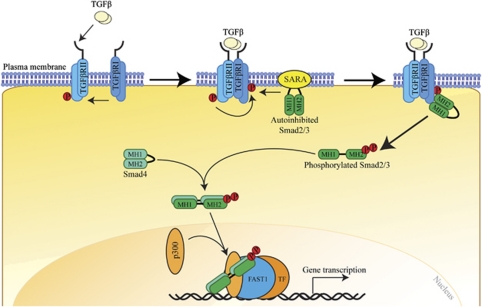
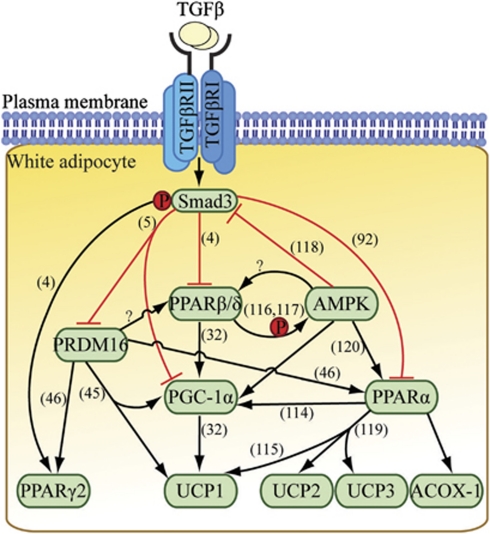
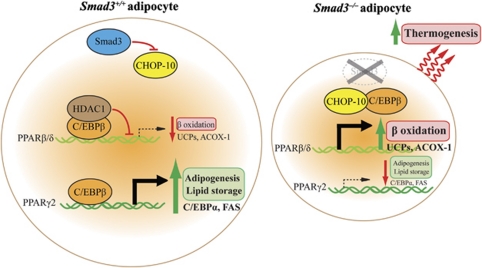
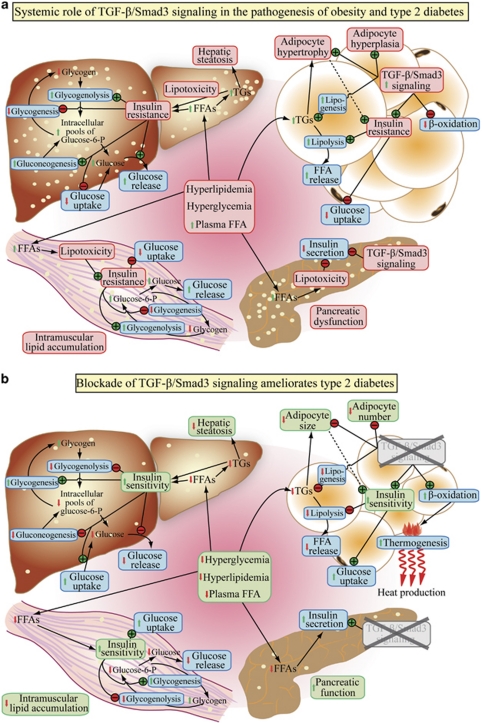
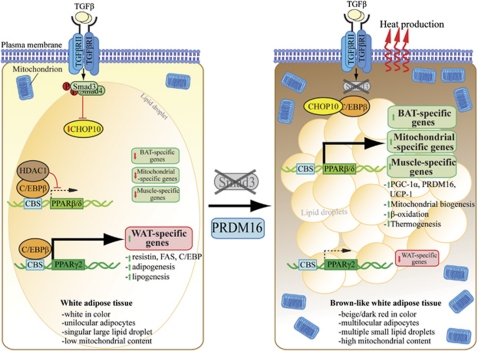
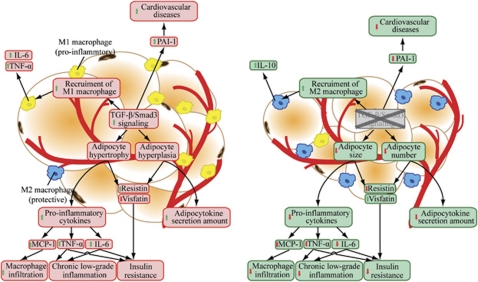
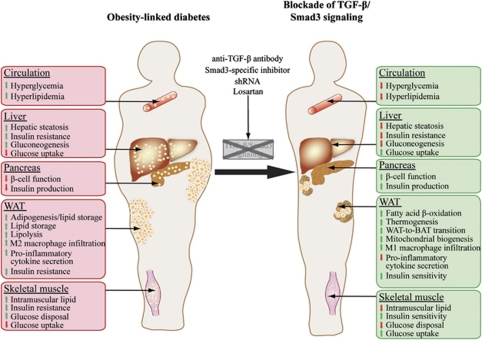
Recent findings on the role of transforming growth factor (TGF)-β/Smad3 signaling in the pathogenesis of obesity and type 2 diabetes have underscored its importance in metabolism and adiposity. Indeed, elevated TGF-β has been previously reported in human adipose tissue during morbid obesity and diabetic neuropathy. In this review, we discuss the pleiotropic effects of TGF-β/Smad3 signaling on metabolism and energy homeostasis, all of which has an important part in the etiology and progression of obesity-linked diabetes; these include adipocyte differentiation, white to brown fat phenotypic transition, glucose and lipid metabolism, pancreatic function, insulin signaling, adipocytokine secretion, inflammation and reactive oxygen species production. We summarize the recent in vivo findings on the role of TGF-β/Smad3 signaling in metabolism based on the studies using Smad3(-/-) mice. Based on the presence of a dual regulatory effect of Smad3 on peroxisome proliferator-activated receptor (PPAR)β/δ and PPARγ2 promoters, we propose a unifying mechanism by which this signaling pathway contributes to obesity and its associated diabetes. We also discuss how the inhibition of this signaling pathway has been implicated in the amelioration of many facets of metabolic syndromes, thereby offering novel therapeutic avenues for these metabolic conditions.
最近的研究结果表明,转化生长因子-β(TGF-β)/Smad3 信号通路在肥胖和 2 型糖尿病发病机制中的作用突显了其在代谢和脂肪堆积中的重要性。事实上,先前的研究已经报道在病态肥胖和糖尿病性神经病患者的人脂肪组织中 TGF-β 水平升高。在这篇综述中,我们讨论了 TGF-β/Smad3 信号通路对代谢和能量平衡的多效性影响,这些都在肥胖相关性糖尿病的病因和进展中起着重要作用;这些包括脂肪细胞分化、白色脂肪向棕色脂肪表型转变、葡萄糖和脂质代谢、胰腺功能、胰岛素信号转导、脂肪细胞因子分泌、炎症和活性氧产生。我们根据 Smad3(-/-)小鼠的研究总结了 TGF-β/Smad3 信号通路在代谢中作用的最新体内研究结果。基于 Smad3 对过氧化物酶体增殖物激活受体(PPAR)β/δ和 PPARγ2 启动子的双重调节作用,我们提出了一个统一的机制,即该信号通路有助于肥胖及其相关的糖尿病。我们还讨论了抑制这种信号通路如何与改善代谢综合征的许多方面有关,从而为这些代谢疾病提供了新的治疗途径。