Department of Pharmaceutical Sciences, South Dakota State University, Brookings, South Dakota, United States of America.
PLoS One. 2013;8(2):e56982. doi: 10.1371/journal.pone.0056982. Epub 2013 Feb 22.
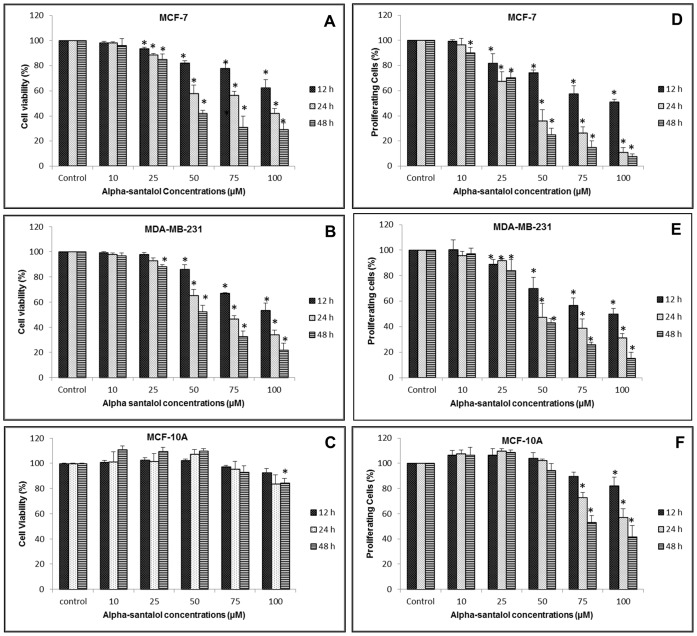
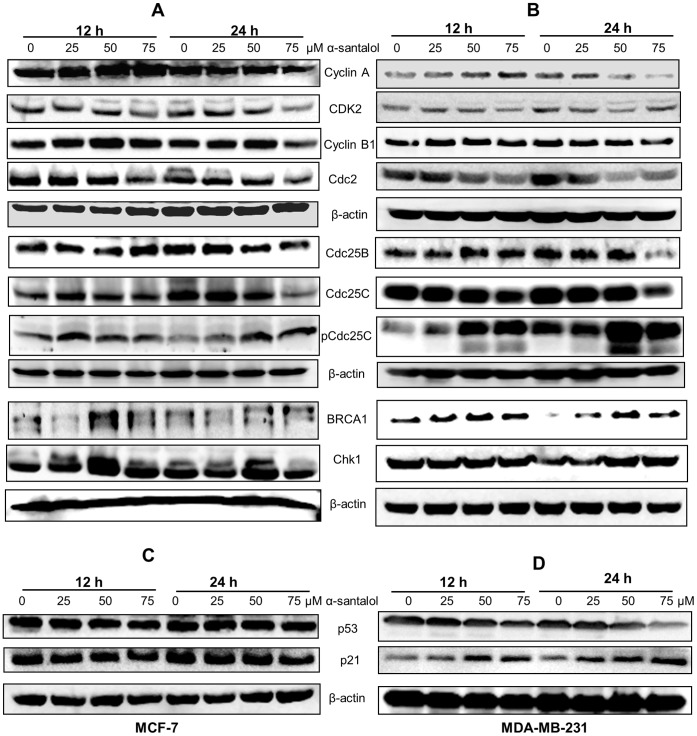
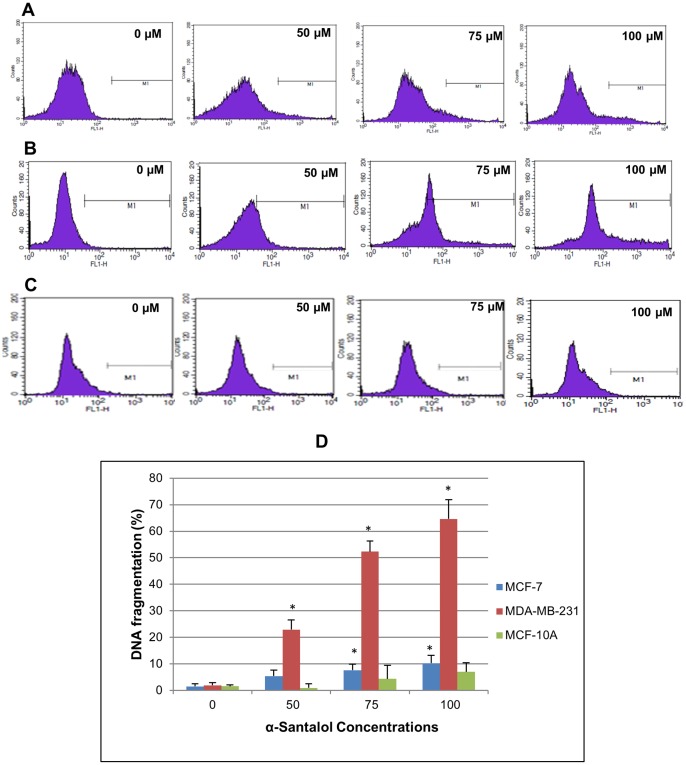
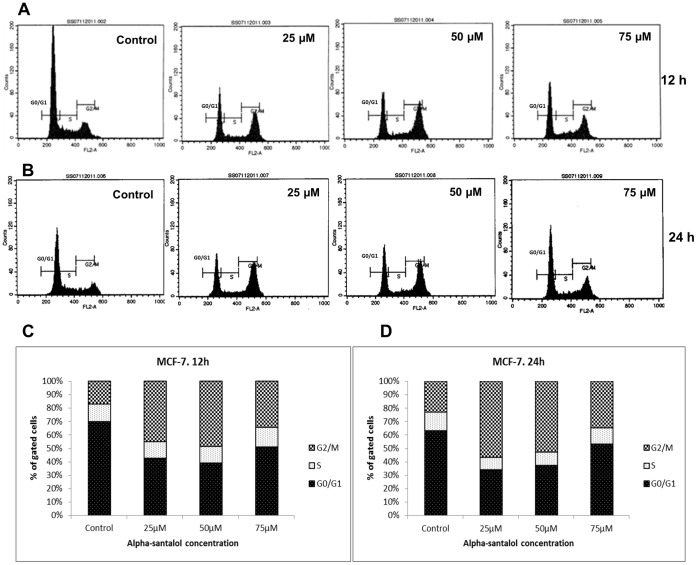
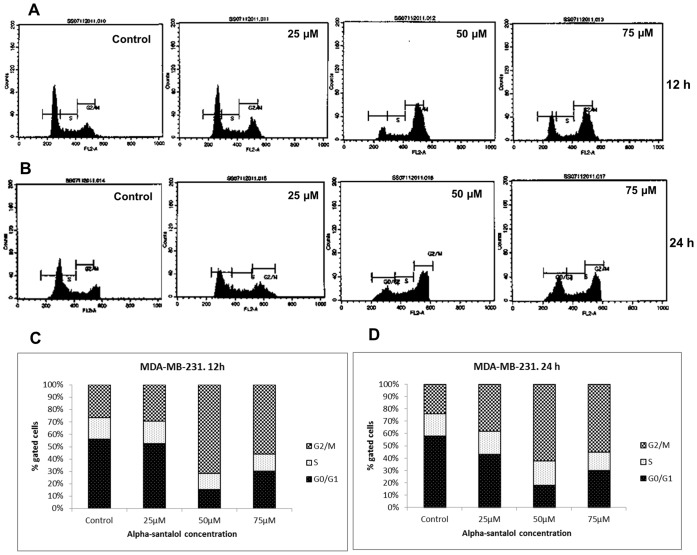
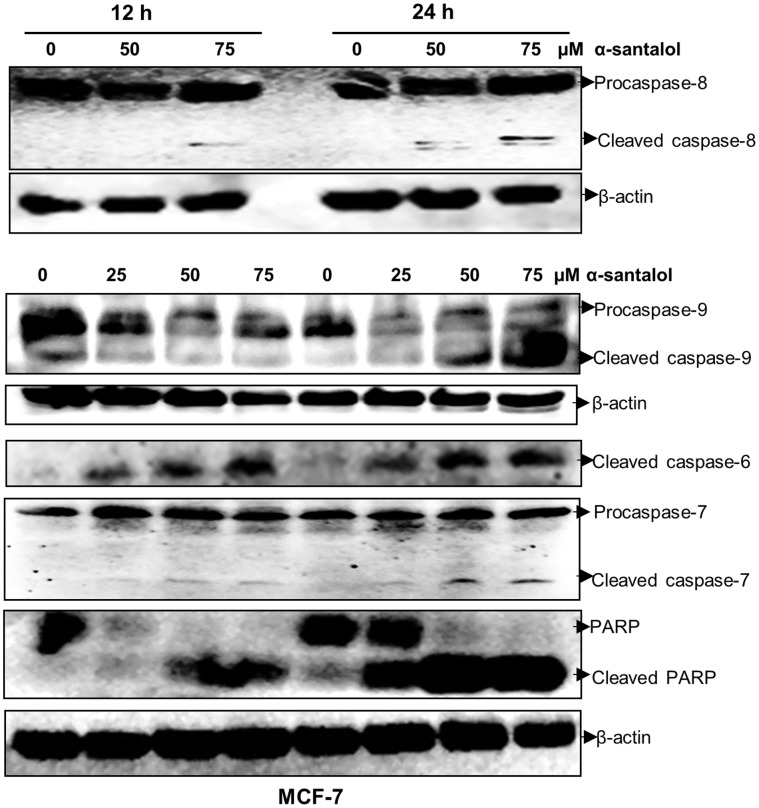
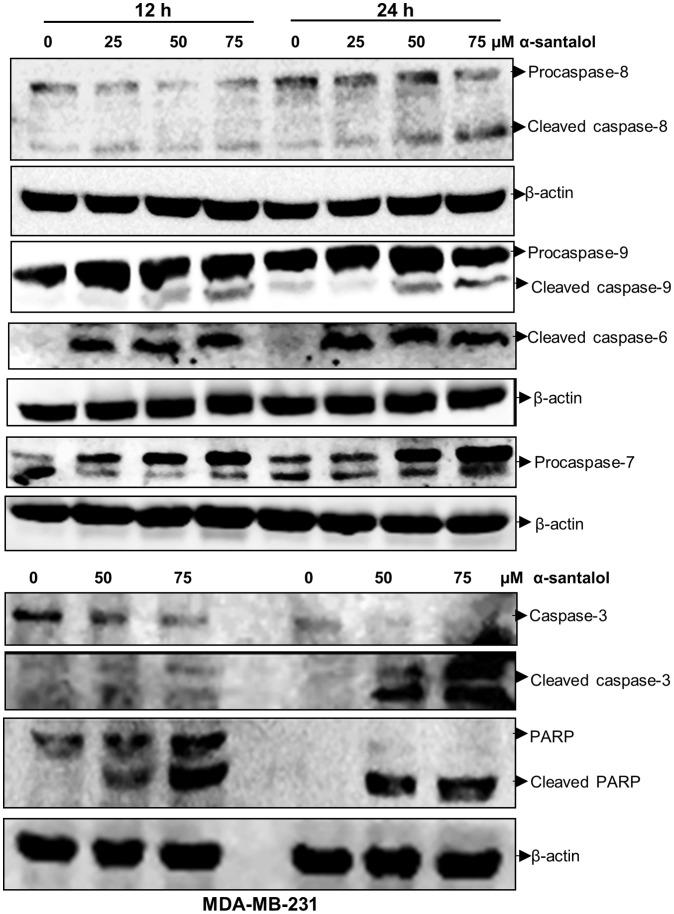
Anticancer efficacy and the mechanism of action of α-santalol, a terpenoid isolated from sandalwood oil, were investigated in human breast cancer cells by using p53 wild-type MCF-7 cells as a model for estrogen receptor (ER)-positive and p53 mutated MDA-MB-231 cells as a model for ER-negative breast cancer. α-Santalol inhibited cell viability and proliferation in a concentration and time-dependent manner in both cells regardless of their ER and/or p53 status. However, α-santalol produced relatively less toxic effect on normal breast epithelial cell line, MCF-10A. It induced G2/M cell cycle arrest and apoptosis in both MCF-7 and MDA-MB-231 cells. Cell cycle arrest induced by α-santalol was associated with changes in the protein levels of BRCA1, Chk1, G2/M regulatory cyclins, Cyclin dependent kinases (CDKs), Cell division cycle 25B (Cdc25B), Cdc25C and Ser-216 phosphorylation of Cdc25C. An up-regulated expression of CDK inhibitor p21 along with suppressed expression of mutated p53 was observed in MDA-MB-231 cells treated with α-santalol. On the contrary, α-santalol did not increase the expression of wild-type p53 and p21 in MCF-7 cells. In addition, α-santalol induced extrinsic and intrinsic pathways of apoptosis in both cells with activation of caspase-8 and caspase-9. It led to the activation of the executioner caspase-6 and caspase-7 in α-santalol-treated MCF-7 cells and caspase-3 and caspase-6 in MDA-MB-231 cells along with strong cleavage of poly(ADP-ribose) polymerase (PARP) in both cells. Taken together, this study for the first time identified strong anti-neoplastic effects of α-santalol against both ER-positive and ER-negative breast cancer cells.
檀香醇是从檀香油中分离得到的一种萜类化合物,本研究旨在探讨其在人乳腺癌细胞中的抗癌功效和作用机制。采用 p53 野生型 MCF-7 细胞作为雌激素受体(ER)阳性模型,p53 突变型 MDA-MB-231 细胞作为 ER 阴性乳腺癌模型,研究了檀香醇对乳腺癌细胞的作用。结果表明,檀香醇能够浓度和时间依赖性地抑制两种细胞的活力和增殖,而与它们的 ER 和/或 p53 状态无关。然而,檀香醇对正常乳腺上皮细胞 MCF-10A 的毒性相对较小。它能诱导 MCF-7 和 MDA-MB-231 细胞发生 G2/M 期细胞周期阻滞和细胞凋亡。檀香醇诱导的细胞周期阻滞与 BRCA1、Chk1、G2/M 调节周期蛋白、细胞周期蛋白依赖性激酶(CDK)、细胞分裂周期蛋白 25B(Cdc25B)、Cdc25C 和 Cdc25C Ser-216 磷酸化的蛋白水平变化有关。在 MDA-MB-231 细胞中,观察到 CDK 抑制剂 p21 的表达上调,同时突变型 p53 的表达下调。相反,檀香醇在 MCF-7 细胞中并没有增加野生型 p53 和 p21 的表达。此外,檀香醇在两种细胞中均能诱导细胞凋亡的外源性和内源性途径,同时激活 caspase-8 和 caspase-9。它导致执行器 caspase-6 和 caspase-7 在檀香醇处理的 MCF-7 细胞中的激活,以及 caspase-3 和 caspase-6 在 MDA-MB-231 细胞中的激活,同时在两种细胞中都有强烈的多聚(ADP-核糖)聚合酶(PARP)的裂解。综上所述,本研究首次证实了檀香醇对 ER 阳性和 ER 阴性乳腺癌细胞具有强烈的抗肿瘤作用。