Department of Developmental and Molecular Biology, Albert Einstein College of Medicine, Bronx, New York, USA.
Nat Neurosci. 2013 Apr;16(4):394-406. doi: 10.1038/nn.3350. Epub 2013 Mar 3.
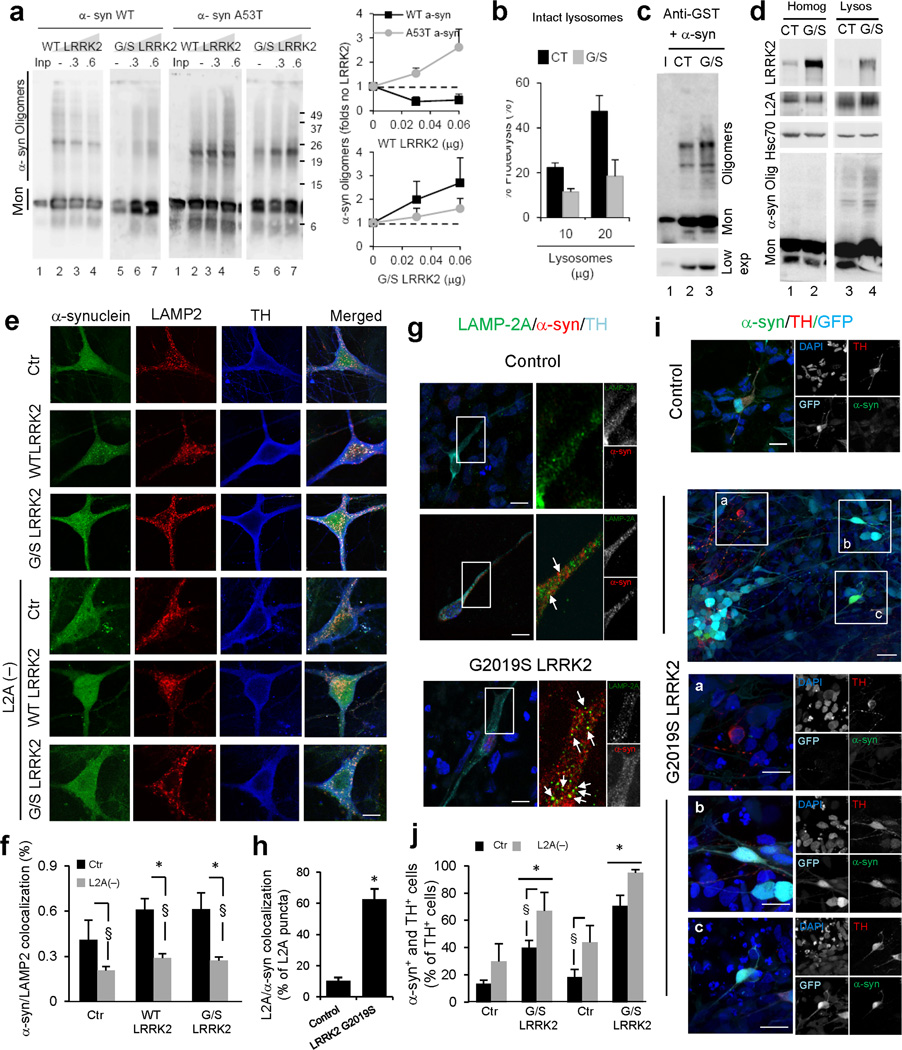
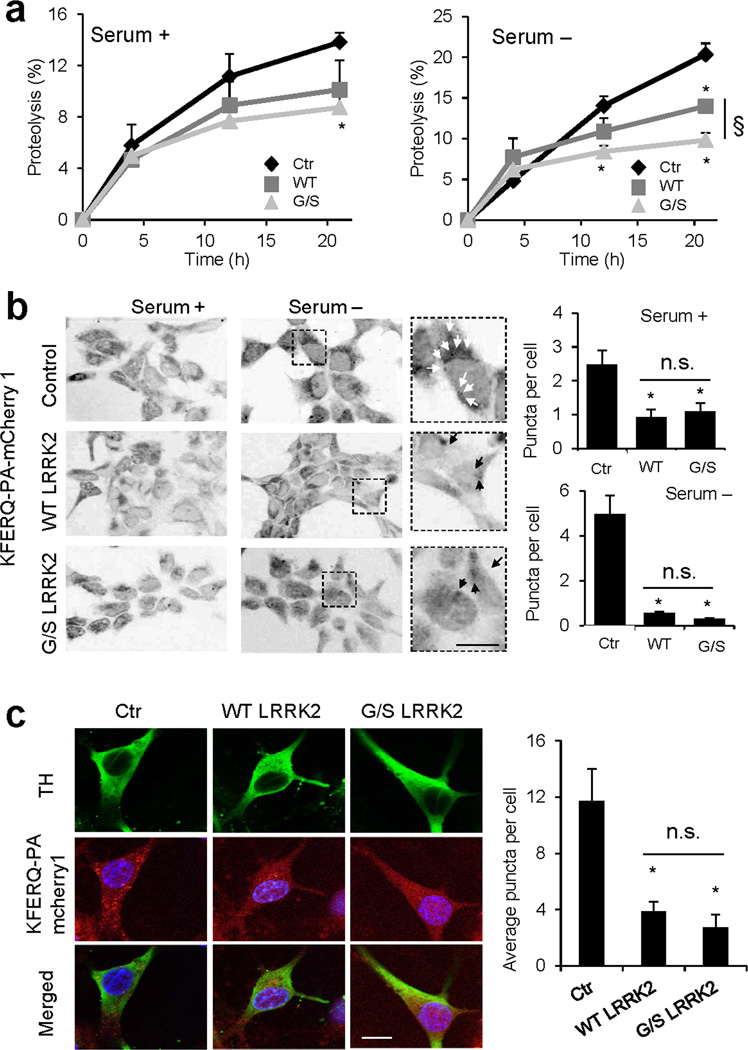
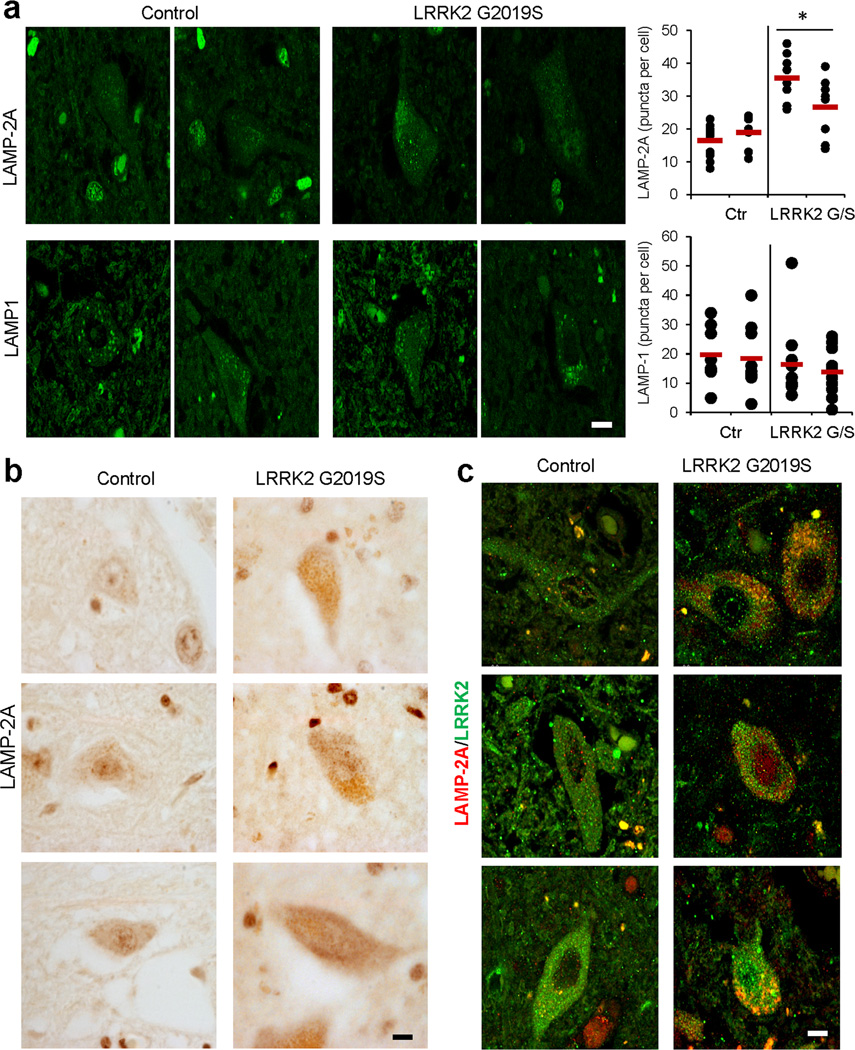
Mutations in leucine-rich repeat kinase 2 (LRRK2) are the most common cause of familial Parkinson's disease. We found LRRK2 to be degraded in lysosomes by chaperone-mediated autophagy (CMA), whereas the most common pathogenic mutant form of LRRK2, G2019S, was poorly degraded by this pathway. In contrast to the behavior of typical CMA substrates, lysosomal binding of both wild-type and several pathogenic mutant LRRK2 proteins was enhanced in the presence of other CMA substrates, which interfered with the organization of the CMA translocation complex, resulting in defective CMA. Cells responded to such LRRK2-mediated CMA compromise by increasing levels of the CMA lysosomal receptor, as seen in neuronal cultures and brains of LRRK2 transgenic mice, induced pluripotent stem cell-derived dopaminergic neurons and brains of Parkinson's disease patients with LRRK2 mutations. This newly described LRRK2 self-perpetuating inhibitory effect on CMA could underlie toxicity in Parkinson's disease by compromising the degradation of α-synuclein, another Parkinson's disease-related protein degraded by this pathway.
LRRK2 中的突变是家族性帕金森病最常见的原因。我们发现 LRRK2 通过伴侣介导的自噬(CMA)在溶酶体中降解,而最常见的致病性 LRRK2 突变形式 G2019S 则不能很好地通过该途径降解。与典型的 CMA 底物的行为相反,在存在其他 CMA 底物的情况下,野生型和几种致病性突变 LRRK2 蛋白的溶酶体结合都增强了,这干扰了 CMA 易位复合物的组织,导致 CMA 缺陷。细胞通过增加 CMA 溶酶体受体的水平来应对这种由 LRRK2 介导的 CMA 受损,正如神经元培养物和 LRRK2 转基因小鼠、诱导多能干细胞衍生的多巴胺能神经元以及帕金森病患者 LRRK2 突变的大脑中所观察到的那样。这种新描述的 LRRK2 对 CMA 的自我延续抑制作用可能通过损害另一种通过该途径降解的帕金森病相关蛋白 α-突触核蛋白的降解,导致帕金森病的毒性。