Brain Mind Institute, School of Life Sciences, Ecole Polytechnique Fédérale de Lausanne, Lausanne, Switzerland.
PLoS One. 2011 Apr 6;6(4):e18568. doi: 10.1371/journal.pone.0018568.
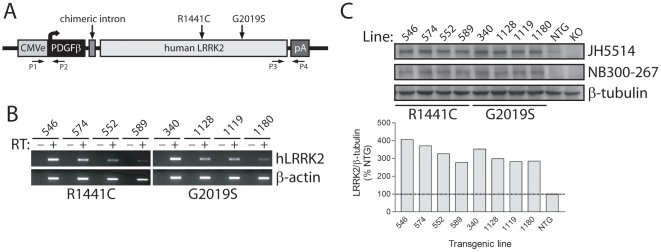
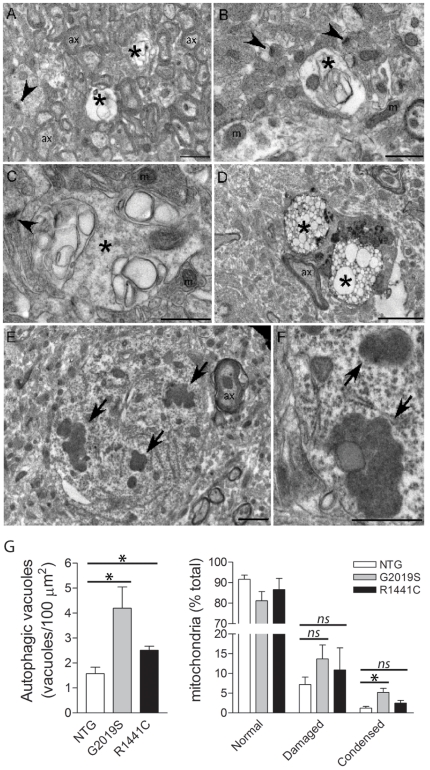
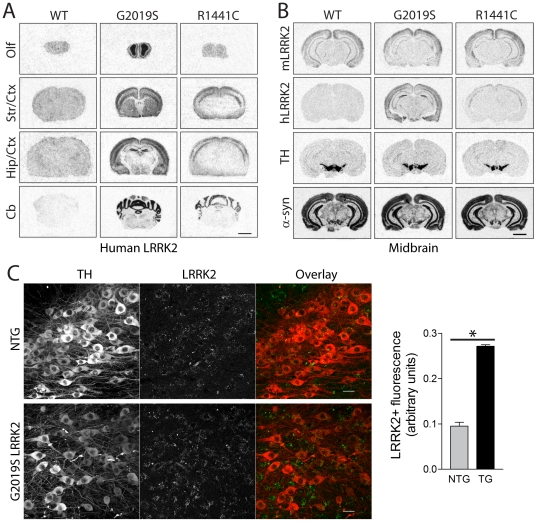
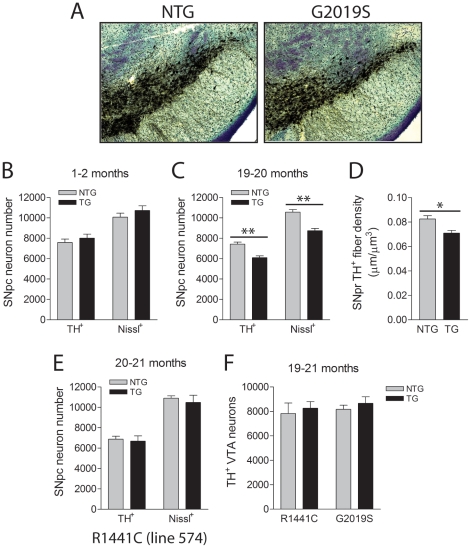
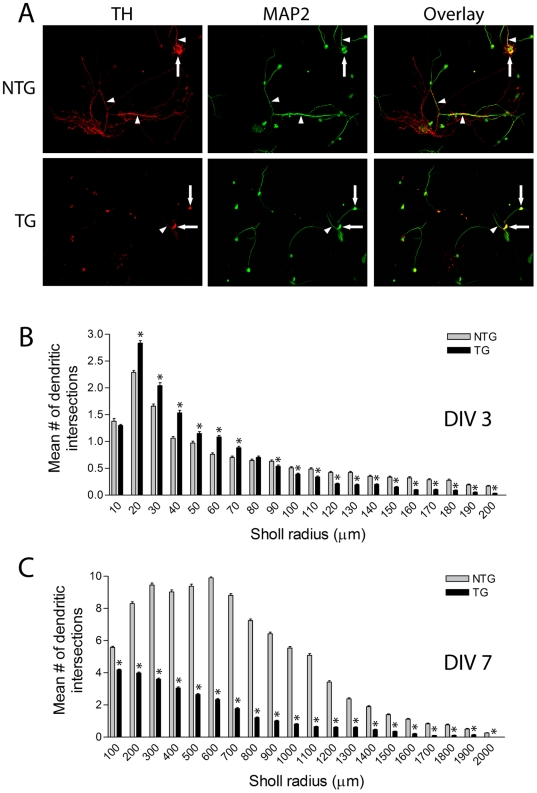
Mutations in the leucine-rich repeat kinase 2 (LRRK2) gene cause late-onset, autosomal dominant familial Parkinson's disease (PD) and also contribute to idiopathic PD. LRRK2 mutations represent the most common cause of PD with clinical and neurochemical features that are largely indistinguishable from idiopathic disease. Currently, transgenic mice expressing wild-type or disease-causing mutants of LRRK2 have failed to produce overt neurodegeneration, although abnormalities in nigrostriatal dopaminergic neurotransmission have been observed. Here, we describe the development and characterization of transgenic mice expressing human LRRK2 bearing the familial PD mutations, R1441C and G2019S. Our study demonstrates that expression of G2019S mutant LRRK2 induces the degeneration of nigrostriatal pathway dopaminergic neurons in an age-dependent manner. In addition, we observe autophagic and mitochondrial abnormalities in the brains of aged G2019S LRRK2 mice and markedly reduced neurite complexity of cultured dopaminergic neurons. These new LRRK2 transgenic mice will provide important tools for understanding the mechanism(s) through which familial mutations precipitate neuronal degeneration and PD.
LRRK2 基因中的突变导致迟发性、常染色体显性家族性帕金森病 (PD),也与特发性 PD 有关。LRRK2 突变是 PD 最常见的病因,其临床和神经化学特征与特发性疾病基本无法区分。目前,表达野生型或致病突变型 LRRK2 的转基因小鼠未能产生明显的神经退行性变,尽管观察到黑质纹状体多巴胺能神经传递的异常。在这里,我们描述了表达家族性 PD 突变 R1441C 和 G2019S 的人类 LRRK2 的转基因小鼠的开发和特征。我们的研究表明,G2019S 突变型 LRRK2 的表达以年龄依赖性方式诱导黑质纹状体通路多巴胺能神经元的退化。此外,我们观察到老年 G2019S LRRK2 小鼠大脑中存在自噬和线粒体异常,以及培养的多巴胺能神经元的神经突复杂性明显降低。这些新的 LRRK2 转基因小鼠将为理解家族性突变引发神经元变性和 PD 的机制提供重要工具。