Department of Population Health and Primary Care, Faculty of Medicine and Health Sciences, Norwich Medical School, University of East Anglia, Norwich, UK.
BMJ Open. 2013 Mar 1;3(3):e002269. doi: 10.1136/bmjopen-2012-002269.
The aim of this systematic review is to appraise the evidence for the use of anti-VEGF drugs and steroids in diabetic macular oedema (DMO) as assessed by change in best corrected visual acuity (BCVA), central macular thickness and adverse events
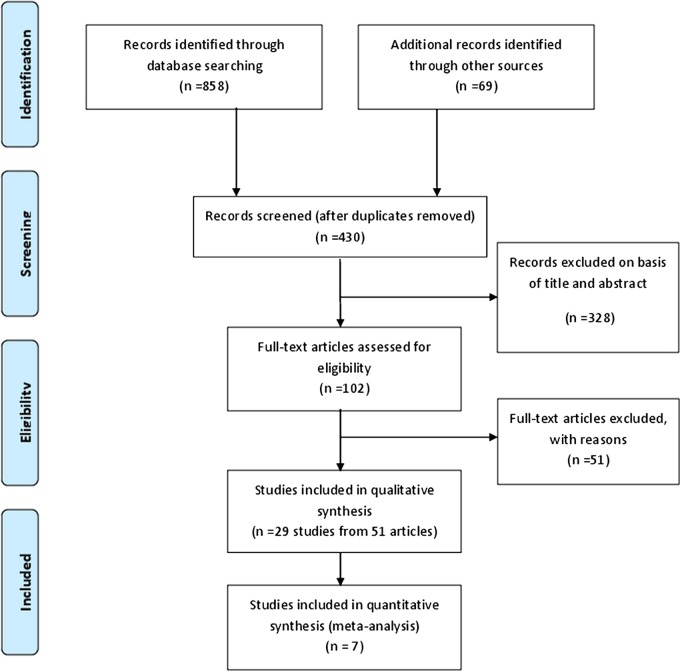
MEDLINE, EMBASE, Web of Science with Conference Proceedings and the Cochrane Library (inception to July 2012). Certain conference abstracts and drug regulatory web sites were also searched.
STUDY ELIGIBILITY CRITERIA, PARTICIPANTS AND INTERVENTIONS: Randomised controlled trials were used to assess clinical effectiveness and observational trials were used for safety. Trials which assessed triamcinolone, dexamethasone, fluocinolone, bevacizumab, ranibizumab, pegaptanib or aflibercept in patients with DMO were included.
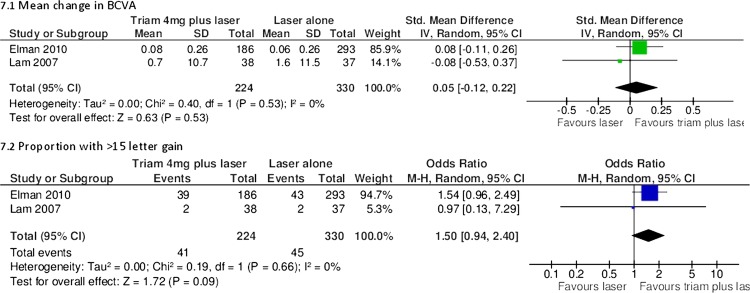
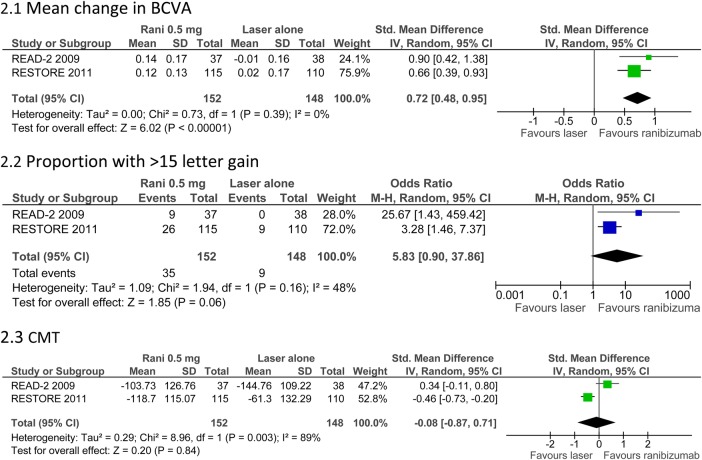
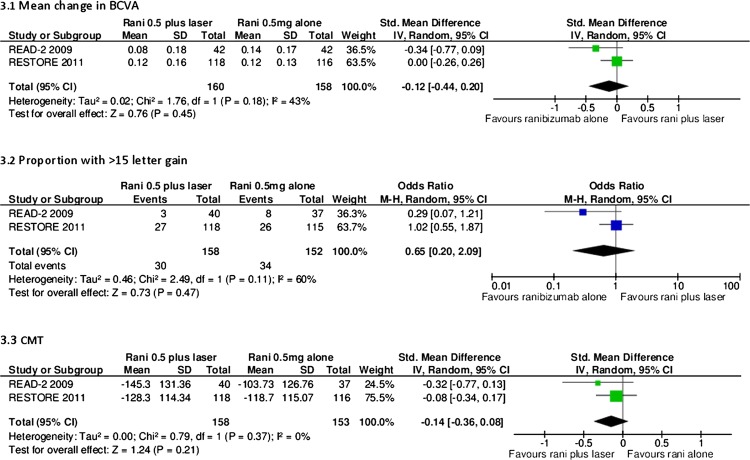
Risk of bias was assessed using the Cochrane risk of bias tool. Study results are narratively described and, where appropriate, data were pooled using random effects meta-analysis.
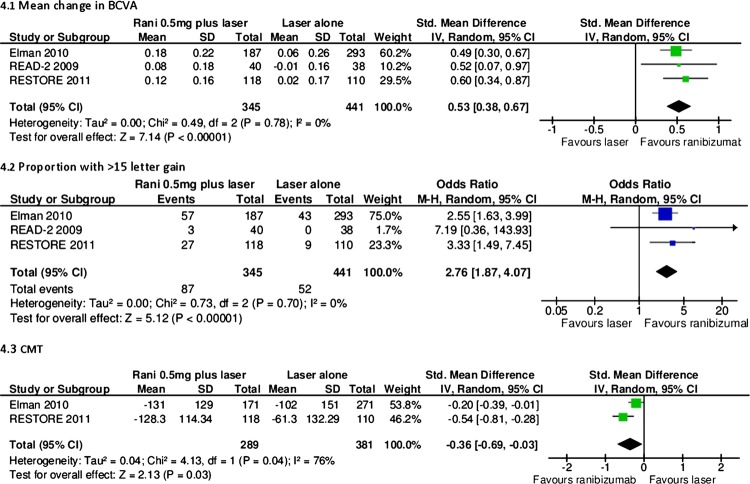
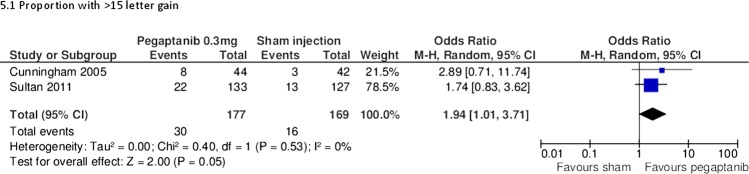
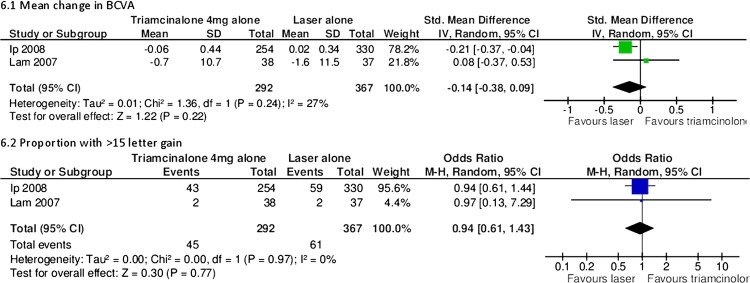
Anti-VEGF drugs are effective compared to both laser and placebo and seem to be more effective than steroids in improving BCVA. They have been shown to be safe in the short term but require frequent injections. Studies assessing steroids (triamcinolone, dexamethasone and fluocinolone) have reported mixed results when compared with laser or placebo. Steroids have been associated with increased incidence of cataracts and intraocular pressure rise but require fewer injections, especially when steroid implants are used.
The quality of included studies varied considerably. Five of 14 meta-analyses had moderate or high statistical heterogeneity.
The anti-VEGFs ranibizumab and bevacizumab have consistently shown good clinical effectiveness without major unwanted side effects. Steroid results have been mixed and are usually associated with cataract formation and intraocular pressure increase. Despite the current wider spectrum of treatments for DMO, only a small proportion of patients recover good vision (≥20/40), and thus the search for new therapies needs to continue.
本系统评价旨在评估抗血管内皮生长因子药物和类固醇在糖尿病黄斑水肿(DMO)中的应用证据,通过最佳矫正视力(BCVA)、中心黄斑厚度和不良事件的变化来评估。
MEDLINE、EMBASE、Web of Science 与会议论文集以及 Cochrane 图书馆(从建库至 2012 年 7 月)。还搜索了某些会议摘要和药物监管网站。
研究入选标准、参与者和干预措施:随机对照试验用于评估临床疗效,观察性试验用于评估安全性。入选的试验评估了 DMO 患者中曲安奈德、地塞米松、氟轻松、贝伐单抗、雷珠单抗、帕塔单抗或阿柏西普的治疗效果。
使用 Cochrane 偏倚风险工具评估偏倚风险。研究结果以叙述性方式描述,在适当的情况下,使用随机效应荟萃分析进行数据合并。
与激光和安慰剂相比,抗血管内皮生长因子药物更有效,似乎比类固醇更能提高 BCVA。它们在短期内被证明是安全的,但需要频繁注射。与激光或安慰剂相比,评估类固醇(曲安奈德、地塞米松和氟轻松)的研究报告结果不一。类固醇与白内障和眼压升高的发生率增加有关,但需要的注射次数较少,尤其是使用类固醇植入物时。
纳入研究的质量差异很大。五项荟萃分析存在中度或高度统计学异质性。
抗血管内皮生长因子药物雷珠单抗和贝伐单抗在没有明显不良副作用的情况下表现出良好的临床疗效。类固醇的结果喜忧参半,通常与白内障形成和眼压升高有关。尽管目前 DMO 的治疗方法范围更广,但只有一小部分患者恢复了良好的视力(≥20/40),因此需要继续寻找新的治疗方法。