Channing Division of Network Medicine, Brigham and Women's Hospital and Harvard Medical School, Boston, Massachusetts, United States of America.
PLoS One. 2013;8(2):e56179. doi: 10.1371/journal.pone.0056179. Epub 2013 Feb 14.
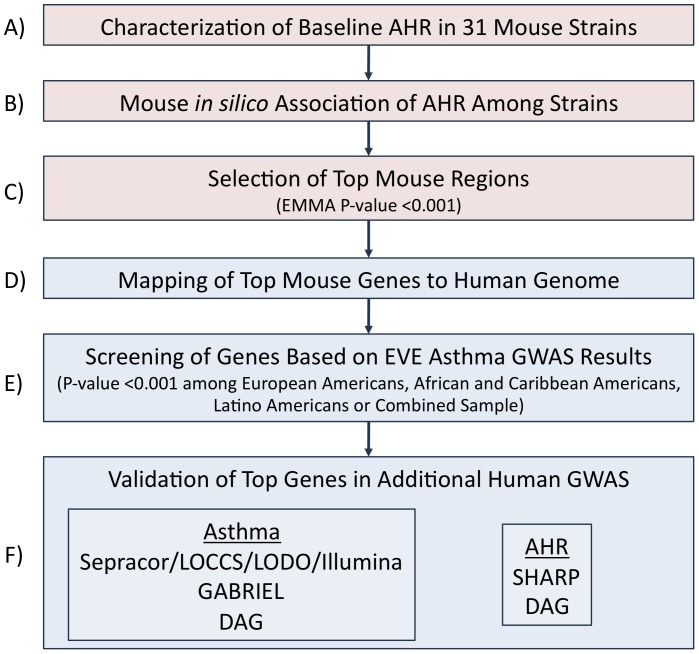
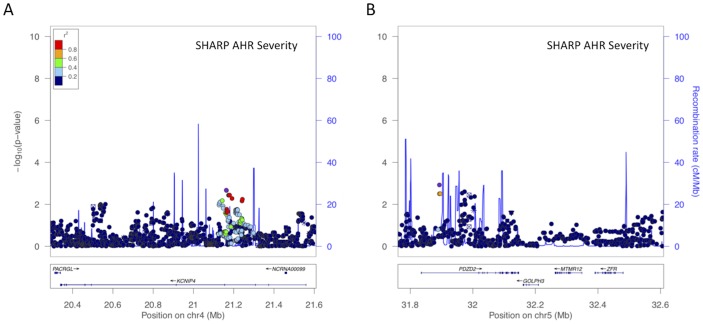
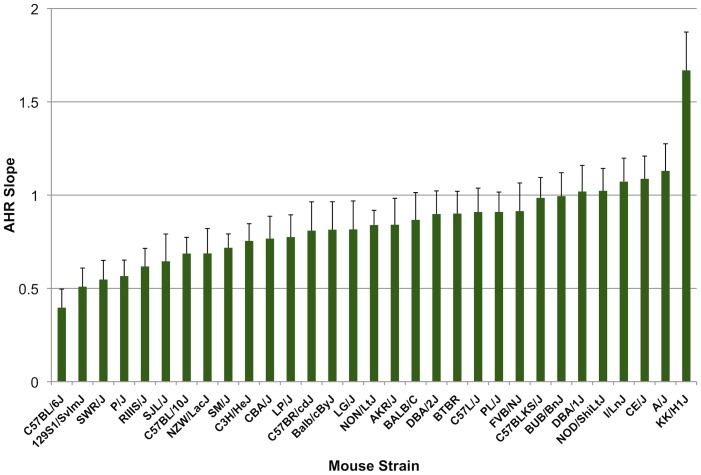
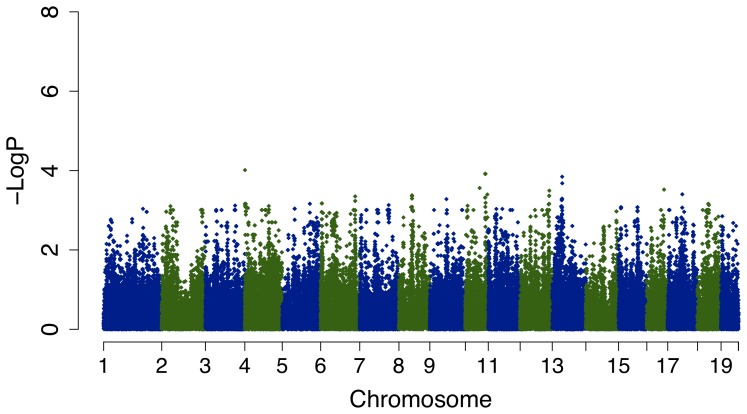
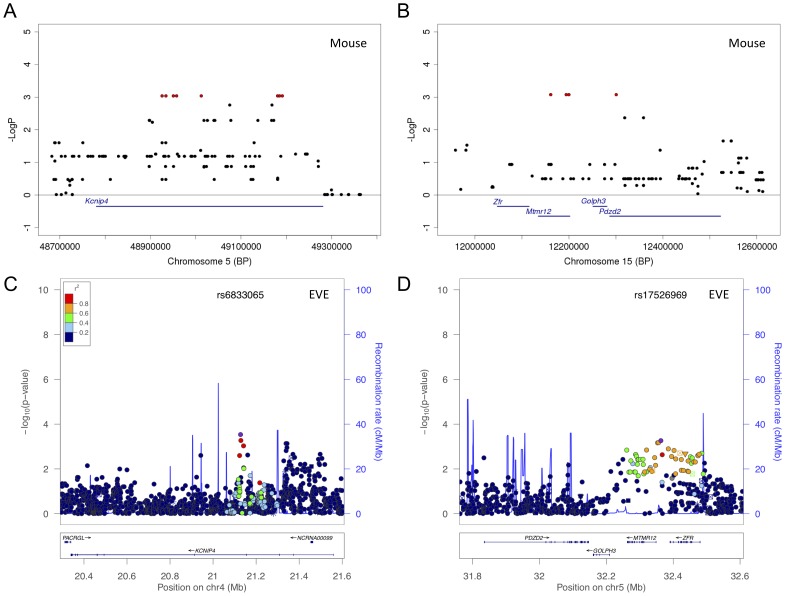
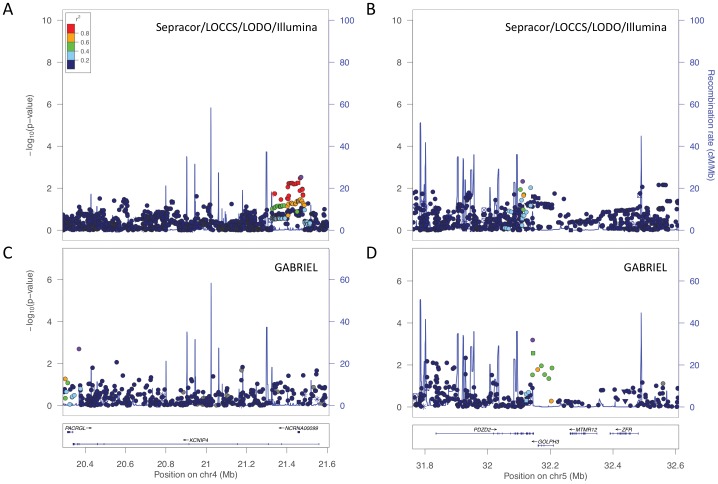
Asthma is a common chronic respiratory disease characterized by airway hyperresponsiveness (AHR). The genetics of asthma have been widely studied in mouse and human, and homologous genomic regions have been associated with mouse AHR and human asthma-related phenotypes. Our goal was to identify asthma-related genes by integrating AHR associations in mouse with human genome-wide association study (GWAS) data. We used Efficient Mixed Model Association (EMMA) analysis to conduct a GWAS of baseline AHR measures from males and females of 31 mouse strains. Genes near or containing SNPs with EMMA p-values <0.001 were selected for further study in human GWAS. The results of the previously reported EVE consortium asthma GWAS meta-analysis consisting of 12,958 diverse North American subjects from 9 study centers were used to select a subset of homologous genes with evidence of association with asthma in humans. Following validation attempts in three human asthma GWAS (i.e., Sepracor/LOCCS/LODO/Illumina, GABRIEL, DAG) and two human AHR GWAS (i.e., SHARP, DAG), the Kv channel interacting protein 4 (KCNIP4) gene was identified as nominally associated with both asthma and AHR at a gene- and SNP-level. In EVE, the smallest KCNIP4 association was at rs6833065 (P-value 2.9e-04), while the strongest associations for Sepracor/LOCCS/LODO/Illumina, GABRIEL, DAG were 1.5e-03, 1.0e-03, 3.1e-03 at rs7664617, rs4697177, rs4696975, respectively. At a SNP level, the strongest association across all asthma GWAS was at rs4697177 (P-value 1.1e-04). The smallest P-values for association with AHR were 2.3e-03 at rs11947661 in SHARP and 2.1e-03 at rs402802 in DAG. Functional studies are required to validate the potential involvement of KCNIP4 in modulating asthma susceptibility and/or AHR. Our results suggest that a useful approach to identify genes associated with human asthma is to leverage mouse AHR association data.
哮喘是一种常见的慢性呼吸道疾病,其特征为气道高反应性(AHR)。哮喘的遗传学在小鼠和人类中已经得到了广泛的研究,并且同源基因组区域与小鼠 AHR 和人类哮喘相关表型相关。我们的目标是通过整合小鼠 AHR 关联与人类全基因组关联研究(GWAS)数据,鉴定与哮喘相关的基因。我们使用高效混合模型关联(EMMA)分析对 31 个小鼠品系的雄性和雌性的基础 AHR 测量值进行了 GWAS。选择 EMMA p 值<0.001 的附近或包含 SNP 的基因进行进一步的人类 GWAS 研究。先前报道的 EVE 联盟哮喘 GWAS 荟萃分析的结果用于选择具有人类哮喘关联证据的同源基因的子集,该分析由来自 9 个研究中心的 12958 名不同的北美受试者组成。在三个人类哮喘 GWAS(即 Sepracor/LOCCS/LODO/Illumina、GABRIEL、DAG)和两个人类 AHR GWAS(即 SHARP、DAG)中进行了验证尝试后,Kv 通道相互作用蛋白 4(KCNIP4)基因被确定为在基因和 SNP 水平上与哮喘和 AHR 均具有名义相关性。在 EVE 中,最小的 KCNIP4 关联位于 rs6833065(P 值为 2.9e-04),而对于 Sepracor/LOCCS/LODO/Illumina、GABRIEL、DAG 的最强关联分别为 rs7664617、rs4697177、rs4696975 处的 1.5e-03、1.0e-03、3.1e-03。在 SNP 水平上,所有哮喘 GWAS 中最强的关联位于 rs4697177(P 值为 1.1e-04)。与 AHR 关联的最小 P 值为 2.3e-03,位于 SHARP 中的 rs11947661 和 DAG 中的 rs402802。需要进行功能研究以验证 KCNIP4 调节哮喘易感性和/或 AHR 的潜在作用。我们的结果表明,一种有用的方法是利用小鼠 AHR 关联数据来鉴定与人类哮喘相关的基因。