Department of Human Genetics, The University of Chicago, Chicago, IL, USA.
Center for Vascular Biology Research, Beth Israel Deaconess Medical Center, Harvard Medical School, Boston, MA, USA.
Genome Med. 2020 Jul 20;12(1):64. doi: 10.1186/s13073-020-00759-w.
A challenge in the post-GWAS era is to assign function to disease-associated variants. However, available resources do not include all tissues or environmental exposures that are relevant to all diseases. For example, exaggerated bronchoconstriction of airway smooth muscle cells (ASMCs) defines airway hyperresponsiveness (AHR), a cardinal feature of asthma. However, the contribution of ASMC to genetic and genomic studies has largely been overlooked. Our study aimed to address the gap in data availability from a critical tissue in genomic studies of asthma.
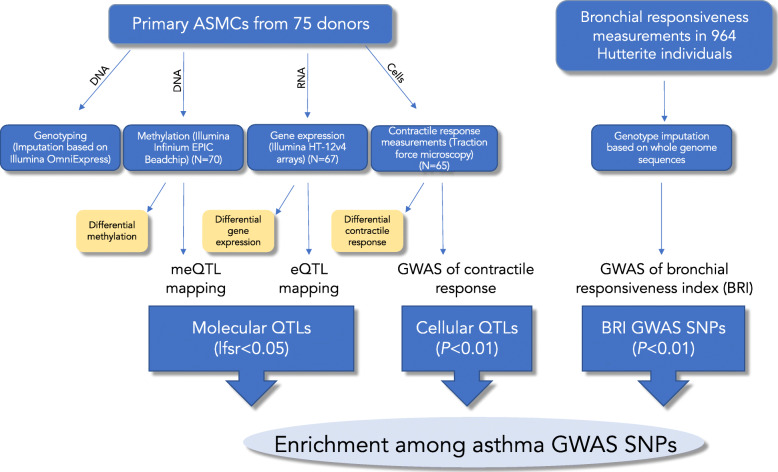
We developed a cell model of AHR to discover variants associated with transcriptional, epigenetic, and cellular responses to two AHR promoting cytokines, IL-13 and IL-17A, and performed a GWAS of bronchial responsiveness (BRI) in humans.
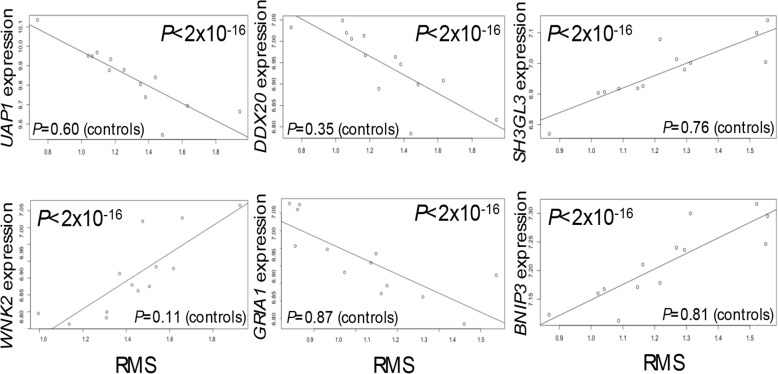
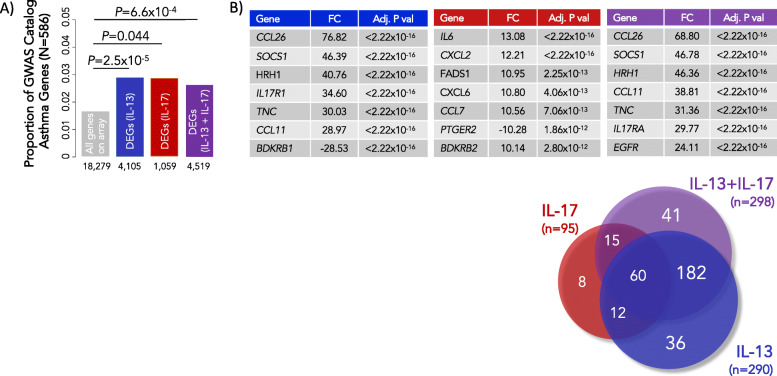
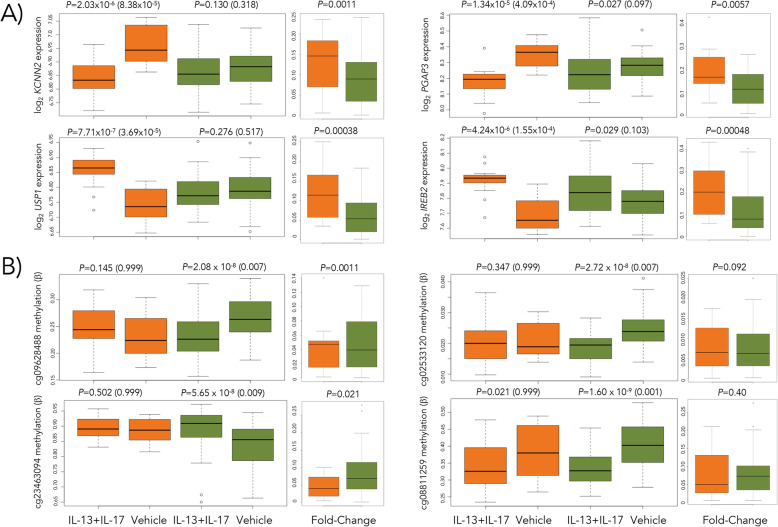
Our study revealed significant response differences between ASMCs from asthma cases and controls, including genes implicated in asthma susceptibility. We defined molecular quantitative trait loci (QTLs) for expression (eQTLs) and methylation (meQTLs), and cellular QTLs for contractility (coQTLs) and performed a GWAS of BRI in human subjects. Variants in asthma GWAS were significantly enriched for ASM QTLs and BRI-associated SNPs, and near genes enriched for ASM function, many with small P values that did not reach stringent thresholds of significance in GWAS.
Our study identified significant differences between ASMCs from asthma cases and controls, potentially reflecting trained tolerance in these cells, as well as a set of variants, overlooked in previous GWAS, which reflect the AHR component of asthma.
在后 GWAS 时代,面临的挑战是将疾病相关变体赋予功能。然而,现有的资源并不包括与所有疾病相关的所有组织或环境暴露。例如,气道平滑肌细胞(ASMC)的支气管过度收缩定义了气道高反应性(AHR),这是哮喘的一个主要特征。然而,ASMC 对遗传和基因组研究的贡献在很大程度上被忽视了。我们的研究旨在解决哮喘基因组研究中关键组织数据可用性的差距。
我们开发了一种 AHR 细胞模型,以发现与两种促进 AHR 的细胞因子(IL-13 和 IL-17A)的转录、表观遗传和细胞反应相关的变体,并对人类的支气管反应性(BRI)进行了 GWAS。
我们的研究揭示了哮喘病例和对照组 ASMC 之间存在显著的反应差异,包括与哮喘易感性相关的基因。我们定义了用于表达(eQTLs)和甲基化(meQTLs)的分子数量性状基因座(QTLs),以及用于收缩性(coQTLs)的细胞 QTLs,并对人类受试者的 BRI 进行了 GWAS。哮喘 GWAS 中的变体在 ASM QTLs 和与 BRI 相关的 SNP 中显著富集,并且在与 ASM 功能相关的基因附近富集,其中许多具有较小的 P 值,但在 GWAS 中未达到严格的显著阈值。
我们的研究确定了哮喘病例和对照组 ASMC 之间的显著差异,这可能反映了这些细胞中的训练耐受性,以及一组在以前的 GWAS 中被忽视的变体,这些变体反映了哮喘的 AHR 成分。