Instituto de Investigaciones Biotecnológicas Dr. Rodolfo A. Ugalde, Universidad Nacional de San Martín, San Martín, Buenos Aires, Argentina.
PLoS Negl Trop Dis. 2013;7(2):e2048. doi: 10.1371/journal.pntd.0002048. Epub 2013 Feb 14.
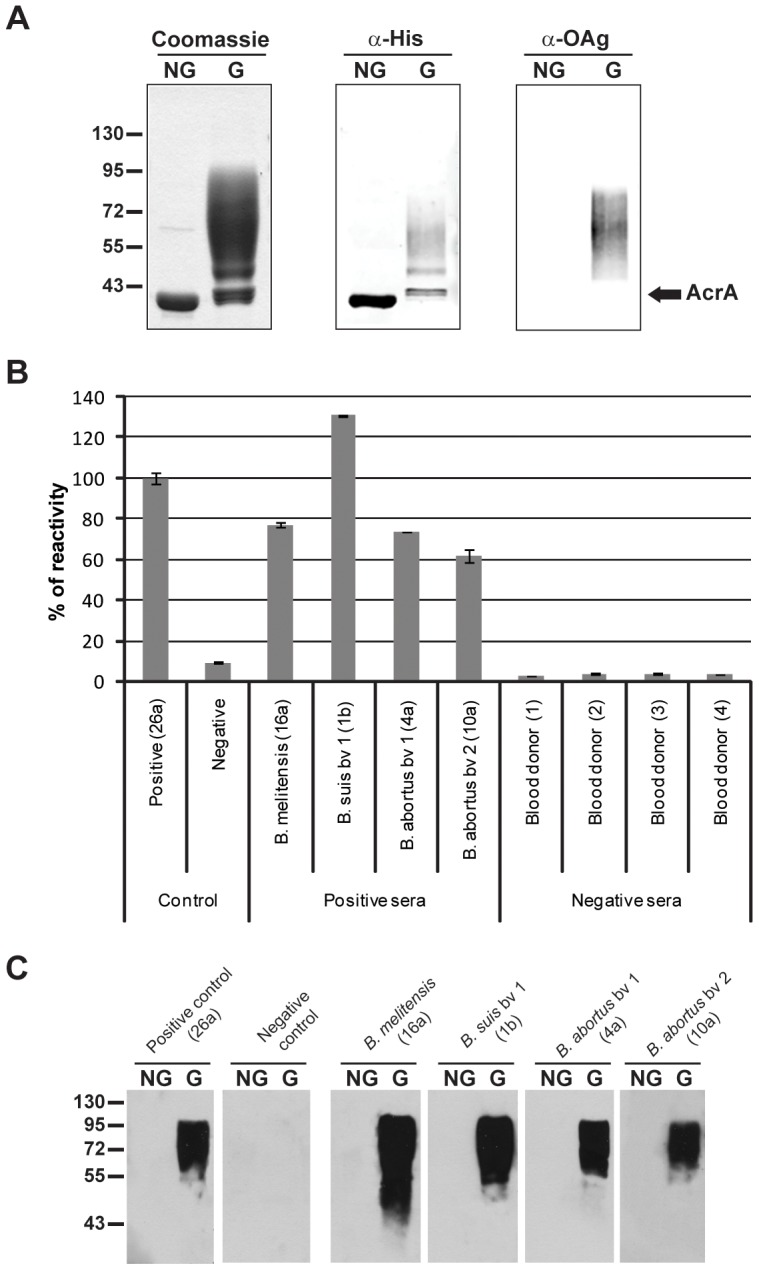
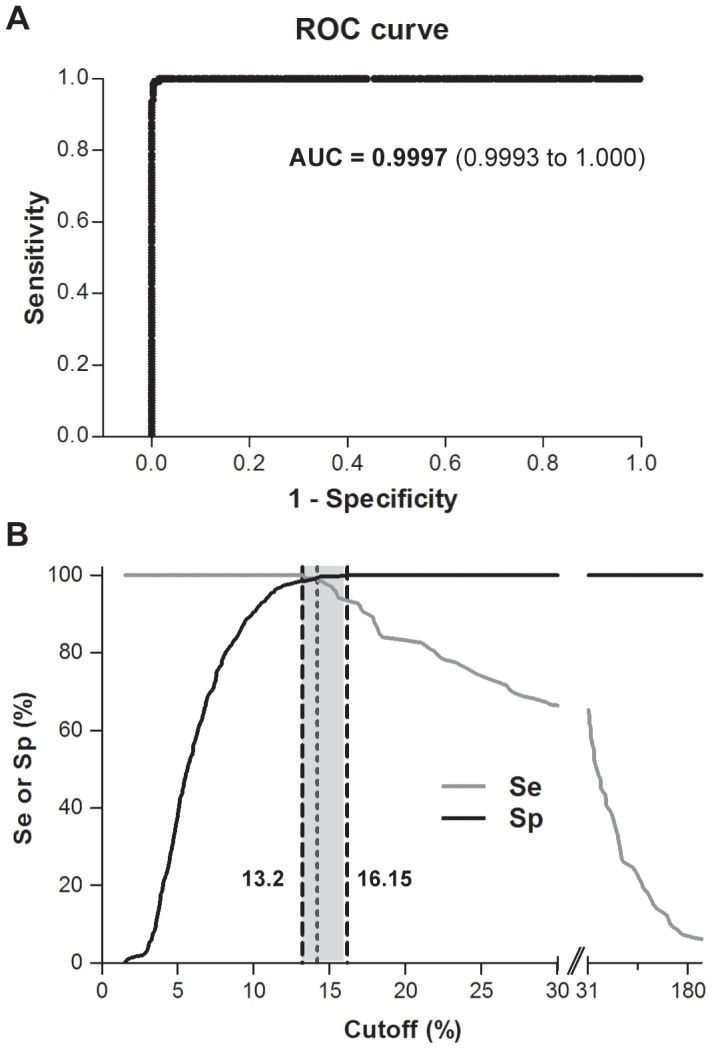
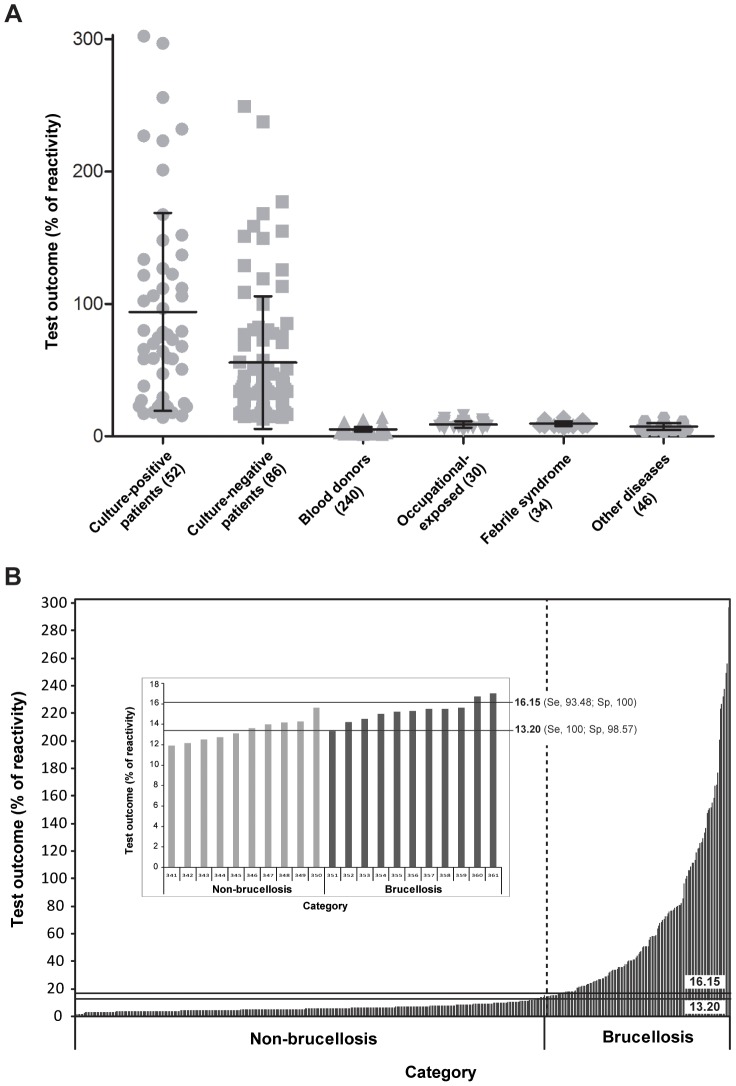
Brucellosis is a highly contagious zoonosis and still a major human health problem in endemic areas of the world. Although several diagnostic tools are available, most of them are difficult to implement especially in developing countries where complex health facilities are limited. Taking advantage of the identical structure and composition of the Brucella spp. and Yersinia enterocolitica O:9 O-polysaccharide, we explored the application of a recombinant Y. enterocolitica O:9-polysaccharide-protein conjugate (OAg-AcrA) as a novel antigen for diagnosis of human brucellosis. We have developed and validated an indirect immunoassay using OAg-AcrA coupled to magnetic beads. OAg-AcrA was produced and purified with high yields in Y. enterocolitica O:9 cells co-expressing the oligosaccharyltransferase PglB and the protein acceptor AcrA of Campylobacter jejuni without the need for culturing Brucella. Expression of PglB and AcrA in Y. enterocolitica resulted in the transfer of the host O-polysaccharide from its lipid carrier to AcrA. To validate the assay and determine the cutoff values, a receiver-operating characteristic analysis was performed using a panel of characterized serum samples obtained from healthy individuals and patients of different clinical groups. Our results indicate that, using this assay, it is possible to detect infection caused by the three main human brucellosis agents (B. abortus, B. melitensis and B. suis) and select different cutoff points to adjust sensitivity and specificity levels as needed. A cutoff value of 13.20% gave a sensitivity of 100% and a specificity of 98.57%, and a cutoff value of 16.15% resulted in a test sensitivity and specificity of 93.48% and 100%, respectively. The high diagnostic accuracy, low cost, reduced assay time and simplicity of this new glycoconjugate-magnetic beads assay makes it an attractive diagnostic tool for using not only in clinics and brucellosis reference laboratories but also in locations with limited laboratory infrastructure and/or minimally trained community health workers.
布鲁氏菌病是一种高度传染性的动物传染病,仍然是世界范围内地方性流行地区的一个主要人类健康问题。尽管有几种诊断工具可用,但其中大多数都难以实施,特别是在卫生设施复杂有限的发展中国家。利用布鲁氏菌属和肠弯曲菌 O:9 O-多糖相同的结构和组成,我们探索了一种重组肠弯曲菌 O:9-多糖-蛋白缀合物 (OAg-AcrA) 在诊断人类布鲁氏菌病中的应用。我们已经开发并验证了一种使用与磁性珠偶联的 OAg-AcrA 的间接免疫测定法。OAg-AcrA 在共表达寡糖基转移酶 PglB 和空肠弯曲菌蛋白受体 AcrA 的肠弯曲菌 O:9 细胞中以高产率生产和纯化,而无需培养布鲁氏菌。PglB 和 AcrA 在肠弯曲菌中的表达导致宿主 O-多糖从其脂质载体转移到 AcrA。为了验证该测定法并确定截止值,使用来自不同临床组的健康个体和患者的特征血清样本进行了接收者操作特征分析。我们的结果表明,使用该测定法,可以检测由三种主要人类布鲁氏菌病病原体(流产布鲁氏菌、马耳他布鲁氏菌和猪布鲁氏菌)引起的感染,并选择不同的截止值来根据需要调整灵敏度和特异性水平。截止值为 13.20%时,灵敏度为 100%,特异性为 98.57%,截止值为 16.15%时,检测灵敏度和特异性分别为 93.48%和 100%。这种新的糖缀合物-磁性珠测定法具有高诊断准确性、低成本、缩短测定时间和简单性,使其成为一种有吸引力的诊断工具,不仅可用于临床和布鲁氏菌病参考实验室,还可用于实验室基础设施有限和/或社区卫生工作者培训水平低的地方。