Department of Biological Mechanisms and Functions, Graduate School of Bioagricultural Sciences, Nagoya University, Nagoya, Japan.
PLoS One. 2013;8(3):e58175. doi: 10.1371/journal.pone.0058175. Epub 2013 Mar 5.
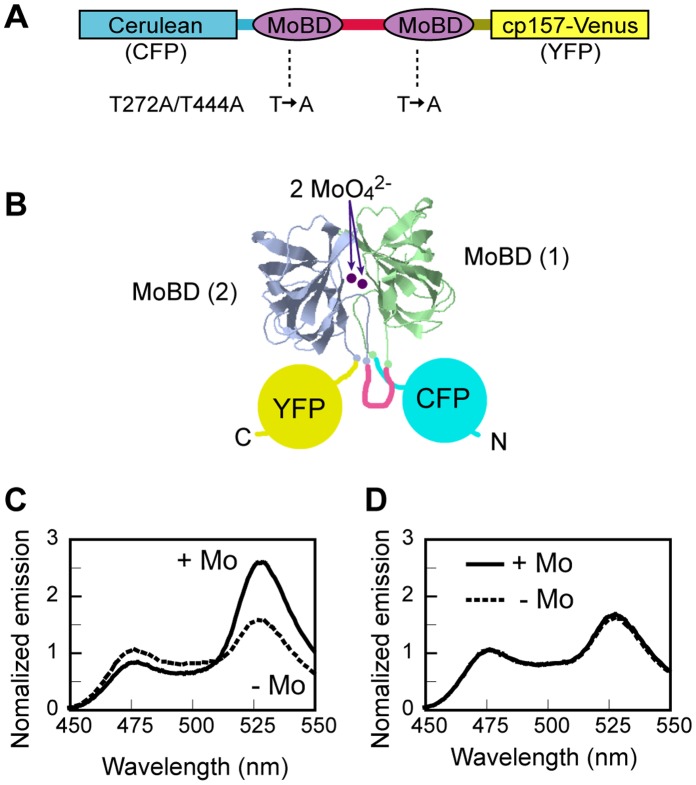
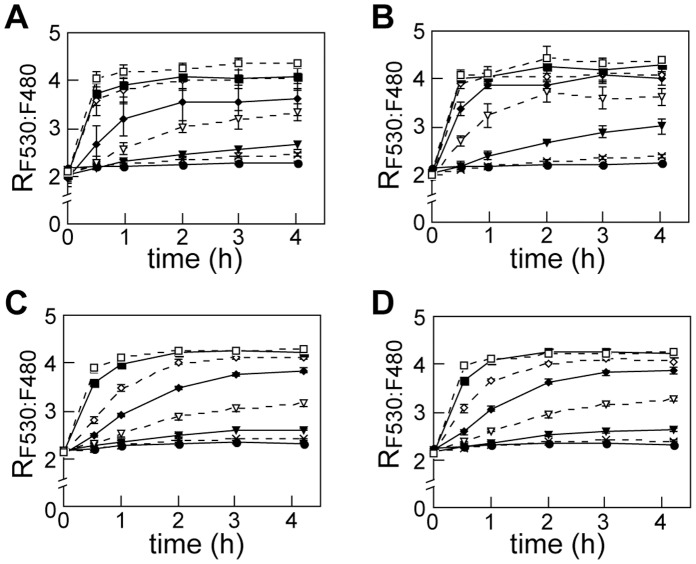
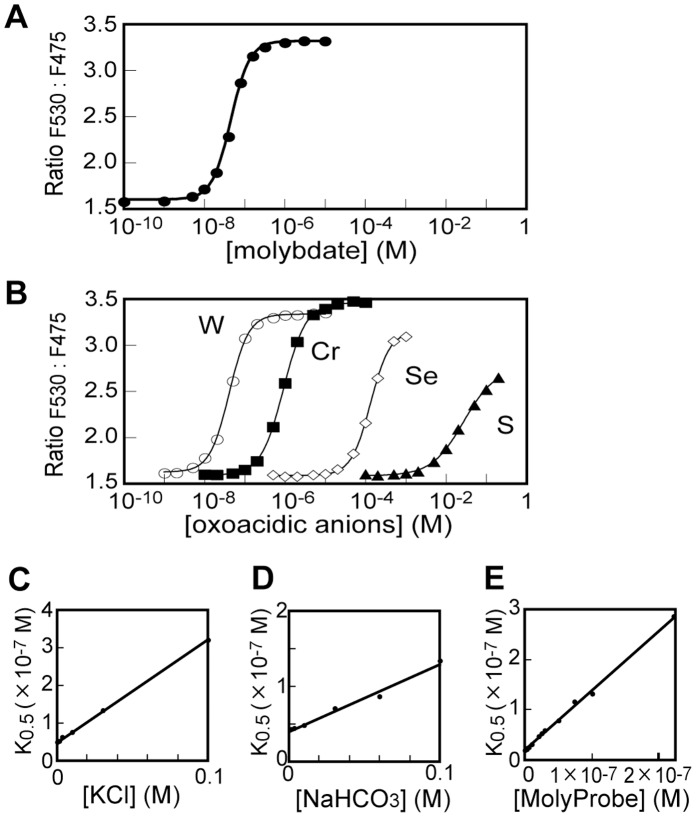
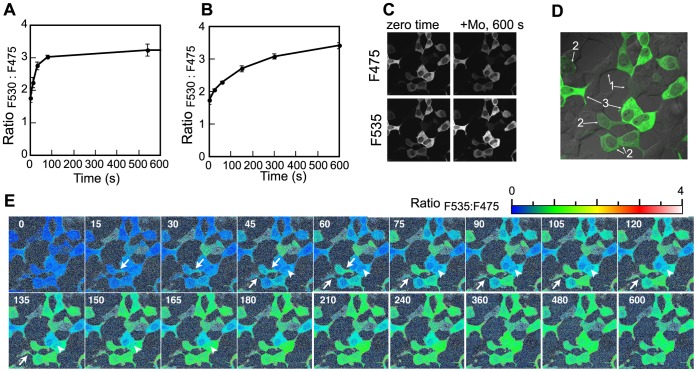
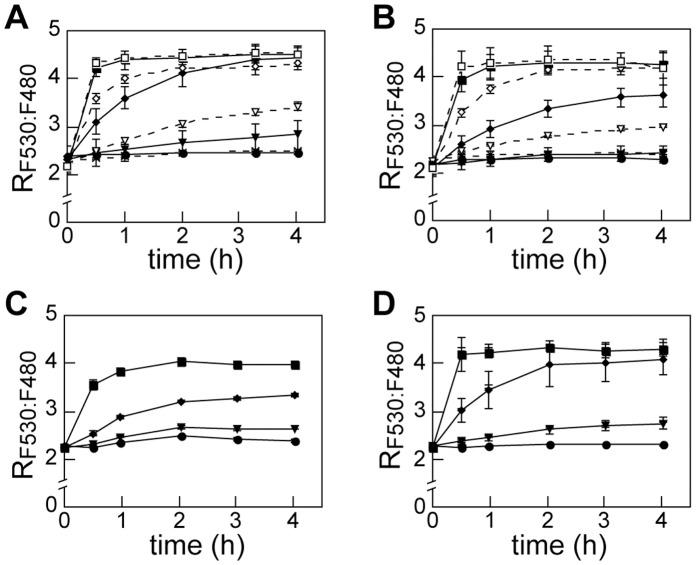
Molybdenum (Mo) is an essential trace element for almost all living organisms including animals. Mo is used as a catalytic center of molybdo-enzymes for oxidation/reduction reactions of carbon, nitrogen, and sulfur metabolism. Whilst living cells are known to import inorganic molybdate oxyanion from the surrounding environment, the in vivo dynamics of cytosolic molybdate remain poorly understood as no appropriate indicator is available for this trace anion. We here describe a genetically encoded Förester-resonance-energy-transfer (FRET)-based nanosensor composed of CFP, YFP and the bacterial molybdate-sensor protein ModE. The nanosensor MolyProbe containing an optimized peptide-linker responded to nanomolar-range molybdate selectively, and increased YFP:CFP fluorescence intensity ratio by up to 109%. By introduction of the nanosensor, we have been able to successfully demonstrate the real-time dynamics of molybdate in living animal cells. Furthermore, time course analyses of the dynamics suggest that novel oxalate-sensitive- and sulfate-resistant- transporter(s) uptake molybdate in a model culture cell.
钼(Mo)是几乎所有生物体(包括动物)的必需微量元素。Mo 用作钼酶的催化中心,用于碳、氮和硫代谢的氧化/还原反应。虽然已知活细胞从周围环境中导入无机钼酸盐阴离子,但由于没有合适的指示剂用于这种痕量阴离子,因此细胞浆中钼酸盐的体内动力学仍知之甚少。我们在这里描述了一种由 CFP、YFP 和细菌钼酸盐传感器蛋白 ModE 组成的遗传编码的 Förester 共振能量转移(FRET)纳米传感器。含有优化肽接头的纳米传感器 MolyProbe 对纳米摩尔范围内的钼酸盐选择性响应,并使 YFP:CFP 荧光强度比增加高达 109%。通过引入纳米传感器,我们已经能够成功地证明活动物细胞中钼酸盐的实时动态。此外,对动力学的时程分析表明,新型草酸盐敏感和硫酸盐抗性转运体在模型培养细胞中摄取钼酸盐。