Shanghai Key Laboratory of Regulatory Biology, School of Life Sciences, East China Normal University, Shanghai, People's Republic of China.
PLoS One. 2013;8(3):e58288. doi: 10.1371/journal.pone.0058288. Epub 2013 Mar 5.
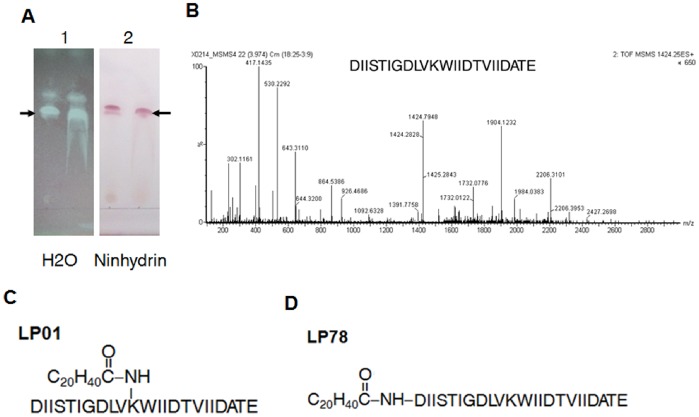
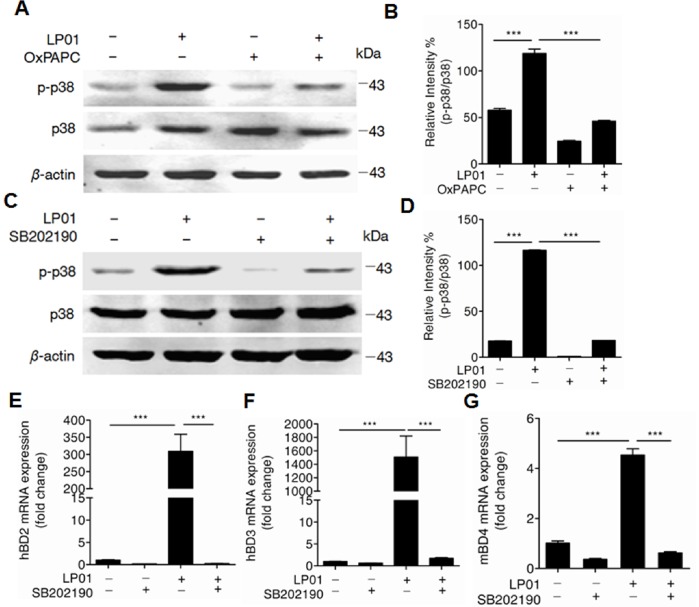
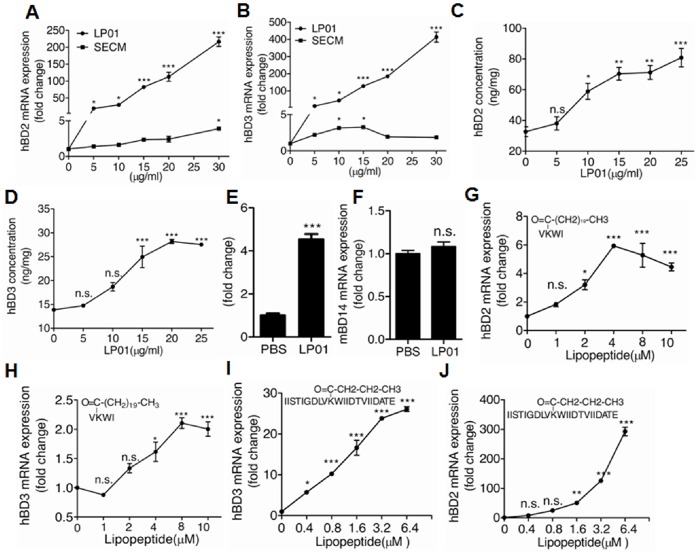
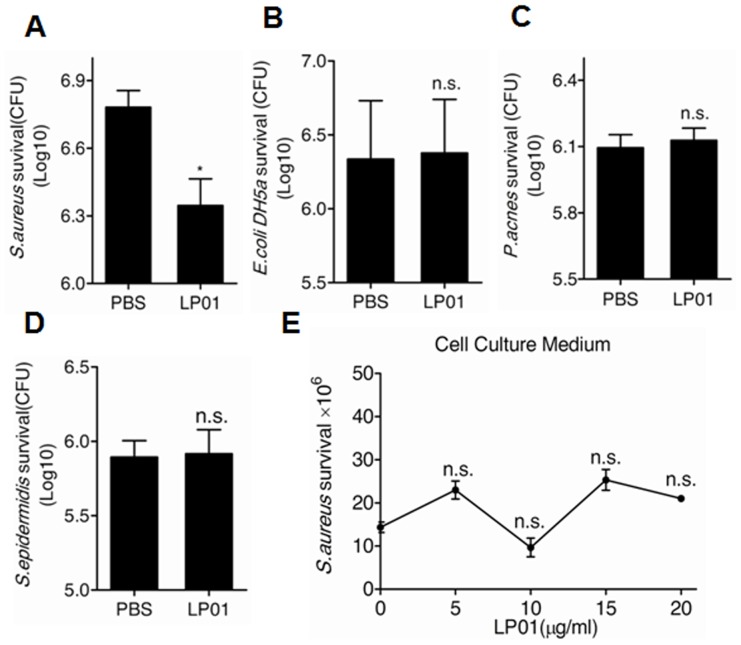
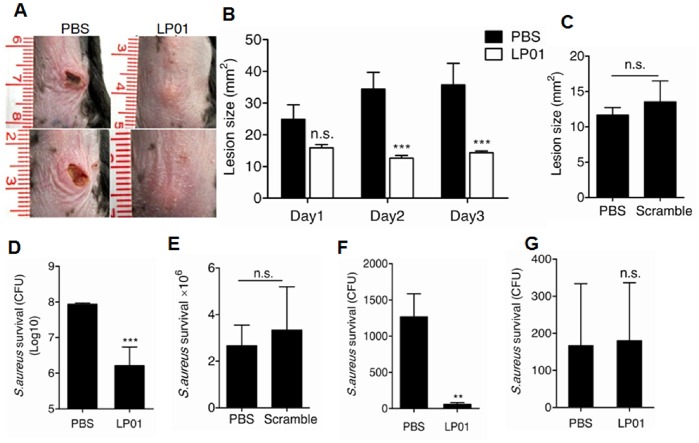
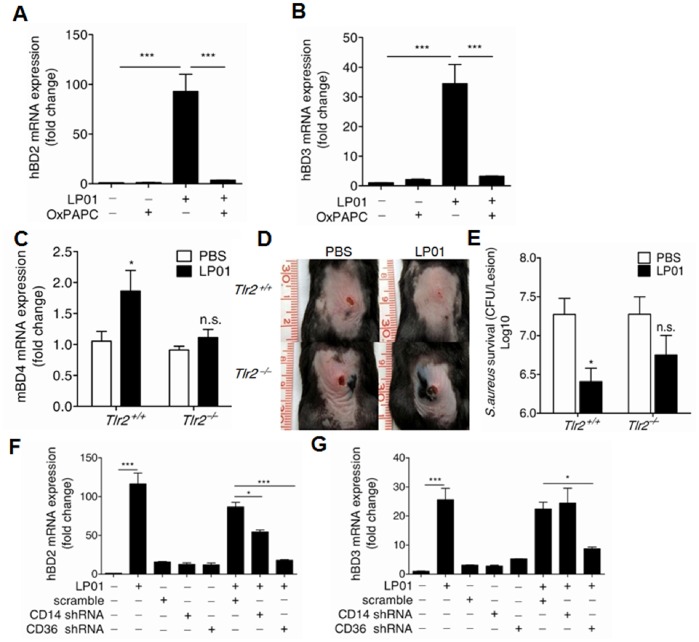
Staphylococcus epidermidis (S.epidermidis) plays important protective roles by directly producing or by stimulating hosts to produce antimicrobial peptides (AMPs) against pathogenic infections. Although several AMPs from S.epidermidis have been identified, molecules that stimulate hosts to produce AMPs remain largly unknown. Here we demonstrate that a new lipopeptide (named LP01) purified from S.epidermidis culture media has a unique structure with heneicosanoic acid (21 carbons) binding to lysine(11) of a peptide chain. In vitro LP01 increased the expression of β-defensin 2(hBD2) and hBD3 in neonatal human epidermal keratinocytes(NHEK), leading to increased capacity of cell lysates to inhibit the growth of S.aureus. In vivo LP01 induced the expression of mouse β-defensin 4(mBD4) to decrease the survival of local S.aureus in skin and systemic S.aureus survival in liver. The induction of beta-defensins by LP01 was dependent on TLR2 as Tlr2-deficient mice had decreased mBD4. Furthermore, knockdown of CD36 decreased the expression of hBD2 and hBD3, and p38 MAPK inhibitor significantly inhibited the expression of hBDs induced by LP01.Taken together, these findings demonstrate that lipopeptide LP01 from normal commensal S.epidermidis increases antimicrobial peptide hBD2 and hBD3 expression via the activation of TLR2/CD36-p38 MAPK, thus enhancing antimicrobial defense against pathogenic infections.
表皮葡萄球菌(S.epidermidis)通过直接产生或刺激宿主产生抗病原感染的抗菌肽(AMPs)来发挥重要的保护作用。尽管已经鉴定出几种来自表皮葡萄球菌的 AMPs,但仍有大量刺激宿主产生 AMPs 的分子尚不清楚。在这里,我们证明了从表皮葡萄球菌培养基中纯化的一种新的脂肽(命名为 LP01)具有独特的结构,其中二十一烷酸(21 个碳)与肽链上的赖氨酸(11)结合。体外 LP01 增加了新生儿人表皮角质形成细胞(NHEK)中β-防御素 2(hBD2)和 hBD3 的表达,导致细胞裂解物抑制金黄色葡萄球菌生长的能力增强。体内 LP01 诱导了小鼠β-防御素 4(mBD4)的表达,减少了皮肤局部金黄色葡萄球菌和肝脏全身金黄色葡萄球菌的存活。LP01 诱导β-防御素的表达依赖于 TLR2,因为 TLR2 缺陷型小鼠的 mBD4 减少。此外,CD36 的敲低降低了 hBD2 和 hBD3 的表达,而 p38 MAPK 抑制剂显著抑制了 LP01 诱导的 hBDs 的表达。总之,这些发现表明,正常共生表皮葡萄球菌的脂肽 LP01 通过激活 TLR2/CD36-p38 MAPK 增加抗菌肽 hBD2 和 hBD3 的表达,从而增强针对病原感染的抗菌防御。