Ferreira-da-Silva Francisco Walber, da Silva-Alves Kerly Shamyra, Lemos-Dos-Santos Matheus, de Oliveira Keciany Alves, Joca Humberto Cavalcante, do Vale Otoni Cardoso, Coelho-de-Souza Andrelina Noronha, Leal-Cardoso José Henrique
Laboratory of Electrophysiology, Superior Institute of Biomedical Sciences, State University of Ceará, Avenue Paranjana, 1700 Campus of Itaperi, 60740-903 Fortaleza, CE, Brazil.
ISRN Endocrinol. 2013;2013:638028. doi: 10.1155/2013/638028. Epub 2013 Feb 17.
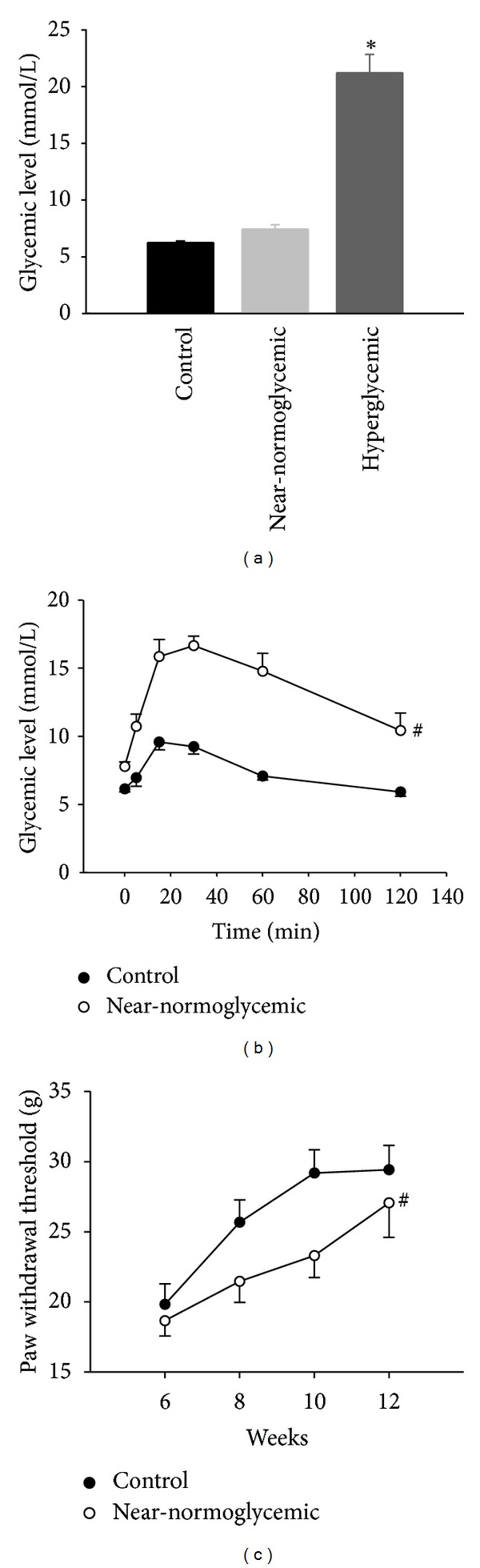
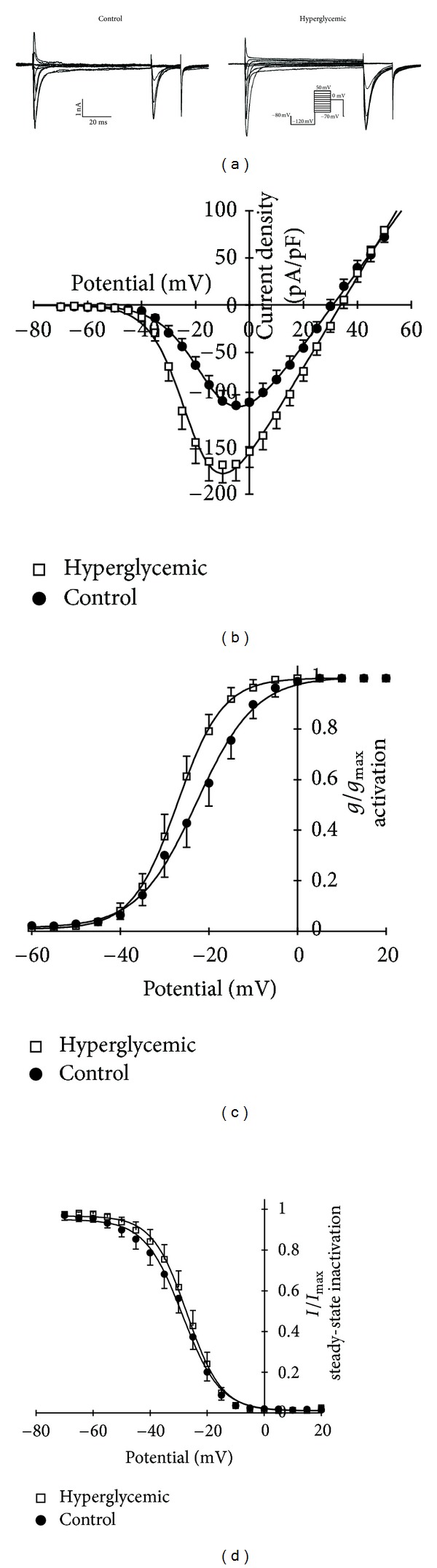
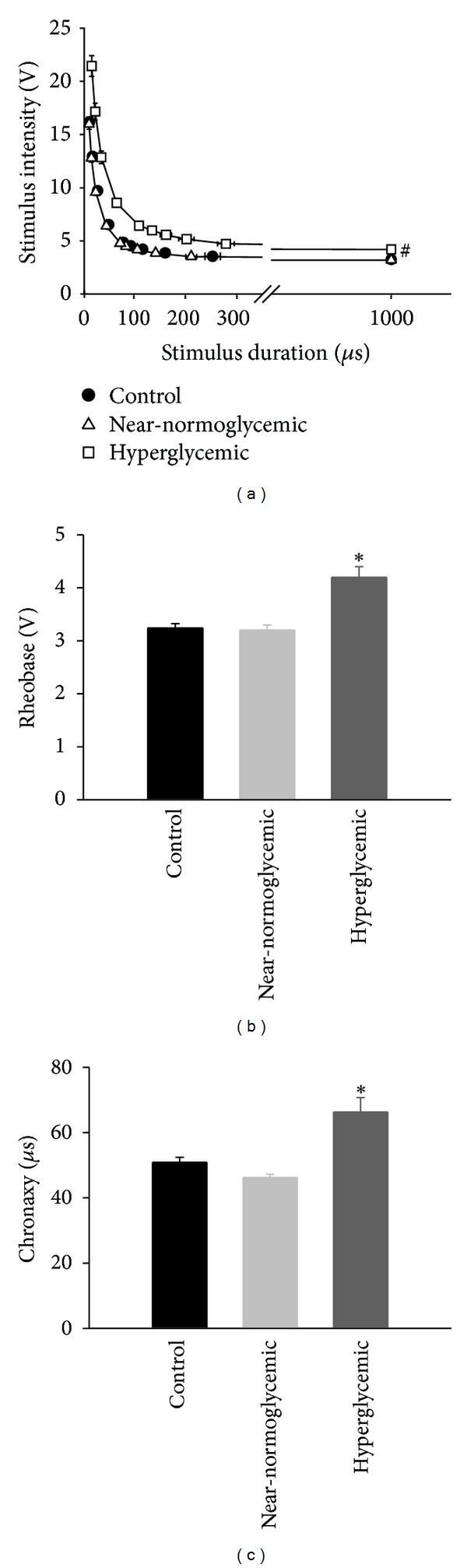
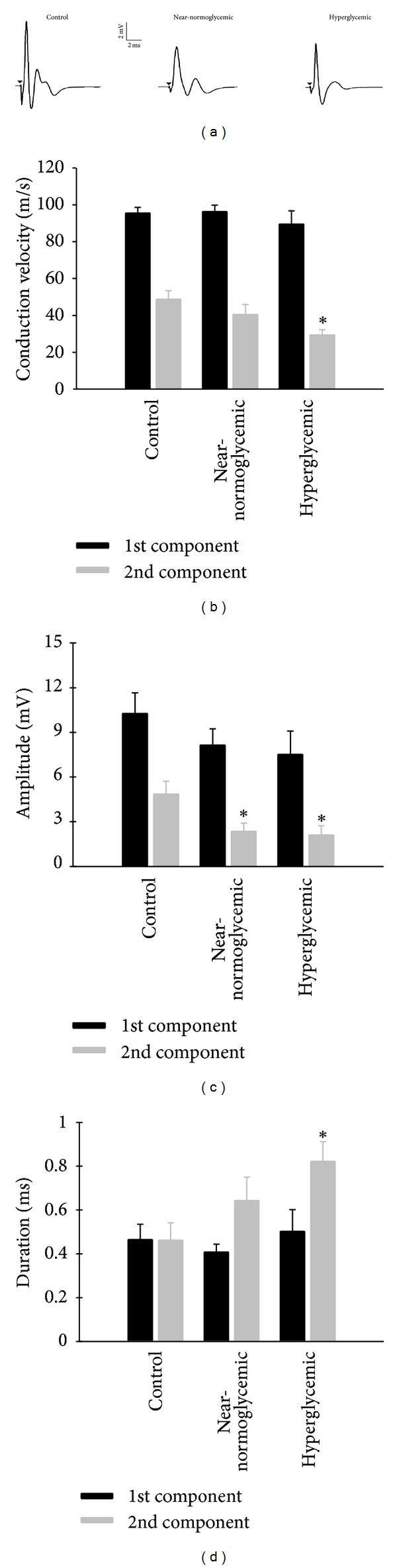
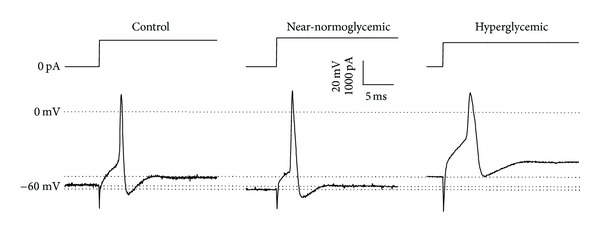
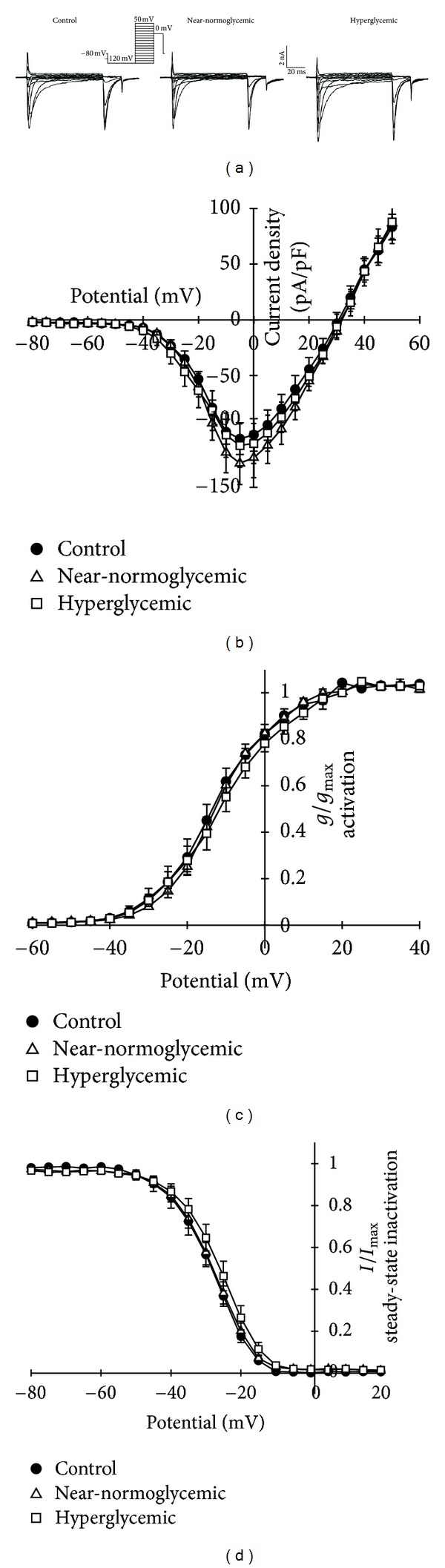
One experimental model of diabetes mellitus (DM) similar to type II DM, called n5-STZ, is obtained by a single injection (via i.p.) of streptozotocin (STZ) in the 5th day of life of newborn rats. The present investigation aimed to characterize alterations in excitability of rat peripheral neurons in n5-STZ model. n5-STZ DM was induced, and electrophysiological evaluation was done at 12th week of rat life. Rats developed glucose intolerance, sensory alteration, and hyperglycemia or near-normoglycemia (21.2 ± 1.6 and 7.4 ± 0.4 mmol/L). In near-normoglycemia group the significant electrophysiological alteration observed was decreased in amplitude of 2nd wave (2nd component, conduction velocity: 48.8 m/s) of compound action potential (CAP) of sciatic nerve. For hyperglycemic rats, decreased excitability, amplitude, and conduction velocity of 2nd CAP component of sciatic nerve were found; a depolarization of resting potential (4-5 mV) and reduction in maximum ascendant and descendant inclinations of action potential were found in DRG neurons but no alteration on Na(+) current (INa(+) ). Thus, n5-STZ rats develop alterations in excitability which were related to glycemic levels but were not likely attributable to changes on INa(+) . Our data confirm that n5-STZ model is a useful model to study type II DM.
一种类似于II型糖尿病的糖尿病(DM)实验模型,称为n5-STZ,是通过在新生大鼠出生后第5天单次腹腔注射链脲佐菌素(STZ)获得的。本研究旨在表征n5-STZ模型中大鼠外周神经元兴奋性的改变。诱导产生n5-STZ糖尿病,并在大鼠出生后第12周进行电生理评估。大鼠出现葡萄糖不耐受、感觉改变以及高血糖或接近正常血糖水平(分别为21.2±1.6和7.4±0.4 mmol/L)。在接近正常血糖组中,观察到的显著电生理改变是坐骨神经复合动作电位(CAP)的第二波(第二成分,传导速度:48.8 m/s)幅度降低。对于高血糖大鼠,发现坐骨神经第二CAP成分的兴奋性、幅度和传导速度降低;在背根神经节(DRG)神经元中发现静息电位去极化(4 - 5 mV)以及动作电位最大上升和下降斜率降低,但钠电流(INa(+))无变化。因此,n5-STZ大鼠出现的兴奋性改变与血糖水平有关,但不太可能归因于INa(+)的变化。我们的数据证实n5-STZ模型是研究II型糖尿病的有用模型。